AI, Power & Society

AI standards are the only realistic truce in the US-China AI race Rivals may not trust each other, but they can still agree on basic safety rules Without shared standards, AI competition will become more costly, fragmented, and dangerous
Read More

Data center jobs are real, but most local gains happen during construction After launch, many software and operations jobs can be done remotely Dense regions should approve data centers only when land, power, and local jobs justify the trade-off
Read More
AI will not just augment workers; it will replace many with a few “superhuman” operators The real divide is access to compute and energy, not worker readiness Without new policy, AI will create structural labor redundancy The artifici
Read More
Shanghai’s single AI cluster outpaces United States’ scattered hubs. Talent gravity widens innovation and wage gaps. Focus investment, cushion workers. In July 2025, Shanghai caught the attention of global policymakers when the
Read More








Federal AI spending alone no longer secures United States dominance after decades of relative decline. China is sprinting ahead as AI-driven “super-human” productivity makes vast swathes of labour redundant. Research budgets must be tied to strong worker protections to win the tech race without fracturing society.
Read More
The Anthropic–OpenAI shift exposes flaws in Pentagon AI procurement Replacing an AI model triggers deep operational and institutional disruption Procurement reform is needed to balance speed, ethics, and security The pivot
Read More
AI chip export controls are tools of geopolitical leverage, not just technology denial China’s pragmatic strategy limits the long-term impact of chip restrictions Effective AI chip export controls must tie semiconductor access to strategic conditions
Read More
AI is reshaping the life trajectory of young adults, not just their jobs Economic insecurity linked to automation delays marriage, housing, and family formation Without structural policy reform, AI will redefine adulthood itself
Read More
AI is eroding the first rung of professional careers Upward mobility is weakening as entry-level roles disappear Education and policy must rebuild structured career pathways By 2030, tens of millions of early-career roles that once
Read More

AI copyright disputes are shifting toward strict AI data governance and data provenance scrutiny Settlements and licensing deals now shape the legal landscape more than courtroom doctrine The future of AI regulation will depend on verifiable governance, not abstract fair-use theory
Read More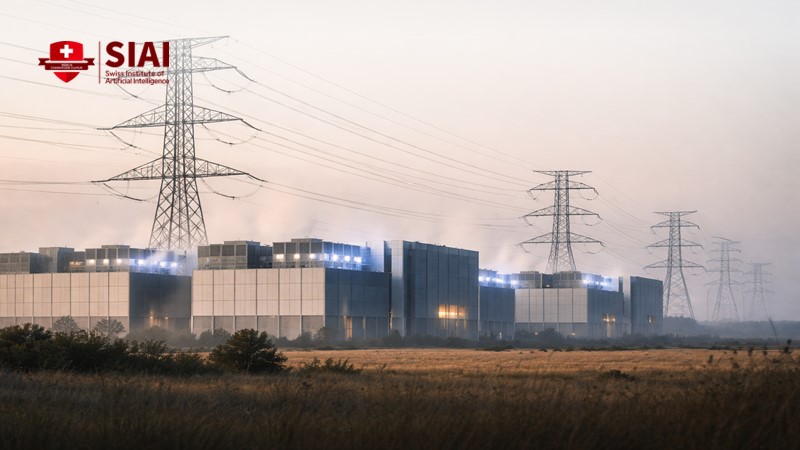
Data centers are not modern factories and rarely create broad local prosperity. They often raise local power costs while delivering few permanent jobs. Only strict public-benefit energy rules can rebalance the deal. The dat
Read More


AI is triggering a new global divergence, much like the industrial revolutions before it Countries that control AI systems and skills will gain lasting economic and institutional power Education and policy now decide who leads and who is left behind
Read More

Health data monetization is failing because patients do not trust technology firms with sensitive medical records Turning health data into a commodity ignores consent, governance, and healthcare’s real economics Without strong safeguards and public oversight, most health data projects will keep breaking down
Read More
AI in education needs compute; cooling drives water, power, and trust costs Require verified standards for data center water cooling, power, and heat reuse Site compute in low-water regions and reuse heat to scale AI responsibly Operatin
Read More
Orbital data centers could ease power and cooling limits on Earth The costs and climate trade-offs are still unclear Education should set rules now before orbit becomes a new dependency Global data centers consumed roughly 415 TW
Read More
AI video streaming is mainstream; tools are easier, directing still matters Without rights, provenance, and QC, slop scales and trust falls Train hybrids and set standards to gain speed without losing story Back in D
Read More