AI Packaging Game-Changer ‘Glass Substrates’ Ignite Global Race Toward Mass Production

Authored On
Modified
Key Material at the Core of Next-Generation AI Semiconductor Packaging
China and Japan Accelerate Production Line Construction and Prototype Development
Competition Expands Beyond Technology Into Full-Scale Manufacturing Ecosystem Development
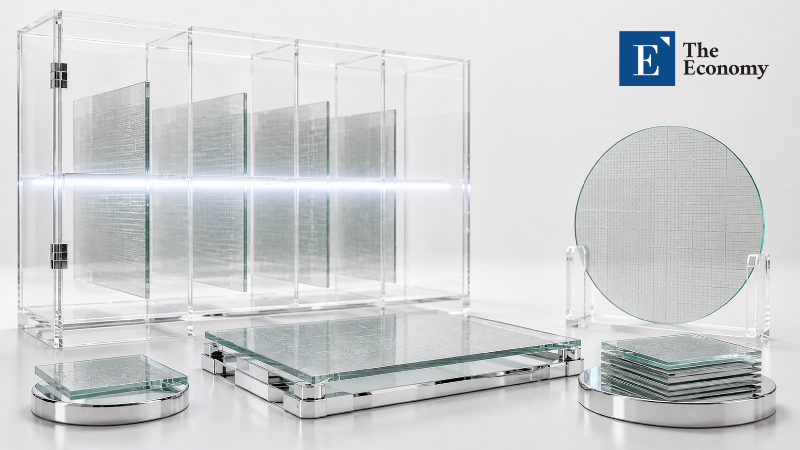
China and Japan are intensifying efforts to secure leadership in the glass core substrate market, a technology emerging as a cornerstone of next-generation semiconductor packaging. As competition in artificial intelligence (AI) semiconductors shifts from process-node miniaturization toward advanced packaging technologies, companies across the sector are accelerating investments in manufacturing facilities and supply chain development. With glass substrates increasingly viewed as a critical enabler of AI semiconductor scalability, industry observers believe that yield stabilization and the ability to overcome fundamental technology barriers will determine future market leadership.
Wave of Chinese Entrants Targets Market Growth Potential
According to industry sources on June 11, Chinese semiconductor glass substrate manufacturers including BOE Technology, Visionox, AKM Meadville, and Yuntian Semiconductor have recently been introducing large volumes of inspection solutions. These companies are pursuing the deployment of optical and X-ray inspection equipment for substrate surface inspection and are also exploring partnerships with Korean materials, components, and equipment suppliers.
BOE was the first company in China to formally enter the semiconductor glass substrate business. Leveraging its expertise in glass-processing technologies developed through liquid crystal display (LCD) manufacturing, the global display maker identified semiconductor glass substrates as a key future growth engine. The company has moved aggressively, establishing a pilot production line within approximately two years of announcing its market entry. BOE is reportedly achieving meaningful progress in Through Glass Via (TGV) technology, a core process that creates vertically penetrating holes in glass substrates to serve as data transmission pathways.
Visionox, one of China’s three leading display manufacturers, has been building a materials, components, and equipment supply chain for glass substrate manufacturing since last year and is currently advancing equipment investments. The company is reportedly engaging with numerous suppliers to optimize process technologies. Alongside firms such as TGV specialist WG Tech and equipment manufacturer Han’s Laser, Visionox is rapidly assembling a glass substrate ecosystem. In particular, the company is pursuing a strategy of extending its ultra-thin glass (UTG) expertise and display panel manufacturing know-how into semiconductor-grade glass substrates. To support this effort, Visionox has recently expanded dedicated business units and increased related research and development expenditures.
Printed circuit board (PCB) manufacturers are also accelerating efforts to establish glass substrate supply chains. Chinese PCB producer AKM Meadville built a glass substrate pilot production line in January and has begun process validation. Ranked among the world’s top 20 PCB suppliers by revenue and eighth globally in high-density interconnect (HDI) substrates, AKM Meadville is leveraging its experience in producing high-performance substrates for servers and telecommunications equipment to enter the glass substrate market. Activity is also intensifying in the semiconductor back-end sector. Yuntian Semiconductor, a Chinese outsourced semiconductor assembly and test (OSAT) provider, is simultaneously developing glass substrate-based advanced packaging technologies and constructing related supply chains. Recently incorporated into Huawei’s supply chain and recognized for its technological capabilities, the company is also concentrating resources on securing next-generation packaging technologies.
Japan Accelerates Development of Glass Substrate Ecosystem
Investment and technology development related to glass substrates are also gaining momentum in Japan. Ibiden, one of Japan’s leading semiconductor substrate manufacturers, is conducting glass substrate R&D. Drawing on its advanced circuit formation technologies and large-format substrate manufacturing capabilities accumulated through supplying advanced package substrates to global semiconductor companies including Intel and Nvidia, Ibiden is evaluating the commercialization potential of glass substrates. Industry observers believe the company could exert significant influence during commercialization, given its strong position in high-value substrate markets for high-performance computing (HPC) and AI servers.
Dai Nippon Printing (DNP), Japan’s largest printing company, is also pursuing an aggressive glass substrate development strategy. Targeting mass production by 2028, DNP has established a pilot line and is advancing development of glass core substrates for semiconductor packaging applications. The company is particularly preparing to target next-generation AI server package markets through its expertise in large-area glass processing and fine-pattern formation technologies. DNP’s core strength lies in precision patterning. The company possesses advanced microfabrication capabilities accumulated through semiconductor photomasks and display photolithography and is exploring ways to apply those technologies to glass substrate manufacturing processes.
AGC, Japan’s largest glass manufacturer, is likewise moving to establish a materials supply chain for glass substrates. The company is developing glass core substrate materials based on its ultra-thin glass and specialty semiconductor glass technologies while exploring collaboration opportunities with global packaging firms. Believing that material supply could emerge as a bottleneck once the glass substrate market reaches commercial scale, AGC is focusing on securing production capabilities in advance.
In the equipment segment, Shibuya Corporation has entered the race to develop TGV processing systems. Leveraging precision laser and drilling technologies, the company is advancing micro-hole processing capabilities and is conducting joint development projects with Japanese semiconductor equipment manufacturers. Industry analysts believe Japanese companies are building supply chains spanning materials, substrates, and equipment while nurturing the glass substrate sector as a strategic industry aimed at securing leadership in future semiconductor packaging technologies. As Chinese firms pursue aggressive investment-driven expansion, Japan appears equally determined to maintain influence in the next-generation packaging race.

Emerging as the Future of AI Packaging, With Yield and Patents Remaining Key Challenges
Glass substrates are attracting attention as a next-generation substrate technology because they offer superior resistance to thermal stress and warpage while enabling advantages in fine-line interconnects and electrical performance. As AI performance advances, packaging capabilities capable of connecting graphics processing units (GPUs) and high-bandwidth memory (HBM) across larger and denser architectures are becoming increasingly important. Against this backdrop, glass substrate technology is emerging as a promising solution for enhancing the scalability of AI semiconductors through next-generation packaging.
As a result, not only semiconductor companies such as Nvidia, Broadcom, AMD, and Intel but also major technology firms including Apple, Google, and Amazon are showing strong interest in glass substrates for future AI and mobile chip development. Current AI and mobile chip production remains constrained by the annual packaging capacity limits of Taiwan Semiconductor Manufacturing Co. (TSMC), and industry participants believe glass substrates could help alleviate these bottlenecks. Intel has identified glass substrates as a core next-generation packaging technology for several years. The company argues that glass substrates offer advantages over conventional organic substrates in transistor density, package size scalability, and power efficiency. Nvidia and AMD are also facing mounting pressure to implement larger package architectures as competition in AI accelerator performance intensifies.
Despite market enthusiasm, significant challenges remain before mass production becomes viable. The most widely cited obstacle is the inherent brittleness of glass. Even minor impacts can generate fractures, while cracks that are difficult to detect visually may form during manufacturing processes. In semiconductor packaging, cracks measuring only a few micrometers can undermine product reliability, making advanced inspection technologies essential. This technical challenge is a major reason Chinese and Japanese companies have been actively investing in optical and X-ray inspection systems.
Microcracks generated after the TGV process are considered one of the most critical variables affecting commercialization. Because TGV requires the creation of thousands to tens of thousands of microscopic holes in glass, stress concentration effects can easily occur. Industry experts believe that establishing mass production systems will be difficult unless companies can rapidly detect crack formation and maintain stable yields through advanced inspection technologies. Global equipment manufacturers are already investing aggressively in AI-powered defect analysis and high-resolution X-ray inspection technologies.
Fundamental intellectual property barriers also represent a major burden for late entrants. A substantial portion of key glass substrate patents is held by U.S. and German companies. Firms such as Intel, Corning, and Schott have established extensive patent portfolios covering glass materials, processing technologies, and packaging architectures. The patent barriers are broader than many assume. Glass substrate-related intellectual property extends well beyond the glass material itself, encompassing TGV formation methods, metal-filling processes, wiring structures designed to minimize signal loss, thermal-expansion control technologies, and large-format substrate manufacturing methods. Intel, Corning, and Schott have spent more than a decade conducting R&D and securing these patents.
As a result, some industry observers believe that patent disputes could become increasingly common as the glass substrate market matures, regardless of manufacturing capacity competition. Historically, patents in the semiconductor industry have frequently translated directly into market dominance during the formative stages of technology standardization. Consequently, alongside technological capabilities, the development of robust patent portfolios is emerging as a decisive factor in determining competitiveness within the glass substrate sector. One semiconductor industry official stated, “The glass substrate race ultimately comes down to who can first establish a viable mass-production structure. In the early stages, yield stabilization and supply reliability will be critical, making collaboration among multiple specialized companies unavoidable. However, as demand for high-performance packaging expands rapidly alongside AI semiconductor adoption, companies that secure value chains and foundational patents in advance are likely to gain long-term market leadership.”
Similar Post