“Short Sellers Unlikely to Survive”: Musk Issues Warning as SpaceX Shares Weaken and Starship Setbacks Depress Investor Sentiment

Stefan Schneider brings a dynamic energy to The Economy’s tech desk. With a background in data science, he covers AI, blockchain, and emerging technologies with a skeptical yet open mind. His investigative pieces expose the reality behind tech hype, making him a must-read for business leaders navigating the digital landscape.
Authored On
Modified
Musk warns that major SpaceX short positions have a low probability of survival
Starship, a central pillar of SpaceX’s future growth, struggles to prove its technical capabilities
Test flight scheduled for this month postponed twice in succession
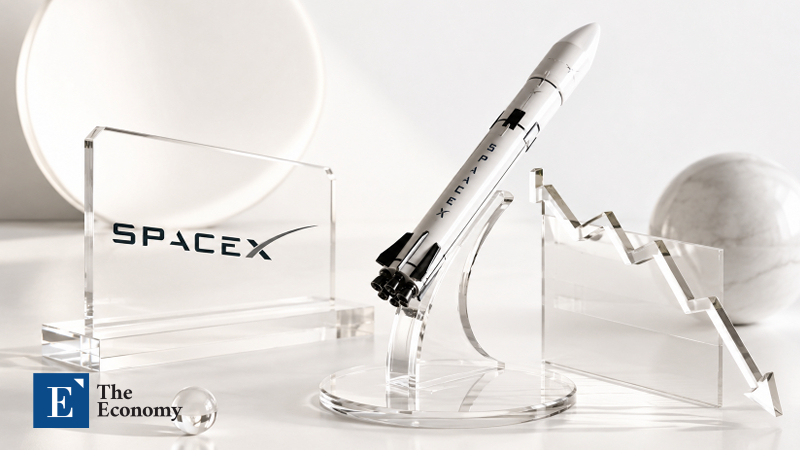
SpaceX Chief Executive Elon Musk has issued a public warning to investors shorting the company’s shares. As the stock retreated from the sharp gains recorded immediately after its initial public offering and demand for short positions increased rapidly, Musk intervened verbally in an apparent attempt to defend the share price. Market participants, however, largely believe that a warning alone will be insufficient to reverse the recent deterioration in investor sentiment. To restore its valuation, SpaceX will ultimately need to demonstrate tangible progress in core projects such as Starship.
SpaceX Shares Tumble
In a post published on X, formerly Twitter, on July 18, Musk said that “as time passes, the probability of survival for firms maintaining substantial short positions in SpaceX will become very low.” SpaceX made a high-profile debut on the New York stock market on June 12, and its shares climbed as high as $225 in intraday trading on June 16, the company’s third trading day. That represented a gain of approximately 66% from its $135 offering price. SpaceX also surpassed Amazon to become the fifth-largest US-listed company by market capitalization, bringing it close to Microsoft. The stock subsequently lost momentum as debate intensified over whether its valuation had risen too far, however, and closed at $118.24 on July 23.
As the share price continued to struggle, short selling against SpaceX increased sharply. Citing estimates from US financial data analytics company S3 Partners, CNBC reported that approximately 32% of publicly traded SpaceX shares had been sold short, a substantial increase from between 5% and 7% one month earlier. The figure indicates that a growing number of investors expect the company’s share price to decline further. Matthew Unterman, head of research at S3 Partners, said short sellers were continuing to expand their positions ahead of several important events, including SpaceX’s first earnings announcement since its listing and the expiration of restrictions preventing existing shareholders from selling their stock.
Another financial data analytics company, Ortex, estimated that the decline in SpaceX shares had transformed short sellers’ mark-to-market performance from a loss of $677 million in early June into a profit of $8.7 billion as of the July 16 closing price. “SpaceX short sellers have experienced a difficult journey since the IPO, and that volatility is likely to continue,” said Peter Hillerberg, co-founder of Ortex. “SpaceX has been a roller coaster for short sellers, but the outcome has ultimately moved decisively in their favor.”
Continuing Disruption Around Starship Launches
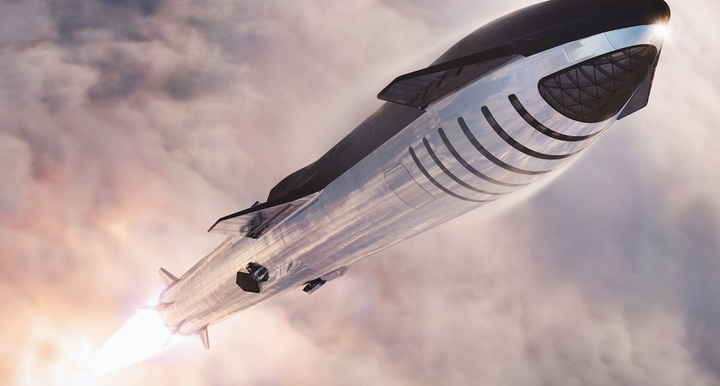
Analysts generally believe that Musk’s verbal intervention will be insufficient to restrain either the decline in SpaceX shares or growing demand for short positions. Investors ultimately expect the company to deliver meaningful results, with particular attention focused on the development of Starship, the fully reusable super-heavy launch vehicle designed to be recovered and flown again after launch. Starship is viewed as the central mechanism through which SpaceX intends to reduce launch costs and as the technological foundation for several of Musk’s future ventures, including space-based data centers, the expansion of the Starlink communications network, and missions to the Moon and Mars.
The problem is that Starship’s development has remained highly unstable. During its first integrated test flight in April 2023, several engines failed to operate normally, and the vehicle was destroyed in flight approximately four minutes after launch, causing extensive damage to the launch site. The US Federal Aviation Administration subsequently required SpaceX to implement 63 corrective actions. During the second test in November of the same year, SpaceX successfully separated Starship from the reusable first-stage Super Heavy booster for the first time, but the booster exploded while performing its return maneuver and the upper-stage Starship was also destroyed during flight. The third test, conducted in March 2024, marked progress as Starship reached space for the first time, but the vehicle failed to maintain a stable orientation during atmospheric reentry and was lost after communications were interrupted.
During the seventh test flight in January 2025, an upgraded Starship experienced a propulsion-system failure during ascent, lost communications, and broke apart over the Caribbean. The eighth test, conducted two months later, also ended with the destruction of the vehicle after engine shutdowns and a loss of attitude control. Debris from the two explosions within a three-month period fell across a wide area and disrupted nearby commercial flights, prompting the FAA to begin another accident investigation and subsequent safety review. During the ninth test in May 2025, Starship again reached space but failed to release simulated Starlink satellites because the payload-bay door did not open. An internal leak then caused the vehicle to lose tank pressure and attitude control, preventing it from maintaining its planned flight path before communications were lost over the Indian Ocean.
SpaceX Still Needs to Prove Its Growth Engine
Starship test flights have continued to encounter significant problems in 2026. During the 12th test flight in May, the next-generation Starship V3 reached space and survived atmospheric reentry, but one upper-stage Raptor engine shut down prematurely during ascent. One engine on the Super Heavy booster also shut down during the climb, while several others failed to restart normally during the return burn. The booster deviated from its planned trajectory and crashed into the Gulf of Mexico, while an engine-restart test scheduled to take place in space was canceled.
The 13th Starship test flight, initially scheduled for July 16, also failed to proceed as planned. SpaceX intended to deploy 20 of its latest Starlink V3 satellites, establish communications with existing satellites in orbit, and use cameras mounted on the payloads to photograph the condition of Starship’s thermal-protection tiles. Shortly before launch, however, several Raptor engines on the Super Heavy booster failed to ignite properly, activating the automatic abort system. The vehicle remained on the launchpad as smoke spread around the launch tower. Musk later said on X that the two malfunctioning engines would be replaced. SpaceX shares fell by approximately 3% in after-hours trading that day and declined by more than 5% during the following trading session.
SpaceX subsequently announced that it would attempt the flight again on July 23 from its Starbase facility in southern Texas, but that schedule was also delayed by one day because of weather conditions. Dense cloud cover would have prevented the cameras from obtaining a sufficiently clear view of the thermal-protection system, while the effects of a tropical storm created additional complications. “The repeated test-flight failures demonstrate that SpaceX continues to face execution risks as it attempts to scale Starship into a high-frequency, reusable operating system,” said Ivan Feinseth, chief investment officer at US financial research and advisory firm Tigress Financial Partners. “They also reinforce the risk that continued delays could push the company’s revenue and margin trajectory further into the future.”
Stefan Schneider brings a dynamic energy to The Economy’s tech desk. With a background in data science, he covers AI, blockchain, and emerging technologies with a skeptical yet open mind. His investigative pieces expose the reality behind tech hype, making him a must-read for business leaders navigating the digital landscape.
- Previous “Earnings Rise, but Cash Flow Turns Negative”: Google Faces AI Investment Backlash as Big Tech Spending Race Deepens Financial and Profitability Pressure
- Next “Japanese Auto Alliance to Challenge the US and China”: Honda and Nissan Expand SDV Cooperation as Toyota Seeks Unified Parts Standards
Similar Post