“From AI Growth Hopes to Fears of Financial Distress”: Wall Street Hedging Surges as Falling Stocks and Data Center Construction Delays Fuel Bubble Warnings

As one of the youngest members of the team, Tyler Hansbrough is a rising star in financial journalism. His fresh perspective and analytical approach bring a modern edge to business reporting. Whether he’s covering stock market trends or dissecting corporate earnings, his sharp insights resonate with the new generation of investors.
Authored On
Modified
Demand for put options and credit risk hedges grows amid fears of an AI bubble collapse
Big Tech and semiconductor shares fall together, with potential distress in private credit also a concern
Tighter U.S. regulations on data center construction add uncertainty over investment recovery
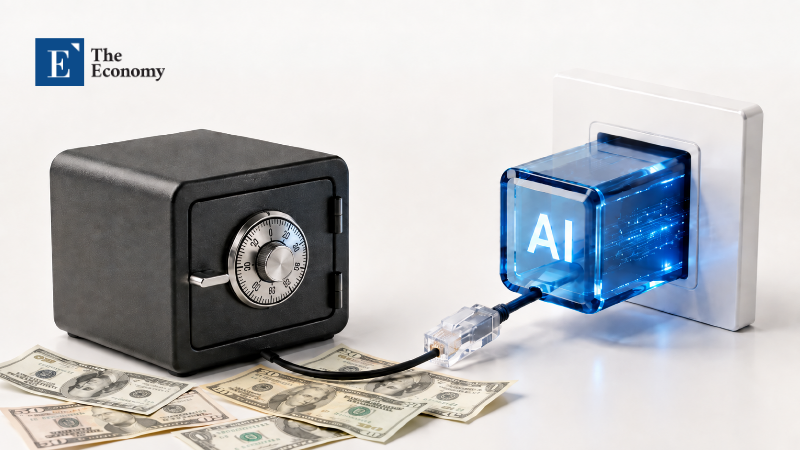
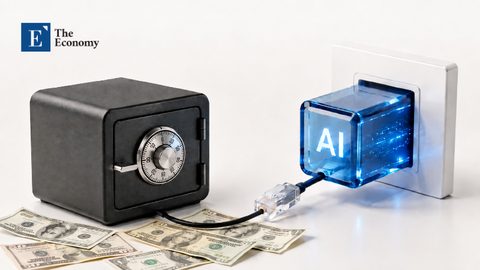
Investors seeking so-called “loss insurance” in artificial intelligence (AI) are rapidly increasing. As shares of major AI companies weaken in tandem and data center construction delays materialize, particularly in the United States, investors are shifting their attention toward credit risk management. With AI infrastructure investment intricately intertwined with private credit, insurance and structured financial products, some market participants are even warning that losses at individual companies could spread into credit risks across financial markets.
AI Investment Turns Into a Risk
According to The Wall Street Journal (WSJ) on Oct 31st, trading aimed at protecting against AI-related investment losses has recently increased on Wall Street. Market activity surrounding AI cloud specialist CoreWeave is a prime example. According to Cboe Global Markets, trading volume in CoreWeave put options (the right to sell a particular stock at a pre-agreed price at a specified future date) has remained elevated after surging to a record high last month. CoreWeave shares were trading at around USD 55 as of last week, and investors were focusing on put options expiring in 2028 with a strike price of USD 35.
This demand for risk protection is also evident in the corporate bond market. Data from bond information provider Solve show that credit default swap (CDS) premiums for five U.S. Big Tech companies—Amazon, Alphabet, Microsoft, Meta and Oracle—all rose over the past month, reaching their highest levels since 2021. A CDS is a derivative that compensates for losses when a credit event occurs, such as a bond issuer failing to meet its debt obligations. Higher premiums are interpreted as indicating greater credit risk as assessed by the market. Solve co-founder Eugene Grinberg told the WSJ, “The fact that CDS premiums have risen across the board suggests growing market concerns about the industry as a whole, rather than company-specific credit problems.”
Financial Products Targeting Infrastructure Emerge
Financial products that directly protect the profitability of AI infrastructure businesses have also emerged. U.S. quantitative trading firm Jump Trading recently established a dedicated AI computing capacity trading unit and began trading derivatives designed to reduce data center operators’ losses from falling graphics processing unit (GPU) rental rates. GPU rental rates currently remain high, supported by growing demand for AI computing, but a sharp decline cannot be ruled out if supply expands as new data centers come online or demand slows. The products Jump Trading is pursuing are structured to spread such price fluctuation risks in advance. For example, if a GPU rental company enters into a contract to hedge downside risk based on an hourly rental rate of USD 4, it can receive the USD 1 difference from Jump Trading even if the actual market rate falls to USD 3.
Insurance products protecting against declines in GPU resale prices have also been introduced. On the 17th of last month, U.S. AI infrastructure financing company American Compute launched “residual value insurance” for financial companies that lend against GPUs or lease the equipment. Under the product, the insurer pays the difference if a GPU’s actual sale price at a contractually specified time falls below a pre-agreed minimum price. Semiconductor manufacturers have also begun directly sharing financial institutions’ loss risks. In a USD 63 billion AI chip financing transaction with Anthropic announced on the 26th of last month, Broadcom agreed to provide a residual value guarantee for senior loans. Under the arrangement, a special purpose vehicle (SPV) raises funds from financial institutions to purchase Broadcom’s AI accelerators and networking equipment, then leases them to Anthropic. The senior loans total USD 43.5 billion, and Broadcom will, subject to certain conditions, cover any shortfall if the equipment’s residual value upon eventual disposal falls below the contractually guaranteed level.
Table 1. Types of Transactions to Hedge AI Investment Losses
| Risk Area | Hedging Instrument | Key Examples | Structure and Features |
|---|---|---|---|
| Declining Share Prices | Put Options | CoreWeave | Secures the right to sell shares at a specified price, protecting against losses from declining share prices |
| Corporate Default | Credit Default Swaps (CDS) | Amazon, Alphabet, Microsoft, Meta and Oracle | Compensates for bond losses when a credit event occurs, such as a corporate default |
| Declining GPU Rental Rates | Price Derivatives | Jump Trading | Covers the difference if actual GPU rental rates fall below the agreed price |
| Declining GPU Resale Prices | Residual Value Insurance | American Compute | Pays the difference if the GPU sale price falls below the agreed minimum price |
| Declining AI Equipment Values | Residual Value Guarantee | Broadcom–Anthropic Financing Transaction | The manufacturer bears part of financial institutions’ losses if the equipment’s disposal value falls below the guaranteed level |
Market Warnings of an AI Bubble
The AI market’s focus on the risk of declining asset values reflects persistent concerns that massive capital spending and expanding debt could lead to a bubble collapse. For example, investor Michael Burry, known as the real-life figure portrayed in the film “The Big Short,” which covered the 2008 financial crisis, warned last month on his Substack newsletter platform about risks in the private credit market linked to AI data center investment. His point was that insurers acquired by private equity firms are investing in structured financial products, including asset-backed securities (ABS) backed by data center and semiconductor lease contracts, potentially spreading the AI industry’s debt risks throughout the financial system. Burry highlighted that distress within the complex financial structure connecting private equity, private credit and insurers could constrict funding for data center construction and hurt AI infrastructure investment, a major growth driver of the U.S. economy.
Institutional investors are also becoming increasingly wary of excessive investment. According to a global fund manager survey conducted last month by U.S. financial services group Bank of America (BofA), 39% of respondents identified massive AI capital spending by large cloud companies (hyperscalers) as the factor most likely to trigger a future systemic credit crisis. An AI bubble was cited by 23% as financial markets’ biggest “tail risk” (the risk of an extreme event that is highly unlikely but, if it occurs, causes devastating losses to asset values or the broader economy), while 45% expected the AI market to remain in a bubble in 2027.
AI-Related Stocks Plunge
The recent steep decline in AI-related stocks is also fueling market anxiety. Comparing closing prices on the 30th of last month with those on September 30, shares of Google parent Alphabet plunged 18.67%, from USD 344.08 to USD 279.84. Over the same period, Meta fell 15.19%, from USD 725.18 to USD 614.99, while Nvidia declined 10.39%, from USD 228.38 to USD 204.64. Shares of Big Tech companies pursuing massive AI capital investments have weakened together.
Semiconductor companies suffered even steeper losses. During that period, Intel shares fell 45.30%, from USD 120.23 to USD 65.76, while AMD dropped 17.48%, from USD 611.76 to USD 504.80. CoreWeave also plunged 37.02% over the same period, from USD 87.12 to USD 54.87. Meanwhile, AI server manufacturer Dell declined 21.13%, and memory chipmaker Micron fell 16.93%. Against this backdrop, the Philadelphia Semiconductor Index slid 15.36% last month, while the tech-heavy Nasdaq Composite fell 5.30%, recording its largest monthly decline since March of last year.
Data Center Regulations Stir Growing Controversy
The problem is that these trends could accelerate further. Data center construction projects are increasingly being delayed in the United States, a key hub for global AI infrastructure investment, raising the risk of failing to recoup investment costs. According to global investment firm Interconnected Capital, 415 U.S. jurisdictions had introduced bans or moratoriums on data center construction as of the 26th of last month. Of these, 43 had imposed permanent bans, while 372 had implemented temporary moratoriums on new construction, permitting and related activities. Regulations have tightened as problems associated with large-scale data center operations accumulate, including surging electricity and water demand and opposition from local residents. Such permitting delays could weigh on Big Tech companies’ profitability by increasing land acquisition and grid connection costs and delaying the start of operations.
As uncertainty surrounding AI infrastructure investment grows, signs of changes are also emerging in semiconductor suppliers’ production and sales strategies. In particular, observers suggest that Nvidia, which leads the global AI semiconductor market, is seeking to concentrate production capacity on highly profitable products for professional use and AI infrastructure. Citing industry sources, U.S. technology publication Tom’s Hardware reported on the 10th of last month that Nvidia was halting supplies of the GB202 chips used in its consumer RTX 5090 graphics cards and prioritizing allocations to data center and professional products. In the middle of the same month, speculation also emerged that production of the RTX 5090 and RTX 5080 could end in January 2027, and that the existing RTX 5080 with 16GB of memory could be replaced by a 24GB model. Nvidia denied the discontinuation rumors, but the controversy has continued following reports on the 26th of last month that some graphics card manufacturers were unable even to place new orders for the chips and memory needed to produce the RTX 5090.
As one of the youngest members of the team, Tyler Hansbrough is a rising star in financial journalism. His fresh perspective and analytical approach bring a modern edge to business reporting. Whether he’s covering stock market trends or dissecting corporate earnings, his sharp insights resonate with the new generation of investors.
Similar Post