“Servers Face Hacking, Meeting Rooms Face Eavesdropping”: OpenAI Case Puts Corporate Internal Controls to the Test
“Servers Face Hacking, Meeting Rooms Face Eavesdropping”: OpenAI Case Puts Corporate Internal Controls to the Test

Siobhán Delaney is a Dublin-based writer for The Economy, focusing on culture, education, and international affairs. With a background in media and communication from University College Dublin, she contributes to cross-regional coverage and translation-based commentary. Her work emphasizes clarity and balance, especially in contexts shaped by cultural difference and policy translation.
Authored On
Modified
Eavesdropping allegations against OpenAI employee raise internal security alarm
AI analysis of meeting conversations could expose development and business strategies
Need for security investment to monitor information access and removal comes into focus
Allegations that an OpenAI employee bugged an executive meeting room have put insider security at technology companies under scrutiny. Evidence that an employee accessed a meeting space and attempted to collect executives’ conversations has heightened concerns that security gaps can remain even after employee vetting and restrictions on access to confidential information. Applying artificial intelligence (AI) analysis to unauthorized recordings could also magnify the damage from a leak by connecting remarks scattered across multiple meetings to uncover development plans and business strategies. These risks underscore the need for continuous checks on employees’ access to and removal of information and are expected to support increased corporate investment in monitoring.
OpenAI Engineer Charged with Bugging Executive Meeting Room
According to Bloomberg and other foreign media reports on the 13th (all dates hereafter are local time), the U.S. Department of Justice announced on the 9th that it had arrested and charged Abdulrahman Alfozan, a 35-year-old Saudi national and OpenAI engineer. Alfozan is accused of installing a recording device in an executive meeting room at OpenAI’s offices in San Francisco, California, around the 28th of last month. The device, discovered by employees around the 30th of that month, was plugged into a USB port on the back of a television, concealed with toilet paper, and contained encrypted recordings. The room is used to discuss confidential matters, including nonpublic research, product development plans, and partnerships with governments and companies. Investigators found that Alfozan, who joined the company in July last year, was not authorized to enter the room or attend its meetings.
U.S. investigators also obtained evidence that Alfozan looked into meeting room locations and schedules before installing the device. According to a criminal complaint made public in court, he repeatedly used workplace tools to look up executives’ work locations and information about meetings with external partners. A chatbot account in his spouse’s name, which shared some identifying information with his account, also contained queries about making and concealing recording devices, remote access, and encrypting storage devices. Company CCTV footage also showed Alfozan appearing near the meeting room several times before the device was discovered. On the 5th of this month, he was seen entering the room and apparently examining the back of the television. That same day, security staff inspected his bag, which had been left in another room, and found another similar recording device alongside his wallet and identification.
Confidentiality Risks Extend to Meeting Room Conversations
The case is seen as highlighting the importance of meeting rooms within corporate systems for protecting confidential information. Executives’ conversations can contain business ideas not yet committed to writing, technical limitations, and internal assessments not disclosed to negotiating partners. Investigators found that OpenAI, too, had used the room to discuss sensitive matters, including research results, product plans, and cooperation with governments and companies. If such information reaches competitors, companies risk having their development direction anticipated or losing leverage in negotiations over deal terms. Companies now face the burden of protecting the conversations where information is first exchanged, separately from controlling access to internal files.
That burden is growing as recording capabilities become embedded in everyday personal devices. Recording and storing a conversation on a mobile phone does not require access to the corporate network and therefore leaves no trace in the company’s communications logs. The spread of wearable devices such as smart glasses that record their surroundings has also emerged as a new concern for businesses. U.S. labor and employment attorney David Miklas noted that corporate IT departments have difficulty tracking smart glasses or applying security updates to them, and cannot remotely erase their data even after an employee leaves. Even after a company closes an account and retrieves work equipment, confidential information stored on personal devices remains outside its control.
Table 1. Routes for Leaks of Confidential Meeting Information and Corporate Security Risks
| Category | Main Exposure Routes | Corporate Security Risks |
|---|---|---|
| Meeting room conversations | Exposure of business ideas before documentation, technical limitations, and internal assessments related to negotiations | Development direction exposed to competitors; weaker bargaining power over deal terms |
| Recording on personal devices | Conversations recorded on mobile phones or smart glasses without accessing the corporate network | Difficult for IT departments to track and control; confidential information remains on personal devices after employees leave |
| AI analysis of recordings | Speech-to-text conversion, extraction of key remarks, and linked analysis of records from multiple meetings | Easier to trace development schedules, investment plans, and negotiation terms; damage may extend beyond the leaked information identified |
| AI meeting transcription services | Audio processing and summarization by external providers; storage on external servers depending on retention policies and settings | Dependent on external providers’ security and data management; potential liability disputes if customer or partner information is leaked |
Even Fragmentary Remarks Can Become Clues to Strategy When Analyzed by AI
The spread of AI speech recognition and summarization technology is also reducing the time and cost required to analyze conversations collected without authorization. A major factor is the automation of converting long recordings into text and extracting passages that mention particular technologies or business partners. Analyzing records from multiple meetings together also makes it much easier to connect scattered details about development schedules, investment plans, and negotiation terms. Fragmentary remarks from individual meetings can thus accumulate into material used to trace corporate strategy. In particular, as meeting records build up, they can expose internal circumstances that individual remarks alone would not reveal, potentially making the actual damage more extensive than the leaked information a company has identified.
Routinely used AI meeting transcription services also carry risks of exposing confidential information. With cloud-based services, external providers become involved in converting and summarizing audio, taking meeting content outside the company’s control. Audio and transcripts sent to these providers can remain on external servers after the meeting ends, depending on the providers’ retention policies and user settings. The Electronic Frontier Foundation (EFF) has noted that even data not used to train models may be retained for purposes such as providing services, and that stored information may be exposed to leaks through hacking and other means. This means that protecting corporate confidentiality also depends on external providers’ security standards and data management practices. In particular, if records containing customer information or business partners’ trade secrets are leaked, the damage could spread to counterparties, potentially triggering disputes over how the information was shared and who was responsible for managing it.
Incident Response Costs Add to Corporate Burdens
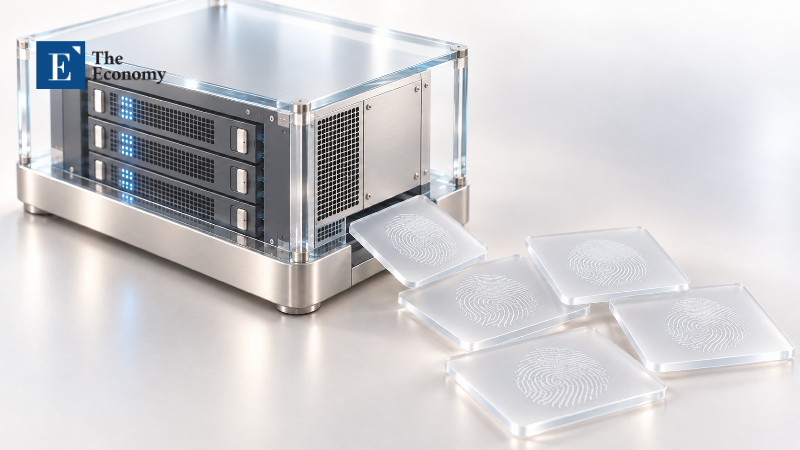
As losses from confidential information leaks and responsibility for managing information grow, technology companies are increasingly likely to expand their employee monitoring budgets. Companies whose competitiveness depends heavily on research and development (R&D) results have stronger incentives to detect insiders’ access to and removal of information early. Before this incident, OpenAI had strengthened employee vetting and restricted the sharing of core technical information to designated personnel on each project. Employees involved in developing new models were required to verify that anyone they discussed related information with in shared office spaces was also authorized to access it. The company also reportedly introduced fingerprint authentication in some offices and expanded its security staff. With eavesdropping allegations emerging at a company that had already tightened internal controls, investment in checking employees’ actual behavior and compliance with security rules is expected to gain further momentum.
A survey of global companies also shows increased spending to address insider risk. According to the Ponemon Institute’s “2026 Cost of Insider Risks Report,” sponsored by security company DTEX, insider risk management’s share of surveyed companies’ IT security budgets rose from 8.2% in 2023 to about 19% in 2025. The findings were based on a survey of 354 organizations in North America, Europe, the Middle East, Africa, and Asia-Pacific that had experienced significant insider-related incidents. These organizations’ annual costs related to insider incidents averaged USD 19.5 million (approximately USD 20.0 million), including incidents caused by employee mistakes, deliberate leaks, and stolen account credentials. Of the responding organizations, 64% increased related budgets in 2025, and 70% expected further increases in 2026. Investigation and recovery costs, along with business disruption resulting from internal information leaks, are supporting greater investment in prevention.
Stronger Justification for Internal Monitoring
As investment expands, companies are also likely to collect and analyze more records of employee activity. Security systems already include functions that identify anomalies by combining document usage histories with the times and locations of access badge use. Even employees authorized to access materials may be flagged for review if they look up information unrelated to their usual work or repeatedly enter areas outside their assigned work zones. Security personnel who verify the actual business purpose of behavior flagged by these systems will also play an increasingly important role. Distinguishing legitimate access to materials during collaboration from attempts to collect confidential information requires examining both employees’ duties and the circumstances of access. Expanding monitoring is therefore expected to increase recurring operating costs for analysis staff and record management.
The competitive advantage that could be lost through technology leaks is a key consideration when companies decide whether to bear these operating costs. In a report published last July, the U.S.-based RAND Corporation warned that core AI development know-how could be conveyed through even a brief conversation or an exposed screen, potentially undermining a technological edge. If the results of lengthy research are used to reduce a competitor’s trial and error, the affected company’s losses include the time advantage it had secured and opportunities to establish an early market lead. Insider risk experts argue that addressing such risks requires continued management even after access has been granted. In an article for the UK’s Royal United Services Institute (RUSI), Paul Martin and Sarah Mercer described continuous monitoring as a personnel security measure applied after authorization. From this perspective, the eavesdropping case supports executives’ concerns that monitoring gaps remain even after employee vetting and access permissions are established. As preserving technological competitiveness adds to the justification for expanded monitoring—long criticized for fostering distrust of employees and invading privacy—companies’ arguments for committing additional personnel and funding are expected to gain greater traction.
Siobhán Delaney is a Dublin-based writer for The Economy, focusing on culture, education, and international affairs. With a background in media and communication from University College Dublin, she contributes to cross-regional coverage and translation-based commentary. Her work emphasizes clarity and balance, especially in contexts shaped by cultural difference and policy translation.
Similar Post