Nations Pursue Independent Energy Strategies Amid Diplomatic Fatigue, Confronting Trump With Geopolitical Realities

Siobhán Delaney is a Dublin-based writer for The Economy, focusing on culture, education, and international affairs. With a background in media and communication from University College Dublin, she contributes to cross-regional coverage and translation-based commentary. Her work emphasizes clarity and balance, especially in contexts shaped by cultural difference and policy translation.
Authored On
Modified
Disruptions to energy supply chains triggered by the Strait of Hormuz crisis
Global energy order shifts from efficiency to security
Countries accelerate moves away from U.S. dependence and Middle East reliance
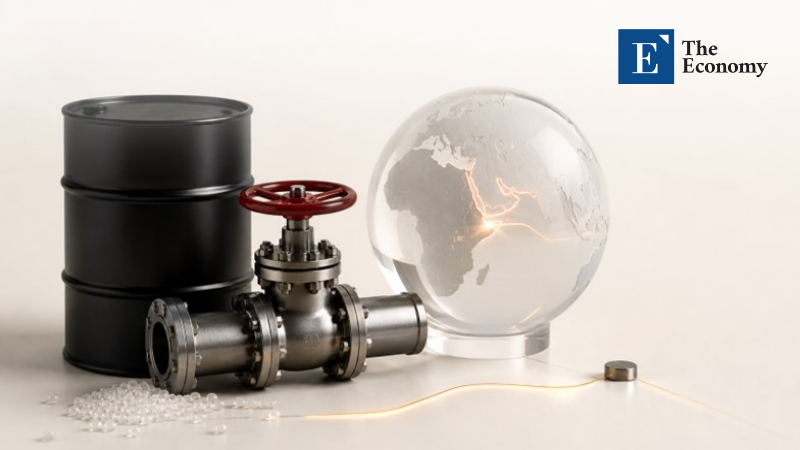
The global energy supply chain is being reshaped along increasingly independent trajectories beyond the control of the United States. As expectations for a rapid normalization of supply following the end of the Iran war have faded, major economies are placing greater emphasis on strengthening their own energy security capabilities. With confidence in the stabilization of the Middle East order weakening, U.S. negotiating power and influence are facing a new test.
Lengthening Supply Recovery Timeline Fuels Energy Market Anxiety
On June 8, Bloomberg, citing a confidential report by the British government, reported that “the United Kingdom believes the recovery of energy supplies affected by Iran is progressing more slowly than previously anticipated.” The report added that “this assessment warns that pressure on energy prices will persist for longer and that the outlook for the global economy is also deteriorating.” Britain had initially projected that supply shortages across global energy markets would last approximately six months after the war’s end, expecting oil supplies from the Persian Gulf to recover rapidly. The latest report, however, forecasts that it could take up to 14 months for supply disruptions to be fully resolved. The reason is that the Middle East peace narrative repeatedly promoted by President Donald Trump has rapidly lost credibility.
The report, prepared by the UK Department for Energy Security and Net Zero, represents the British government’s assessment of the economic impact of the Iran war. Under its best-case scenario, the United States and Iran reach an agreement within this year. Even then, delayed oil supply recovery is expected to keep international crude prices in the range of $100 to $150 per barrel through year-end and around $100 per barrel through 2028. The worst-case scenario envisions a resumption of hostilities that inflicts additional damage on regional infrastructure and delays energy supply recovery for years. In that case, international oil prices could surge to as high as $210 per barrel and remain around $150 per barrel through 2028.
The Iran war has simultaneously exposed vulnerabilities in the liquefied natural gas (LNG) market. Its impact on LNG has been even more complex than on crude oil markets. While oil supply disruptions can be partially mitigated through strategic petroleum reserve releases and production increases, LNG depends on an interconnected industrial network comprising liquefaction facilities, export terminals, dedicated carriers, and regasification infrastructure. A disruption at any single point in the chain can paralyze the entire logistics system. Qatar, in particular, accounts for roughly 20% of global LNG supply, with most shipments passing through the Strait of Hormuz. This explains growing concerns that a prolonged Iran conflict could expose LNG markets to even greater uncertainty than oil markets.
A more serious issue is that the LNG market already lacks sufficient spare capacity. Since the outbreak of the Ukraine war in 2022, Europe has steadily increased imports of LNG from the United States and Qatar to reduce dependence on Russian gas. If Asian countries also intensify competition for LNG procurement in response to Middle East risks, the spot market could face sharp upward price pressure. Indeed, global gas markets have seen LNG freight rates and insurance costs rise since the conflict began, while some shipping operators have adjusted routes and operational strategies to reflect the risks associated with transiting the Strait of Hormuz. A classic risk-premium environment is taking shape, in which fears of supply disruptions are driving prices higher even before actual shortages materialize.
“We Can No Longer Rely Solely on a U.S.-Led Energy Order” — Countries Diversify Energy Sources and Supply Chains
These developments are reshaping national energy policy priorities. In the short term, many countries are scrambling to secure energy supplies from every available source. Thailand, which imports most of its natural gas from Qatar, has rolled out a series of measures to stabilize power supply. The Electricity Generating Authority of Thailand (EGAT) is pursuing plans to increase utilization rates at the Mae Moh coal-fired power plant in Lampang Province, while state-owned energy giant PTT Group has been instructed to expand domestic natural gas production and secure additional LNG supplies. The Thai government is also reviewing contracts with existing suppliers, including the United States, Australia, and Malaysia, to ensure adequate LNG imports.
Taiwan is taking a similar approach. Taiwan’s Ministry of Economic Affairs and state-owned utility Taipower have decided to restart several generating units at the previously shuttered Mailiao coal-fired power plant to prepare for potential LNG supply disruptions from the Middle East. These facilities had been slated for phased retirement under carbon reduction and energy transition policies, but surging energy prices and mounting supply uncertainty have elevated power system stability to the top of the policy agenda. The Taiwanese government is also strengthening oversight of LNG stockpiles. The Ministry of Economic Affairs has activated an emergency monitoring system that reviews inventories at major power plants and LNG import terminals on a daily basis, while state-owned CPC Corporation has been instructed to focus on securing additional LNG cargoes and closely monitor compliance with long-term supply contracts.
The European Union is likewise intensifying efforts to strengthen energy security. The European Commission, working alongside member states, has maintained natural gas storage targets while increasing scrutiny of national stockpile levels. It has also reactivated a joint response mechanism that prioritizes gas allocation among member countries during emergencies. The bloc intends to apply the same crisis-response framework developed after the Ukraine war to energy risks stemming from the Middle East. Individual countries are moving swiftly as well. Germany is reassessing LNG terminal operating plans through state-backed energy companies and considering additional measures to accelerate gas storage replenishment. Italy is pursuing expanded gas imports from non-Middle Eastern suppliers such as Algeria and Azerbaijan, while France is adjusting maintenance schedules for nuclear power plants to preserve electricity supply stability.
South Korea and Japan, both heavily dependent on energy imports, are also strengthening their responses to Middle East risks. The South Korean government has conducted a comprehensive review of crude oil and natural gas stockpiles as well as import sources. The Ministry of Trade, Industry and Energy has held a series of meetings with refiners, Korea Gas Corporation, and power producers, placing greater emphasis on expanding LNG imports from Australia and supporting overseas resource development projects. In addition, Korea National Oil Corporation and Korea Gas Corporation have activated emergency response systems and are prepared to implement alternative procurement measures and secure additional supplies if necessary. Japan has likewise reviewed its strategic petroleum reserve plans and established a system for daily monitoring of LNG inventories held by major utilities. The Japanese government is particularly re-evaluating nuclear power as a key pillar of stable electricity generation and accelerating reactor restart procedures.
Trump-Style Unilateralism Faces Another Test
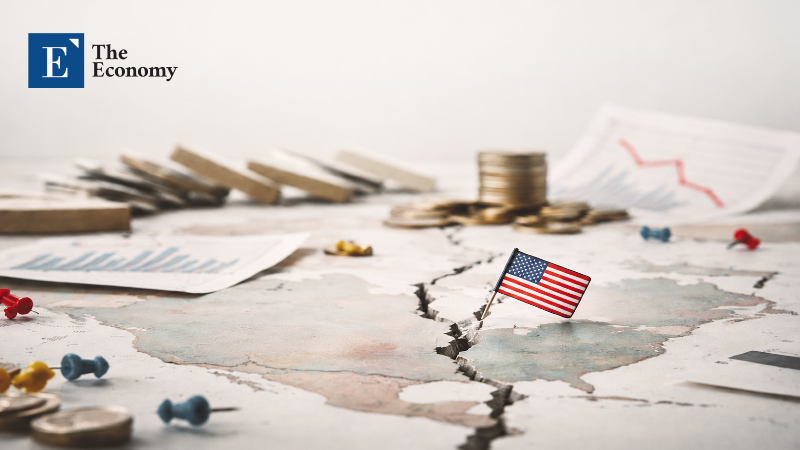
These developments are creating new challenges for U.S. Middle East strategy. The reason countries are accelerating stockpile expansion, supply-chain restructuring, and alternative sourcing efforts is straightforward: they place limited confidence in President Trump’s negotiating leverage. A significant gap has emerged between the Trump administration’s vision of Middle East stabilization and the realities unfolding on the ground.
This shift is translating into growing diplomatic pressure for the Trump administration. The United States must manage military tensions with Iran while simultaneously maintaining stability in international energy markets. Since returning to office, Trump has rebranded America’s energy policy vision from the defensive concept of “Energy Independence” to the more assertive slogan of “Energy Dominance.” Yet with disputes surrounding tariff policies already heightening concerns among allies, a prolonged Middle East crisis would inevitably limit the diplomatic leverage available to Washington.
The situation echoes diplomatic realities Trump encountered during his first administration. Tariff pressure, disputes over defense cost-sharing, and public pressure on allies were employed as tools to strengthen negotiating leverage, but they also encouraged strategic distancing. While trade and security were the primary issues then, energy security has now emerged as the new proving ground. As crude oil and LNG prices climb, allies may increasingly prioritize independent responses over collective action if the perception spreads that U.S. policy is driven primarily by domestic interests.
In international affairs, influence is sustained by more than military and economic power alone. During crises, allies must also have both the incentive and the justification to participate in collective action. When allies trust U.S. judgment, they are more willing to share military, diplomatic, and economic burdens. Conversely, if American policy is viewed as unpredictable and narrowly focused on national interests, countries will prioritize building their own defensive frameworks. Indeed, when President Trump called for international cooperation to secure the Strait of Hormuz in March, major powers including Germany, France, and Italy declined direct military involvement. While acknowledging the importance of stable energy supplies, they made clear that they would not participate in a military solution led by Washington. The growing trend of every nation fending for itself in today’s energy markets serves as a clear indicator of eroding confidence in the United States.
Siobhán Delaney is a Dublin-based writer for The Economy, focusing on culture, education, and international affairs. With a background in media and communication from University College Dublin, she contributes to cross-regional coverage and translation-based commentary. Her work emphasizes clarity and balance, especially in contexts shaped by cultural difference and policy translation.
Similar Post