"Seeking Differentiation Through a Triple Mechanism" Eli Lilly’s Retatrutide Again Proves Efficacy in Trials, Raising Question of Whether It Can Overcome Side-Effect Limits and Reshape the Market

Aoife Brennan is a contributing writer for The Economy, with a focus on education, youth, and societal change. Based in Limerick, she holds a degree in political communication from Queen’s University Belfast. Aoife’s work draws connections between cultural narratives and public discourse in Europe and Asia.
Authored On
Modified
Eli Lilly consistently confirms therapeutic efficacy in clinical trials of retatrutide
Triple-action GLP-1, GIP and glucagon mechanism maximizes weight-loss effect
Side effects including gastrointestinal dysfunction remain clear, requiring further study and improvement in additional trials
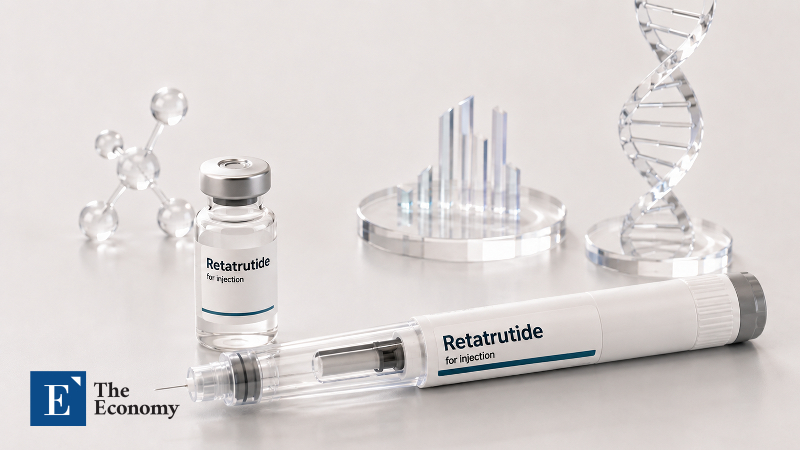
A shift is emerging in the obesity and diabetes drug market. Retatrutide, Eli Lilly’s next-generation triple-action therapy, has once again demonstrated meaningful efficacy in clinical trials. Experts increasingly expect retatrutide to emerge as a pivotal variable capable of reshaping the market, given that it has repeatedly delivered strong results in clinical studies over the past several years, provided issues such as side effects are improved.
Clinical Results for Retatrutide
According to major foreign media outlets including The Guardian on June 8 local time, Lilly in March disclosed results from a Phase 3 clinical trial of retatrutide conducted over 40 weeks in 930 adults with type 2 diabetes. Researchers randomly assigned participants to 4mg, 9mg and 12mg dosing groups and a placebo group. Participants receiving retatrutide lost an average of 11.5% and as much as 16.8% of their body weight after 40 weeks, far exceeding the placebo group’s 2.6% reduction. Glycated hemoglobin, or HbA1c, a key indicator of blood glucose control, also showed clear improvement. The average decline in HbA1c among treatment groups was 1.7 to 1.9 percentage points, more than double the placebo group’s 0.8 percentage-point decrease.
Retatrutide’s efficacy has been repeatedly demonstrated through clinical trials in recent years. In a 2023 clinical study conducted by a research team led by Dr. Arun Sanyal of Virginia Commonwealth University’s Stravitz-Sanyal Institute for Liver Disease and Metabolic Health, involving 98 adults with obesity, the drug’s potential use in treating fatty liver disease was confirmed. The team randomly administered 8mg or 12mg of retatrutide to participants for eight months and tracked changes in liver fat levels. The low-dose group recorded an average 81.7% reduction in liver fat, while the high-dose group saw an 86% decline. The high-dose group also lost 28% of body weight after eight months, while the low-dose group lost 24%.
A Phase 2 substudy released last year also confirmed the drug’s strength in improving body composition. The study, part of a multicenter, randomized, double-blind trial conducted at 42 institutions in the United States, quantitatively analyzed changes in total fat mass using dual-energy X-ray absorptiometry, or DXA, to track shifts in the ratio between fat and muscle. The placebo group recorded only a 4.5% reduction in total fat mass, while retatrutide recipients saw fat mass fall by 15.2% in the 4mg group, 26.1% in the 8mg group and 23.2% in the 12mg group. The high proportion of fat reduction within overall weight loss indicates that the risk of muscle loss accompanying weight reduction was minimized.
Triple-Action Structure With Added Glucagon
Retatrutide is a triple-action therapy that, like Lilly’s Mounjaro and Zepbound drugs, targets glucagon-like peptide-1, or GLP-1, and glucose-dependent insulinotropic polypeptide, or GIP, while also acting on the glucagon receptor. GLP-1 is an incretin hormone secreted by the intestine after food intake. When its receptor is activated by a drug, satiety signals in the brain are strengthened and food remains in the stomach longer. Food intake declines and hunger is reduced. It also contributes to blood glucose control by stimulating insulin secretion only when blood sugar is elevated. This is the same core mechanism of existing obesity treatments.
GIP is another incretin hormone secreted after meals. When the GIP receptor is activated, pancreatic insulin secretion capacity is enhanced, while fat metabolism and insulin sensitivity also improve. According to data released by Lilly, retatrutide was designed to show the strongest activity at the GIP receptor. The company explains that this structure improves blood glucose control and partially mitigates GLP-1-related gastrointestinal side effects.
Glucagon is generally known as a hormone that raises blood sugar, but it plays a different role in retatrutide’s design. Activation of the glucagon receptor increases energy expenditure in the liver and adipose tissue, promoting fat breakdown and enabling the body to burn more calories. Existing GLP-1 therapies function as drugs that make patients eat less, while retatrutide, by also targeting the glucagon receptor, adds a function that enables the body to burn more fat. Appetite suppression, blood glucose control and increased energy expenditure operate simultaneously, amplifying the weight-loss effect.
Remaining Scope for Side-Effect Improvement
Retatrutide is a triple-action therapy that, like Lilly’s Mounjaro and Zepbound drugs, targets glucagon-like peptide-1, or GLP-1, and glucose-dependent insulinotropic polypeptide, or GIP, while also acting on the glucagon receptor. GLP-1 is an incretin hormone secreted by the intestine after food intake. When its receptor is activated by a drug, satiety signals in the brain are strengthened and food remains in the stomach longer. Food intake declines and hunger is reduced. It also contributes to blood glucose control by stimulating insulin secretion only when blood sugar is elevated. This is the same core mechanism of existing obesity treatments.
GIP is another incretin hormone secreted after meals. When the GIP receptor is activated, pancreatic insulin secretion capacity is enhanced, while fat metabolism and insulin sensitivity also improve. According to data released by Lilly, retatrutide was designed to show the strongest activity at the GIP receptor. The company explains that this structure improves blood glucose control and partially mitigates GLP-1-related gastrointestinal side effects.
Glucagon is generally known as a hormone that raises blood sugar, but it plays a different role in retatrutide’s design. Activation of the glucagon receptor increases energy expenditure in the liver and adipose tissue, promoting fat bExperts forecast that retatrutide could substantially alter the obesity and diabetes treatment market. If regulatory approval is granted and side-effect-related issues are improved, the drug could rapidly consolidate its market position. The most consistently observed adverse events in clinical trials to date involve gastrointestinal symptoms. In a Phase 2 obesity trial of retatrutide published in the New England Journal of Medicine in 2023, nausea, diarrhea, vomiting and constipation were cited as the most common adverse events, with higher doses associated with more severe problems. In the TRIUMPH-4 Phase 3 trial disclosed by Lilly in March last year, the share of participants experiencing nausea over 68 weeks of treatment was 38.1% in the 9mg group and 43.2% in the 12mg group. Diarrhea was reported in 34.7% and 33.1%, constipation in 21.8% and 25.0%, and vomiting in 20.4% and 20.9%, respectively. Most were similar to adverse effects observed in existing GLP-1 therapies.
Cardiac-related signals were also observed. In the 2023 New England Journal of Medicine trial, the retatrutide treatment groups showed not only gastrointestinal abnormalities but also a dose-dependent increase in heart rate. This issue peaked at week 24 and then declined at weeks 36 and 48. The researchers noted that glucagon and GLP-1 can produce positive chronotropic and positive inotropic effects on the heart, but analyzed that the magnitude of the increase was similar to levels reported for existing GLP-1 receptor agonists. No increase in heart attacks or serious cardiovascular events was reported.
Paresthesia is also cited as one of retatrutide’s representative adverse effects. In the TRIUMPH-4 Phase 3 results released last December, paresthesia was confirmed in 8.8% of the 9mg group and 20.9% of the 12mg group. The placebo group recorded 0.7%. Paresthesia refers to symptoms such as tingling or burning sensations in the skin and heightened sensitivity to touch. Lilly said most cases involving paresthesia were mild and rarely led to treatment discontinuation. These adverse effects are expected to be closely tracked through additional Phase 3 clinical trials scheduled for this year.reakdown and enabling the body to burn more calories. Existing GLP-1 therapies function as drugs that make patients eat less, while retatrutide, by also targeting the glucagon receptor, adds a function that enables the body to burn more fat. Appetite suppression, blood glucose control and increased energy expenditure operate simultaneously, amplifying the weight-loss effect.
Aoife Brennan is a contributing writer for The Economy, with a focus on education, youth, and societal change. Based in Limerick, she holds a degree in political communication from Queen’s University Belfast. Aoife’s work draws connections between cultural narratives and public discourse in Europe and Asia.
Similar Post