"From the Biosecure Act to Investment Restrictions" U.S. Unleashes Sweeping Curbs on Chinese Biotech, Prioritizing Security Risk Mitigation and Strategic Dominance

As one of the youngest members of the team, Tyler Hansbrough is a rising star in financial journalism. His fresh perspective and analytical approach bring a modern edge to business reporting. Whether he’s covering stock market trends or dissecting corporate earnings, his sharp insights resonate with the new generation of investors.
Authored On
Modified
U.S. rolls out a wave of regulatory measures targeting China's biotech sector
Security concerns mount over potential transfers of American genetic and clinical data to China
China's biotech industry, fueled by state backing, continues to expand its global influence
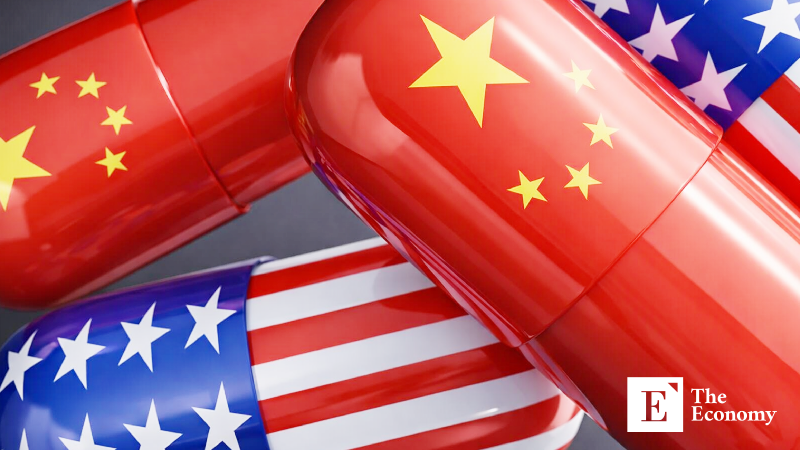
The strategic rivalry between the United States and China is increasingly extending into the biotechnology sector. Washington has intensified restrictions on Chinese biotech firms through measures such as the Biosecure Act, sharply escalating tensions between the two countries. The U.S. crackdown appears to reflect growing concerns over the potential leakage of genetic and clinical data, as well as anxiety over the rapid expansion of China's biotechnology industry.
U.S. Regulatory Offensive Against Chinese Biotech
On Aug. 8, the U.S. Department of Defense released, through its website and the Federal Register, a list of 188 "Chinese Military Companies" operating directly or indirectly in the United States pursuant to the National Defense Authorization Act (NDAA). The so-called "1260H List" included not only major Chinese corporations such as Alibaba, Baidu, and BYD, but also biotechnology firms including genomics company BGI and contract development and manufacturing organization (CDMO) WuXi AppTec. The rationale for including these biotech companies centered on their potential direct or indirect ties to Chinese government entities, including the People's Liberation Army (PLA), the Ministry of Industry and Information Technology (MIIT), the State Administration for Science, Technology and Industry for National Defense (SASTIND), and the State-owned Assets Supervision and Administration Commission (SASAC). U.S. authorities determined that BGI and WuXi AppTec were either linked to or influenced by Chinese state institutions and contributed to China's military-civil fusion strategy supporting its defense-industrial base.
For most companies, inclusion on the 1260H List does not immediately trigger operational restrictions. Biotech firms, however, represent a notable exception. Placement on the list significantly increases the likelihood of becoming subject to the Biosecure Act, a subordinate measure under the NDAA. Passed by Congress in December last year, the Biosecure Act primarily prohibits U.S. government agencies from procuring equipment or services from designated "biotechnology companies of concern" or entering into contracts with them. The law also permits regulators to extend restrictions to subsidiaries, parent companies, affiliates, and successor entities. The 1260H List serves as one of the principal benchmarks for determining whether a company qualifies as a biotechnology company of concern.
The United States has continued to expand regulatory pressure on China's biotechnology sector. One notable example is the Biotechnology Investment National Security Act (BINSA), which passed the House of Representatives on Aug. 2. BINSA, a bipartisan bill jointly introduced by Republican and Democratic lawmakers, would designate U.S. investments in Chinese biotech companies as subject to review under the Comprehensive Outbound Investment National Security Act (COINS). The proposed restrictions cover a broad range of activities, including pharmaceutical development, biopharmaceutical manufacturing, clinical research and development (R&D), licensing agreements, joint ventures and equity investments, as well as technology and intellectual property (IP). Representative John Moolenaar, who introduced the legislation, stated, "American companies like Pfizer and Bristol Myers Squibb are currently doing business with dangerous Chinese biotech companies that threaten the future of American pharmaceutical manufacturing. We cannot allow American investment, expertise, and technology to flow overseas in ways that enable Chinese companies to gain greater control over our economy and weaken our national research infrastructure."
National Security Threats Emerging From Biotechnology
Underlying Washington's hardline stance are allegations involving genetic data transfers. As Chinese biotechnology firms rapidly expand their global footprint, concerns have intensified within the United States that Americans' genetic information and clinical data could ultimately be accessible to the Chinese government. BGI, in particular, has faced scrutiny over claims that its NIFTY prenatal genetic testing service collected genetic data from millions of pregnant women worldwide. Reuters previously reported that genetic information gathered through the testing program had been used in collaborative research involving Chinese military institutions. BGI has denied the allegations.
WuXi AppTec has likewise become a primary target of scrutiny in Washington. U.S. lawmakers have argued that WuXi AppTec and its affiliates provide extensive support for clinical trials, drug development, and manufacturing processes for global pharmaceutical companies, giving them access to substantial volumes of research materials and production data. Critics contend that sensitive data and intellectual property belonging to American biotech firms are consequently exposed to Chinese influence. The House Select Committee on the Strategic Competition Between the United States and the Chinese Communist Party has explicitly asserted that WuXi AppTec grew with support from the Chinese government and military and could be compelled under China's National Intelligence Law to cooperate with state intelligence-gathering activities.
American policymakers increasingly view such risks as matters of national security rather than isolated corporate concerns. Unlike conventional personal information such as names or addresses, genetic data contains highly sensitive information encompassing disease history, inherited vulnerabilities, family relationships, and ethnic characteristics. Large-scale genomic databases can be used to analyze the health profiles of specific populations while simultaneously strengthening capabilities in drug development, precision medicine, and biotechnology research, all of which carry significant strategic and economic implications.

China's Expanding Influence in the Global Biotech Market
Washington's aggressive regulatory posture is also aimed at constraining China's growing influence in biotechnology. China's biotech industry has achieved remarkable quantitative and qualitative growth in recent years. Since 2019, China has surpassed the United States as the world's largest filer of biotechnology patents and now ranks second in high-quality patent applications. The shift underscores China's transformation from a producer of generic drugs into a major center of advanced biotechnology research. Chinese companies have demonstrated particular strength in cutting-edge fields such as antibody-drug conjugates (ADCs) and small interfering RNA (siRNA) technologies. According to global consulting firm McKinsey, Chinese companies account for more than 50% of all new ADC candidates currently in early-stage clinical development worldwide.
China also maintained its No. 1 ranking for a third consecutive year in the recently published Nature Index. The Nature Index measures national and institutional contributions to high-quality research published in leading scientific journals and presented at major academic conferences. China's contribution score reached 52,735 this year, nearly double that of the United States at 26,006. China's annual growth rate in contributions stood at 22.4%, far surpassing the U.S. rate of 4.2%. Institutional rankings further highlight China's dominance. The Chinese Academy of Sciences ranked first, followed by Zhejiang University in second place, while Harvard University slipped to third. Chinese research institutions and universities occupied every position from fourth through tenth. China claimed nine of the top ten spots.
Government support has been a key driver of this expansion. Beijing has consistently advanced biotechnology through initiatives such as "Made in China 2025" launched in 2015 and "Healthy China 2030" introduced in 2016. Made in China 2025 is an industrial strategy designed to channel capital into advanced manufacturing and technology sectors, including biotechnology. Healthy China 2030 integrates healthcare, medicine, and biotechnology innovation into a broader national economic strategy, stimulating R&D activity and investment across the sector. China has also pursued institutional reforms through accelerated review systems, biotechnology cluster incentives, and initial public offering (IPO) reforms aimed at strengthening the industry's long-term growth foundation.
Clinical trial approval procedures have likewise undergone substantial reform. Amendments to China's Drug Administration Law introduced an implied approval system for Investigational New Drug (IND) applications, under which clinical trials automatically proceed if regulators do not raise objections within a specified review period. The reform significantly reduced delays that previously extended for months. In addition, the National Medical Products Administration (NMPA) shortened the IND review period for Class I innovative drugs—new chemical entities or biologics never previously approved anywhere in the world—from 60 days to 30 days, further accelerating the entry of innovative therapies into clinical development.
As one of the youngest members of the team, Tyler Hansbrough is a rising star in financial journalism. His fresh perspective and analytical approach bring a modern edge to business reporting. Whether he’s covering stock market trends or dissecting corporate earnings, his sharp insights resonate with the new generation of investors.
- Previous "MRO Package vs. Production Priority and Investment Commitments" South Korea and Germany Clash Over Canada's CPSP Contract, Testing Germany's Conventional Submarine Dominance and Industrial Capacity
- Next “Failed Invasion of Iran” U.S.-Iran Ceasefire Deal Reached, Yet Final Negotiations Face Formidable Hurdles
Similar Post