"Grid Instability Intensifies" Heatwave Drives Up U.S. Data Center Costs, Shifting the AI Infrastructure Bottleneck From Semiconductors to Power

As one of the youngest members of the team, Tyler Hansbrough is a rising star in financial journalism. His fresh perspective and analytical approach bring a modern edge to business reporting. Whether he’s covering stock market trends or dissecting corporate earnings, his sharp insights resonate with the new generation of investors.
Authored On
Modified
U.S. heat dome amplifies grid strain, driving higher data center operating costs
Power grid operations once dictated by weather now increasingly shaped by AI demand
"GPUs alone cannot expand computing capacity" as investment shifts toward easing power bottlenecks
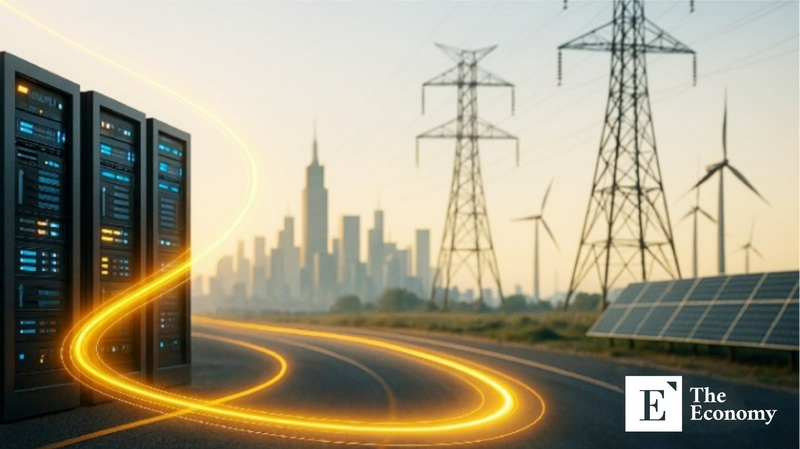
The heatwave sweeping across the United States is emerging as a critical variable for the artificial intelligence (AI) data center market. With power grids already under strain from surging AI-driven electricity demand, soaring electricity consumption and declining operational efficiency caused by extreme heat are further compounding uncertainty. Market observers increasingly believe that this fragile power infrastructure will evolve into a bottleneck for the global AI industry comparable to semiconductors.
Data Centers Face Mounting Pressure Amid Heatwave
According to CNBC on June 30 (local time), Patrick McBride, President of International Construction at global insurer Zurich Insurance Group, said, "Over the past three years, severe weather has been the single largest source of losses in our U.S. data center builders' risk insurance portfolio," adding, "It now accounts for one-third of all losses." He further explained, "Many data centers are relocating to suburban or rural areas where land prices are lower, but these locations were largely undeveloped in the past and therefore had limited historical records of extreme weather events," adding that "as a result, exposure to extreme weather risks has increased." A report released by climate risk analytics firm First Street found that 54% of global data center capacity is located in regions exposed to persistent heat or drought stress.
These risks have become even more apparent following the recent heatwave across the United States. Barron's reported on June 30 that a heat dome had settled over regions home to more than 200 million Americans, representing over 60% of the U.S. population. Heatwaves caused by heat domes not only drive electricity demand sharply higher but also significantly reduce the operating efficiency of natural gas turbines. As a result, PJM Interconnection, the backbone of the U.S. power grid, has approached operational limits and asked large industrial customers, including data centers, to reduce grid consumption and rely more heavily on backup generation.
As grid instability intensifies, data center operating costs inevitably rise. Electricity typically accounts for 30% to 60% of total operating expenses at data centers. Assuming the Power Usage Effectiveness (PUE)—where values closer to 1.0 indicate higher efficiency—rises from 1.2 to 1.4 due to extreme heat, electricity costs per unit of computing workload would increase by roughly 15% to 20%. Operators must also throttle utilization rates to prevent overheating in high-density AI servers. The result is an increasingly inefficient environment where costs rise even as utilization declines. The World Economic Forum (WEF) estimates that extreme weather could impose annual costs of as much as $8.1 billion on the data center industry by 2035.
Power Grid Operations Undergo Structural Shift
The power instability created by data centers is no longer merely an industrial risk but is reshaping the principles of grid management itself. PJM's recent overhaul of its emergency response framework is a representative example. Historically, the greatest challenge facing the U.S. power grid came from weather events such as heatwaves and cold snaps. Outside seasonal peaks driven by air conditioning in summer and heating in winter, electricity demand generally remained manageable throughout the year. AI has fundamentally changed that equation. AI data centers consume enormous amounts of electricity continuously regardless of season or weather. Rather than simply creating temporary spikes in demand, they permanently increase the grid's baseload requirements.
Northern Virginia, one of PJM's service territories, hosts the world's largest concentration of data centers. Electricity demand in the region is already placing substantial pressure on day-to-day grid operations. To address this shift, PJM has introduced a new proactive framework known as the "Capacity Advisory." The core objective is to assess generating asset availability three to five days before potential electricity shortages emerge and, if necessary, adjust maintenance schedules for power plants. PJM also plans to share information earlier with neighboring grid operators to coordinate electricity supply across the broader regional network. If necessary, it is also considering working with the U.S. Department of Energy (DOE) to deploy certain reserve generators and power facilities that are normally restricted during standard operations.
The AI-driven focus on power security is expected to intensify further as electricity demand from data centers continues to rise steadily. PJM projects that summer peak electricity demand will increase by an average of 3.6% annually over the next decade because of data center expansion and could exceed 240,000 megawatts (MW) within 15 years. Given that PJM's current generating capacity stands at roughly 182,000 MW, demand is on track to outpace supply. Meanwhile, the supporting power infrastructure remains critically insufficient. According to the U.S. Department of Energy, more than 70% of U.S. transmission lines, transformers, and other grid assets have been in service for over 25 years, and expanding supply quickly is difficult due to the nature of the infrastructure. PJM has consequently warned that power generation shortages could begin emerging as early as the 2026-2027 delivery year.
AI Infrastructure Competition Enters a New Phase
The power constraints facing data centers extend far beyond the United States and are becoming a global challenge. In a recent report, the International Energy Agency (IEA) projected that worldwide electricity consumption by data centers will surge from approximately 415 terawatt-hours (TWh) in 2024 to 945 TWh by 2030—roughly equivalent to Japan's current annual electricity consumption. Over the same period, electricity demand from data centers is expected to grow by approximately 15% annually, more than four times faster than demand growth across other sectors. Electricity consumption by AI-optimized data centers alone is projected to increase more than fourfold by 2030.
Against this backdrop, some market participants argue that the AI investment frenzy that previously centered on semiconductors is beginning to migrate toward the power sector. A typical AI data center houses tens of thousands of graphics processing units (GPUs), while a single rack equipped with the latest AI chips consumes as much electricity as 10 to 15 conventional data center racks. Even if companies secure sufficient GPU supply, they cannot expand actual AI computing capacity without enough data centers to install them or reliable electricity to power those facilities. Unlike semiconductors, where supply constraints can be eased through large-scale advance purchase agreements or expanded manufacturing capacity, power plants, transmission networks, substations, and electricity permitting systems cannot be built within short timeframes.
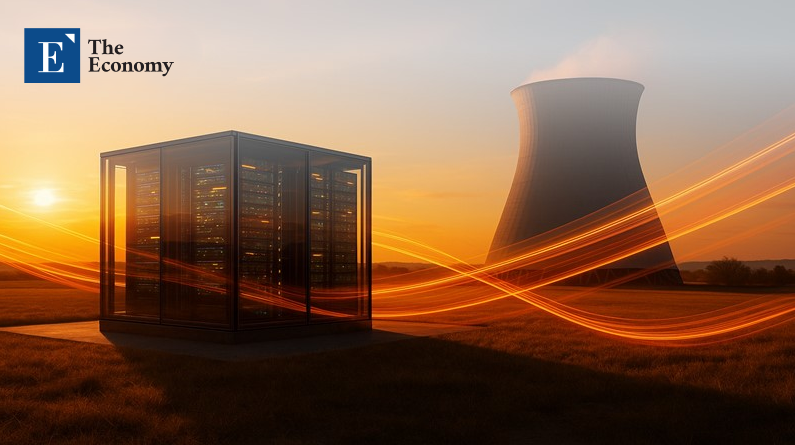
Major economies and leading technology companies have already entered a race to secure electricity dedicated to AI data centers. Microsoft, for example, signed a 20-year power purchase agreement (PPA) with U.S. utility Constellation Energy and is moving forward with the project to restart Unit 1 of the Three Mile Island nuclear power plant in Pennsylvania, which was shut down in 2019. The facility is expected to provide approximately 835 MW of electricity, which Microsoft intends to dedicate to its data center operations. Google has partnered with U.S. nuclear developer Kairos Power to bring its first commercial small modular reactor (SMR) online by 2030 and plans to secure a total of 500 MW of electricity by 2035. Amazon is working with Energy Northwest, a consortium of public utilities in Washington State, to deploy four SMRs developed by U.S. nuclear company X-energy while also evaluating the potential for SMR development in Virginia in partnership with Dominion Energy.
As one of the youngest members of the team, Tyler Hansbrough is a rising star in financial journalism. His fresh perspective and analytical approach bring a modern edge to business reporting. Whether he’s covering stock market trends or dissecting corporate earnings, his sharp insights resonate with the new generation of investors.
Similar Post