From Consumer Goods to Food Service and Beauty: Chinese Brands Push Into the US Market With Sharper Localization and Marketing Strategies

Aoife Brennan is a contributing writer for The Economy, with a focus on education, youth, and societal change. Based in Limerick, she holds a degree in political communication from Queen’s University Belfast. Aoife’s work draws connections between cultural narratives and public discourse in Europe and Asia.
Authored On
Modified
Pop Mart Sheds Its “Chinese Company” Image as US Sales Surge
Chinese Food-Service Brands Accelerate US Push With Localization Strategies
Beauty Brands Leverage Storytelling and Social Media Marketing
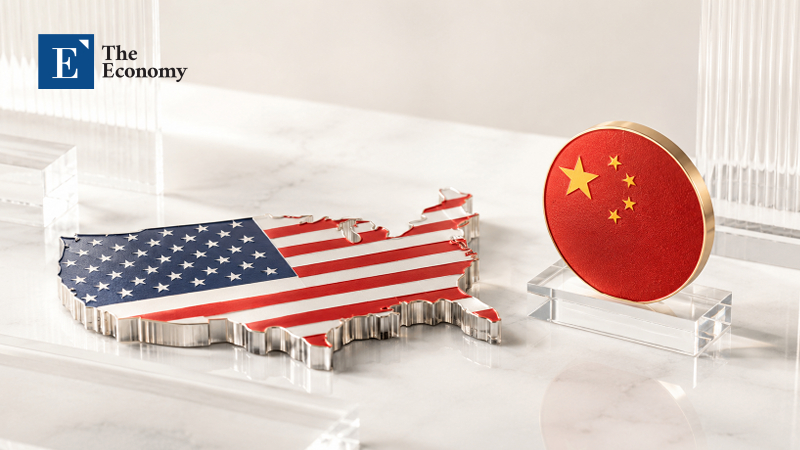
Chinese brands are stepping up their push into the US market. As oversupply and cutthroat competition in China’s domestic market intensify, companies are increasingly seeking new growth channels by knocking aggressively on the doors of Western markets. These firms are placing localization strategies tailored to US consumer preferences and cultural sensibilities at the forefront, while lowering barriers to consumer adoption through marketing that combines distinctive brand universes, storytelling, social media and e-commerce platforms.
Pop Mart’s US Growth Momentum
According to a report by Hong Kong’s South China Morning Post (SCMP) on Aug. 12, first-quarter US revenue at Pop Mart, China’s major art-toy company, jumped 55-60% from the previous quarter. Since opening its first permanent US store in 2023, the company has expanded its offline store count to 37 in just three years and has also installed dozens of vending-machine-style “Robo Shops.” Experts cite Pop Mart’s sophisticated “global branding strategy” as the backdrop to this rapid expansion.
In the US market, Pop Mart has positioned itself as a “global lifestyle and IP company” rather than a Chinese manufacturer. The move is aimed at minimizing political resistance toward Chinese brands amid prolonged US-China tensions. Pop Mart has also signed licensing deals with major Western IP franchises such as Disney and Harry Potter, while expanding its touchpoints with local culture by featuring its own characters, including Labubu and Skullpanda, at last year’s Macy’s Thanksgiving Day Parade in New York. Cathy Chao, a director at global credit-rating agency Fitch, said, “Pop Mart does not directly highlight the fact that it is a Chinese company,” adding that “what ultimately draws consumers is attractive IP and the products themselves.”
Chinese New-Style Tea Brands Race Ahead
The same trend is also pronounced in the US food-service market. Chinese companies are gaining particular prominence in the “new-style tea” segment, where Heytea, Mixue, Tea’Pulse and Luckin Coffee have entered the market. Heytea opened its first US store in New York’s Times Square in 2023 and has since rapidly expanded its footprint into New York, California and Texas. It now operates more than 40 stores in the US. Tea’Pulse is also expanding its store network around New York, while Mixue has continued opening outlets after launching its first US store near the TCL Chinese Theatre in Hollywood. Luckin Coffee, which operates more stores than Starbucks in China, is also increasing its presence across Manhattan.
Market-entry strategies vary by brand. Heytea is targeting prime commercial districts with refined store design and premium menu items such as fruit teas and cheese teas. Major beverages sold at its US stores are priced at around $4-8. Mixue, which competes on price, is focusing on college districts and younger consumers by selling lemonade for about $2 and fruit tea for around $5. Tea’Pulse is seeking differentiation with menus that emphasize the flavor of tea itself, including jasmine and osmanthus, alongside premium ingredients, while Luckin Coffee is presenting “digital efficiency” as its core competitive advantage. The company has applied the app-ordering and in-store pickup model it established in China to the US market, reducing order wait times and labor costs while concentrating small-format stores in areas with heavy foot traffic from urban office workers and students.
Table 1. Localization Strategies of Chinese Companies in the US Market
| Company | Localization Strategy |
|---|---|
| Pop Mart | Minimizes its Chinese corporate image and positions itself as a global IP and lifestyle company, leveraging Western IP and local cultural events |
| Heytea | Targets core commercial districts with refined stores and premium menu offerings |
| Mixue | Targets college districts and younger consumers with low-priced menus |
| Tea’Pulse | Differentiates itself through tea flavor and premium ingredients |
| Luckin Coffee | Improves operating efficiency through app-based ordering and pickup systems and small-format stores |
| Wallace | Adjusts ingredients and seasoning to US consumer preferences while maintaining a low-price strategy |
| Haidilao | Redesigns service through English-language instructions and menu adjustments |
Food-Service Brands Accelerate Localization
Fast-food chains are also mounting an aggressive push. Wallace, a major fast-food brand operating more than 20,000 stores in China, opened its first US store in Walnut, California, last year and plans to open 10 additional US outlets by the end of this year. The company has also modified its menu to suit local tastes. Sandwiches sold at Wallace’s US stores include pickles familiar to US consumers instead of lettuce, and the seasoning has been adjusted to a saltier profile. Its price competitiveness is also clear. At Wallace’s Walnut store, three chicken sandwiches are sold for $10. That is far below local competitors, where similar menu items cost around $6 each. Haidilao, China’s largest hotpot chain, is also accelerating its expansion again after entering the US in 2013 and going through trial and error. The company is redesigning its service by offering detailed English-language instructions on how to eat hotpot, lowering the spiciness of its broths and expanding beef menu options.
The reason Chinese companies are reinforcing localization strategies so rapidly lies in the higher entry barriers in the US market. Chinese brands began accelerating their US expansion in 2023 after the COVID-19 pandemic, but at the time, their prospects for gaining traction remained uncertain due to weak brand recognition and differences in local consumer tastes. US-China relations then deteriorated again around the 2024 presidential election, and President Donald Trump’s warnings of steep tariffs and sanctions against China further increased the political and cost risks Chinese companies had to bear. After the launch of Trump’s second administration last year, tariff burdens became a reality, prompting a surge in Chinese companies that halted US sales or diverted shipments to other markets.
Intensifying Cutthroat Competition in China’s Domestic Market
The difficulty is that Chinese food-service companies are in no position to hastily withdraw from the US market. China’s domestic market is pressuring companies through a severe oversupply structure. In mainland China, long-running weakness in the property sector and subdued consumer sentiment have slowed growth in dining-out demand. At the same time, the number of food-service operators continues to rise, leaving companies caught in a cutthroat price war in which they must keep lowering prices to survive. According to Bob Ching, founder of Chinese food-service investment firm Tomato Capital, China has roughly three times as many food and beverage outlets per capita as the US, and about half of newly opened restaurants shut down within a year. In the tea beverage market, where entry barriers are low, fierce price competition is unfolding through drinks sold for less than $1 per cup or online-order products offered for free.
Against this backdrop, the “way out” Chinese companies have found is localized service in overseas markets. As the above cases show, Chinese consumer-goods and food-service brands entering the US in recent years are not putting their identity as “Chinese companies” at the forefront. Instead of directly transplanting the success formulas of their Chinese headquarters, they are changing products, menus and store designs into forms familiar to US consumers and offering services similar to local brands. One market expert said, “As US-China tensions and discussions of economic decoupling continue, localization has become the key to lowering ‘Chinese brand risk,’ beyond merely matching consumer preferences,” adding that “the exact opposite situation is now unfolding from the past, when foreign companies entered the Chinese market and withdrew one after another after failing to localize.”
The Marketing Grammar of C-Beauty
Chinese brands are also actively using storytelling marketing alongside localization. Among C-beauty companies in particular, promotional strategies that emphasize the aesthetic values and brand universe a brand seeks to convey before product functions or price are spreading rapidly. Mao Geping, for example, has built a premium image by combining traditional Chinese aesthetics with modern makeup, while Florasis has strengthened its brand identity by reflecting Eastern aesthetics and traditional craftsmanship in product design and packaging. Flower Knows is also pursuing a strategy that encourages consumers to buy into the “brand experience” before the product itself, using ornate packaging reminiscent of fairy tales and fantasy novels.
These images have spread to overseas consumers through social media and e-commerce platforms. Chinese brands often expose products through content on short-form platforms such as TikTok, then link that exposure directly to purchases on Shopee, Lazada, TikTok Shop and similar platforms. TikTok has also introduced an e-commerce model that provides customs clearance, storage and delivery services to Chinese sellers, enabling Chinese companies to reach consumers directly without building their own overseas distribution networks. A structure has emerged in which social media “word of mouth” translates directly into higher sales. With logistics infrastructure already built by Chinese e-commerce platforms such as Shein and Temu added to the equation, the time required to move from market testing to sales expansion has also been sharply reduced.
Aoife Brennan is a contributing writer for The Economy, with a focus on education, youth, and societal change. Based in Limerick, she holds a degree in political communication from Queen’s University Belfast. Aoife’s work draws connections between cultural narratives and public discourse in Europe and Asia.
Similar Post