“Vicarious Satisfaction Can Trigger Eating Disorders”: YouTube Cracks Down on Mukbang, Prompting a Rethink of K-Food Promotion

Matthew Reuter is a senior economic correspondent at The Economy, where he covers global financial markets, emerging technologies, and cross-border trade dynamics. With over a decade of experience reporting from major financial hubs—including London, New York, and Hong Kong—Matthew has developed a reputation for breaking complex economic stories into sharp, accessible narratives. Before joining The Economy, he worked at a leading European financial daily, where his investigative reporting on post-crisis banking reforms earned him recognition from the European Press Association. A graduate of the London School of Economics, Matthew holds dual degrees in economics and international relations. He is particularly interested in how data science and AI are reshaping market analysis and policymaking, often blending quantitative insights into his articles. Outside journalism, Matthew frequently moderates panels at global finance summits and guest lectures on financial journalism at top universities.
Authored On
Modified
Binge eating and weight-loss depictions in mukbang videos raise concerns about imitation by vulnerable viewers
YouTube suspends monetization of popular channels, prioritizing viewer impact over creators’ intentions
K-food promotion built around mukbang faces scrutiny over addictive appeal and social harm
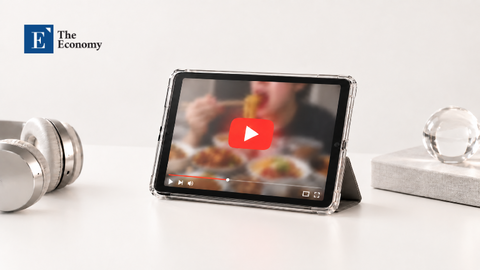
YouTube has suspended monetization on a succession of popular mukbang channels featuring binge eating and weight-loss journeys. The platform determined that videos shared by creators as accounts of daily life or recovery could still prompt vulnerable viewers to engage in risky behavior. The effects of content and services on users have also been central to restrictions on advertising in children’s videos and regulation of addictive features on social media. Critics say South Korea’s cultural and food industries, which use mukbang to promote K-food, must likewise examine its addictive appeal and social costs before pursuing its promotional benefits.
Monetization suspended over weight disclosures and binge-eating depictions
According to a notice posted to content creator Salppaejo’s YouTube community page on September 21, her channel is currently suspended from monetization. Salppaejo has documented her eating habits and fitness routines through mukbang vlogs and videos chronicling her efforts to prepare for a body-profile photoshoot. The channel has separate playlists for mukbang videos featuring various dishes and for videos about her photoshoot preparations. She said guidelines concerning binge eating and eating disorders had recently become stricter. Uncertain which videos might face further penalties, she has stopped uploading and is working with her agency to find a solution.
YouTuber Miso also posted a video on September 15 titled “Why I Had to Delete Four Years of YouTube Videos.” She said she received a notice of a guideline violation in March, followed by another notice and a temporary suspension of monetization later that month. Miso has shared videos documenting repeated cycles of binge eating and weight loss while openly discussing her weight of more than 100 kilograms. “The specific weight figures, diets and weight-loss methods shown in my older videos became an issue,” she said. “To me, they were a record of weight loss and recovery, but YouTube determined that they could encourage vulnerable viewers to imitate unsafe behavior.”
Neither creator’s content is limited to showing food being eaten; both cover broader aspects of daily life, including dieting and appearance management. To fans, their struggle between wanting to eat and wanting to lose weight is a relatable part of ordinary life. Yet viewers’ identification with that struggle is separate from whether it is safe to copy the eating behaviors shown, bringing the videos into conflict with the platform’s protection standards.
Table 1. The evolution of mukbang content and YouTube’s eating-disorder rules
| Category | Key developments |
|---|---|
| Evolution of mukbang | Began in 2009 as personal broadcasts in which creators ate alongside viewers dining alone. As competition for views intensified, content expanded toward large quantities of food and increasingly provocative presentation |
| Expansion of video restrictions | In 2023, restrictions expanded beyond videos promoting or glorifying eating disorders to include content that could lead vulnerable viewers to imitate risky behavior |
| Advertising revenue restrictions | From September 2023, advertising revenue was restricted for eating-disorder content presenting behaviors that viewers might imitate, including binge eating and laxative misuse |
| Subsequent measures | Stronger youth-protection guidelines announced in October 2025. In January 2026, YouTube reaffirmed its policy of excluding eating-disorder content from full monetization |
Stricter oversight of eating-disorder content
Mukbang began in 2009 on personal internet broadcasts. As more people ate alone, the format grew out of a desire to share a meal with someone on screen. Problems emerged as competition for views intensified. When an ordinary meal could no longer attract attention, creators began competing to eat “more, and more dramatically.” Videos that started with a few packets of instant noodles evolved into spectacles featuring dozens of servings. Overseas, a YouTuber known for extreme binge-eating content even died.
YouTube eventually intervened. In 2023, it announced that it would extend its existing ban on content promoting or glorifying eating disorders to material depicting behaviors vulnerable viewers might imitate. Videos showing or describing vomiting after meals or extreme restrictions on food intake are examples. YouTube said even accounts of recovery could face age restrictions if they described past dangerous behaviors in detail. A recovery story that comforts one viewer, it reasoned, could prompt another to copy the behavior.
That September, YouTube revised its advertising guidelines accordingly. Content centered on eating disorders would not earn advertising revenue if it shared material that could lead viewers to imitate behaviors such as binge eating or laxative misuse. The platform subsequently refined its standards further. Announcing youth mental-health protections last October, YouTube said it had recently strengthened its guidance on content promoting eating disorders. In January this year, it explicitly reaffirmed that content focused on eating disorders would remain ineligible for full monetization.
Market dominance underpins enforcement
Google’s ability to impose penalties on popular mukbang channels appears to reflect confidence in YouTube’s business foundations. Alphabet reported that YouTube generated more than $60 billion in advertising and subscription revenue last year. YouTube Chief Executive Officer Neal Mohan said in May that subscriptions accounted for about one-third of total revenue. By diversifying its revenue sources across advertising and paid subscriptions, the platform has gained the capacity to absorb the loss of some popular content. Analysts say that market dominance also supports its decision to restrict revenue from videos facing serious concerns about harm in order to protect the trust of advertisers and users.
Evidence of mukbang’s potential health harms has also accumulated. A study of 140 mukbang viewers aged 19 to 29, published in the international journal Psychology, Health & Medicine, found that stronger addictive tendencies in mukbang viewing were associated with higher levels of internet addiction and eating problems. Research involving adolescents has identified warning signs as well. A Yonsei University College of Medicine team analyzed 50,453 South Korean middle and high school students and found that boys who watched mukbang or cooking broadcasts had 1.22 times the odds of obesity observed among nonviewers. The researchers also identified an association between viewing frequency and obesity.
Precedent in children’s content regulation
YouTube has previously restricted revenue from popular content to protect viewers through its rules for videos made for children. Its regulation of children’s content began with changes to advertising practices based on personal data. In September 2019, Google and YouTube agreed to pay $170 million to settle allegations brought by the U.S. Federal Trade Commission (FTC) and the New York attorney general that they had collected children’s personal information without parental consent and used it for targeted advertising. As a follow-up, YouTube stopped personalized advertising on videos made for children in January 2020, minimized data collection, and disabled comments and notifications. Once content is classified as made for children, the same rules apply regardless of viewers’ actual ages. Creators were required to designate whether their videos were made for children, while YouTube used machine learning to identify videos that had not been labeled. General advertising based on a video’s content remained available, but the revenue model built on tracking viewing histories and interests to target ads was restricted.
After restricting the information used for advertising, YouTube made video quality a condition of monetization. Under standards developed with child-development experts, it began reducing or suspending advertising on low-quality videos made for children in November 2021 and allowed channels dominated by such content to be suspended from its revenue-sharing program. Videos featuring excessive product promotion, pressure to buy or encouragement of negative behavior are subject to review. YouTube also applied the standards to its recommendation system to reduce the visibility of low-quality videos and excluded affected channels from YouTube Kids, its dedicated children’s service. The framework means that even videos permitted to remain online can lose recommendation exposure and advertising revenue if they fall short of quality standards.
Mukbang-led K-food marketing raises concerns about distorted food culture
Regulation aimed at reducing the social impact of harmful content is extending across social media. Since March 17 last year, the UK government has required social media platforms and video-sharing services under the Online Safety Act to assess and prevent the risk of illegal content circulating on their services. The rules cover terrorist propaganda, hate crimes, fraud, the distribution of intimate images without consent and encouragement of suicide, among other offenses. Providers must promptly remove illegal posts once they become aware of them and take preventive measures to stop content involving serious offenses from circulating in the first place. The maximum penalty for noncompliance is the greater of approximately $24 million or 10% of annual worldwide revenue. In serious cases, a court can also order access to a service blocked in the UK.
Reward systems designed to keep users consuming content have also come under regulatory scrutiny. In August 2024, the European Commission made legally binding TikTok’s commitment to permanently withdraw TikTok Lite’s rewards program from the European Union. It found that the feature, which awarded points for watching videos, liking posts and following accounts, could encourage addictive behavior despite insufficient advance risk assessment and mitigation. TikTok also agreed not to launch a substitute program with the same effect. In February this year, the Commission issued preliminary findings that infinite scroll, autoplay and personalized recommendations on TikTok’s main service violated the Digital Services Act (DSA). It said TikTok had failed to adequately assess risks to the physical and mental health of users, including minors and vulnerable adults, and identified measures such as nighttime breaks and changes to the recommendation system as necessary.
Against this backdrop, critics argue that South Korea’s cultural and food industries should reconsider using mukbang built around excessive consumption to promote K-food. A study published in JAMA Pediatrics reviewed 96 studies and identified an association between exposure to food marketing and increased food intake and preferences among children and adolescents. Because promoting products and encouraging consumption can also shape viewers’ diets, the cultural and food industries must reconsider whether using content that encourages addictive viewing and consumption to promote K-food advances cultural value and improves quality of life. “Promoting a food culture also carries responsibility for the eating habits it encourages,” a food specialist said. “The industry should reassess promotional strategies that turn overeating into a spectacle and establish standards for selecting content so that sharing the flavors and traditions of Korean food also contributes to healthier lives.”
Matthew Reuter is a senior economic correspondent at The Economy, where he covers global financial markets, emerging technologies, and cross-border trade dynamics. With over a decade of experience reporting from major financial hubs—including London, New York, and Hong Kong—Matthew has developed a reputation for breaking complex economic stories into sharp, accessible narratives. Before joining The Economy, he worked at a leading European financial daily, where his investigative reporting on post-crisis banking reforms earned him recognition from the European Press Association. A graduate of the London School of Economics, Matthew holds dual degrees in economics and international relations. He is particularly interested in how data science and AI are reshaping market analysis and policymaking, often blending quantitative insights into his articles. Outside journalism, Matthew frequently moderates panels at global finance summits and guest lectures on financial journalism at top universities.
Similar Post