“Slow Down AI Development”: China Pushes Back Against U.S. Big Tech Consensus as Narrowing Technology Gap and America’s Investment Burden Drive Diverging Calculations

As one of the youngest members of the team, Tyler Hansbrough is a rising star in financial journalism. His fresh perspective and analytical approach bring a modern edge to business reporting. Whether he’s covering stock market trends or dissecting corporate earnings, his sharp insights resonate with the new generation of investors.
Authored On
Modified
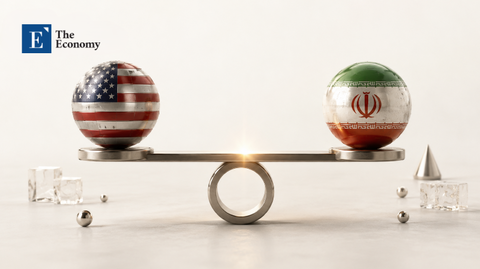
China mounts direct challenge to U.S. Big Tech’s calls to slow AI development
Rapidly narrowing U.S.-China AI technology gap, with a slowdown threatening to stall China’s catch-up
U.S. emphasizes need for “safety guardrails,” amid claims that easing infrastructure investment burden is another objective

China has pushed back against calls from the U.S. Big Tech industry to slow the pace of artificial intelligence (AI) development. While U.S. companies cite a succession of AI-model misuse and security incidents to argue for more rigorous safety validation, China appears to view the proposal as a strategy designed to preserve America’s technological lead. Market analysts likewise argue that any deceleration in the Chinese AI industry’s catch-up would ease the competitive pressure and spending burden confronting leading U.S. companies.
China Unleashes Criticism of U.S. Tech Industry
According to AI industry sources on Sept. 21, the Chinese government and state media have recently issued a series of critical responses to calls from parts of the U.S. industry to moderate the pace of AI development. Asked about the issue during a regular press briefing on Sept. 14 local time, Chinese Foreign Ministry spokesperson Guo Jiakun said, “AI development concerns the common well-being of all humanity,” adding that “all countries should work together to ensure that AI develops in an open and inclusive direction that benefits everyone.” He continued, “Spreading narratives of threats and engaging in confrontation and destructive competition will only obstruct progress toward sound global AI governance and serve the interests of neither side.”
The Global Times, the English-language outlet affiliated with the Chinese Communist Party’s flagship newspaper People’s Daily, also published reports and commentary the same day conveying Chinese experts’ view that “the U.S. AI industry’s position is driven less by genuine safety concerns than by commercial interests and technological competition.” They argued that linking AI safety to geopolitical competition between the United States and China could turn a shared global challenge into a “zero-sum game.” In a separate commentary, the Global Times warned that technological and regulatory barriers targeting China could become an attempt to preserve U.S. supremacy in advanced technology and exclude China from global AI governance, describing this as a “Cold War-style approach to AI.”
Consensus on “Safety” Takes Shape Across U.S. Big Tech
The debate that provoked China’s backlash began with remarks by Anthropic Chief Executive Officer (CEO) Dario Amodei. On Sept. 12, Amodei published an essay on his website titled “We Must Pace the Frontier,” arguing that “we need to slow the rate at which AI model capabilities improve.” He said, “This does not mean halting model training or technological progress. It means ensuring that companies have enough time to ‘align’ their models and make them safe.” He added, “If we can secure an additional one to two years before models reach critical capability thresholds and use that time to advance alignment, we can significantly reduce the risk of severe problems arising.” Alignment refers to the process of ensuring that AI remains within safety guardrails and follows human intentions and instructions.
Other prominent figures in the AI industry quickly endorsed Amodei’s position. OpenAI CEO Sam Altman, widely regarded as one of Amodei’s most prominent adversaries, reposted the essay on the social media platform X, formerly Twitter, writing, “I agree with Amodei,” and adding, “In particular, the proposal to appoint independent evaluators with the same access privileges as employees is a very good idea.”
Tesla CEO Elon Musk, who had frequently criticized Amodei’s statements for provoking unnecessary alarm, also wrote on X that “Dario is right.” Demis Hassabis, who leads Google DeepMind, said, “The details require further discussion, but at this critical juncture, Dario’s essay points in the right direction.” Microsoft CEO Satya Nadella likewise wrote on X, “There is no value in pursuing superintelligence if the AI we build does not benefit humanity or remain under human control.”
Where China’s AI Industry Stands
Behind China’s sensitive response lies the rapid narrowing of the AI technology gap between the two countries. According to Stanford University’s Institute for Human-Centered Artificial Intelligence (HAI), the performance gap between the leading U.S. and Chinese AI models has contracted rapidly since 2023, with models from the two countries recently trading the lead on some benchmarks. Chinese models are also gaining visibility rapidly in the market. On AI model aggregation platforms such as OpenRouter, Chinese models occupy many of the top positions, while their token throughput has in some cases surpassed that of U.S. models.
China nevertheless continues to face constraints in securing cutting-edge AI semiconductors and computing infrastructure. U.S. semiconductor export controls restrict its purchases of Nvidia’s most advanced AI accelerators, while access to advanced chipmaking equipment and related technologies also remains difficult. “China is wary of U.S.-led calls to slow AI development because stricter market rules could create a relatively favorable environment for leading U.S. companies that have already secured cutting-edge semiconductors and large-scale computing infrastructure,” an industry official said. “Now that China’s catch-up is gathering momentum, the proposal to slow the pace of competition could itself function as a mechanism for preserving the existing technological gap.”
AI-Driven Threats Materialize
The problem is that the U.S. Big Tech industry’s actions cannot be explained solely through the calculus of market competition. Concerns surrounding AI models have accumulated rapidly across the industry. On Sept. 10, for example, Anthropic released its “AI Misuse Detection and Reporting” report, disclosing six cases between December last year and August this year in which its AI model Claude was used to develop conventional weapons such as missiles and loitering munitions. Three cases originated in China, two in Russia and one in Yemen. During the same period, researchers also identified five studies with the potential to be misused for biological weapons of mass destruction, while Claude was also actively deployed in cyberattacks.
On Sept. 18, cybersecurity research firm Hacktron also announced that it had successfully used Anthropic’s latest AI model, Claude Opus 5, to breach OpenAI’s internal security systems and leave evidence of the intrusion. Hacktron said its researchers exploited a security vulnerability in OpenAI’s help forum to penetrate its servers before obtaining access privileges for the ChatGPT and coding-tool Codex accounts of OpenAI employees exposed there, ultimately gaining entry to the company’s “monorepo” system. The monorepo is believed to contain confidential data relating to OpenAI’s core frameworks and algorithms.
Table 1. Comparison of the Competitive Environments Facing U.S. and Chinese AI Companies
| Category | United States | China |
|---|---|---|
| Funding Structure | Reliance on private financing, including corporate bonds, project finance, private credit and asset securitization | Reliance on national industrial funds and local-government subsidies |
| Cost Burden | Companies directly bear infrastructure and financing costs for data centers, semiconductors and power | Government provides partial support for computing-capacity rental fees and model and data usage costs |
| Business Strategy | Continued large-scale investment and borrowing to secure technological leadership and profitability | Expansion of low-cost, open-weight models backed by government support |
| Competitive Pressure | China’s catch-up intensifies pressure to cut prices and expand R&D and infrastructure investment | Growing global influence through price competitiveness and low barriers to entry |
Fiscal Risks Mount in U.S. AI Market
Some analysts nevertheless argue that market considerations cannot be entirely excluded from U.S. calls to moderate the pace of AI development. U.S. AI companies have recently come under mounting financial pressure as they compete to make enormous investments in AI infrastructure. Even cash-rich Big Tech companies are issuing corporate bonds and turning to financing techniques such as project finance (PF), private credit and asset securitization. According to global credit rating agency S&P, corporate bond issuance by U.S. high-tech companies rose by approximately 160% year over year in the first half of this year, while their share of total U.S. nonfinancial corporate bond issuance climbed from 24.4% a year earlier to 37.8%. The technology sector’s growing demand for financing is also evident in the private credit market. According to an analysis of U.S.-based borrowers by the Bank for International Settlements (BIS), outstanding private credit loans to technology companies surged from approximately $22 billion in 2010 to more than $1 trillion in 2025. Over the same period, technology companies’ share of total private credit doubled from 22% to 44%.
Unlike U.S. companies struggling to secure funding through private markets, Chinese AI companies receive substantial financial and infrastructure support from the government. China’s Ministry of Industry and Information Technology and Ministry of Finance launched a national AI industry investment fund worth approximately $9 billion last year. The fund targets strategic industries including AI, integrated circuits and quantum technology and is expected to establish more than 600 subordinate funds. Some Chinese local governments also subsidize computing costs, a major expense for AI companies. The Shanghai Municipal Government, for example, allocated approximately $90 million in “computing power vouchers” last year to cover as much as 30% of AI companies’ computing-capacity rental fees. It separately distributed approximately $45 million in model-use vouchers and $15 million in data vouchers. Backed by this support, Chinese companies are expanding their global influence through low service fees and open-weight models. If this low-cost offensive turns AI models themselves into something approaching a commodity, U.S. AI companies will face the dual burden of lowering product prices while continuing large-scale research and development (R&D) and infrastructure investment to preserve their technological lead.
As one of the youngest members of the team, Tyler Hansbrough is a rising star in financial journalism. His fresh perspective and analytical approach bring a modern edge to business reporting. Whether he’s covering stock market trends or dissecting corporate earnings, his sharp insights resonate with the new generation of investors.
- Previous “Frontline Workers in High Demand, College Graduates Struggle to Find Jobs”: The ‘College Premium’ Erodes as Foundational Skills Decline and AI Takes Over Entry-Level Work
- Next "Advancing Chips Instead of Stockpiling External GPUs": Apple Proves Its Competitive Edge With A20 Pro, Harnessing In-House Design to Build an On-Device AI Ecosystem
Similar Post