BYD Accelerates European Production Push in Bid to Become Global Brand—Can It Overcome High Wages, Labor Regulations and Carbon Costs?

Anne-Marie Nicholson is a fearless reporter covering international markets and global economic shifts. With a background in international relations, she provides a nuanced perspective on trade policies, foreign investments, and macroeconomic developments. Quick-witted and always on the move, she delivers hard-hitting stories that connect the dots in an ever-changing global economy.
Authored On
Modified
Slowing Chinese Demand and Steep Tariffs Drive BYD’s European Production Expansion
Three Vehicle Plants and One Battery Plant to Accelerate Push into Local Market
High Wages, Carbon Costs and Labor Rules Expected to Compound European Production Burden
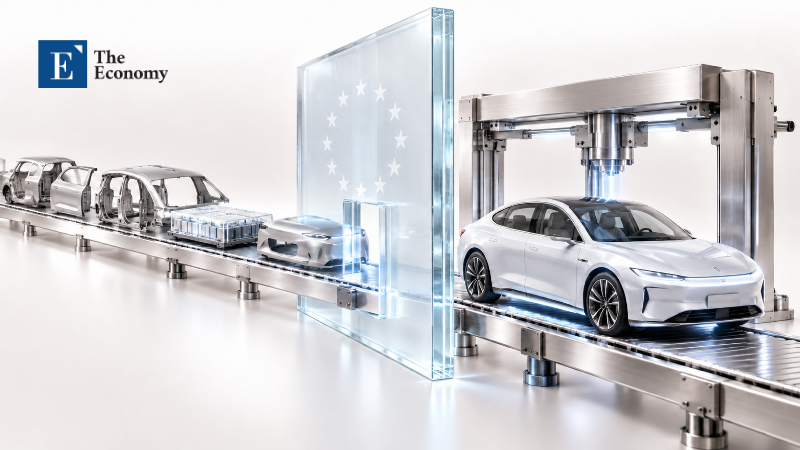
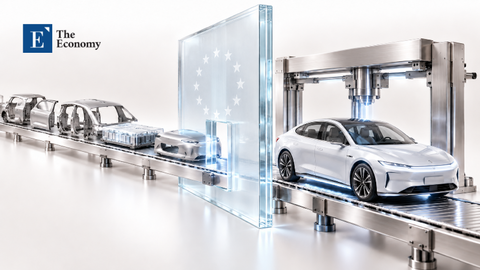
BYD, China’s largest electric vehicle manufacturer, has unveiled a “3+1” production network plan comprising three vehicle plants and one battery factory in Europe. The strategy seeks to reduce the burden of long-distance shipping and steep tariffs while targeting Europe’s recovering EV market through local production. Manufacturing in Europe would give BYD an opportunity to shed its image as a low-cost exporter and gain recognition as a global automaker. Analysts caution, however, that preserving the cost advantage established in China while absorbing Europe’s high wages, carbon costs and stringent labor and procurement regulations will prove difficult.
France and Spain Under Review After Hungary
According to Bloomberg on Sept. 17 (all dates local), BYD’s special adviser for Europe, Alfredo Altavilla, said at an event held in Turin, Italy, the previous day that “BYD aims to establish three vehicle assembly plants and one EV battery factory in Europe.” He described the move as “essential to complying with European Union (EU) regulations and achieving the company’s target production volume.” BYD is currently preparing to begin production at its first European passenger-vehicle plant in Szeged, Hungary. The company plans to decide on its second production base by the end of this year and is consulting governments and companies in France, Spain and Italy over the potential acquisition of underutilized factories owned by rival automakers.
BYD’s interest in acquiring European factories first surfaced during the first half of this year. In a May interview with Bloomberg, BYD Executive Vice President Stella Li said the company was “discussing the acquisition of underutilized local plants with European automakers, including Stellantis,” adding that it preferred to acquire and operate factories independently rather than through joint ventures. Altavilla later told Reuters that Italy had fallen behind in the selection process because Stellantis had shown no intention of selling its factories, while Spain and France had emerged as more viable candidates.
Localization Bet to Break Through Chinese Brand Constraints
BYD is accelerating efforts to secure European production bases as growth in China’s domestic market slows. According to the China Passenger Car Association (CPCA), cumulative retail sales of new energy vehicles (NEVs) in China stood at 1.005 million units as of last month, down 10.1% from a year earlier. The figure was also approximately 20,000 units below the 1,024,848 vehicles sold during the same period in 2024. Total retail sales of passenger vehicles in China fell sharply by 23.6% from 1.995 million units a year earlier to 1.541 million. By category, sales of internal-combustion-engine passenger vehicles plunged 40.0% year over year to 536,000 units, while plug-in hybrid electric vehicle (PHEV) sales declined 25.8% to 307,000 units, marking an eighth consecutive monthly contraction. Over the first eight months of the year, total passenger-vehicle retail sales and NEV sales fell by 20.8% and 11.6%, respectively, pointing to a prolonged downturn in Chinese automotive demand.
Europe’s EV market, by contrast, is showing a clear recovery. According to European EV industry groups and other organizations, new battery electric vehicle (BEV) registrations across Europe surpassed 1.67 million units this year, up 33.1% from the same period a year earlier. In August alone, BEV registrations across the 16 major European markets covered by the data surged 54.2% year over year to 202,833 units, lifting their share of the overall new-car market to 30.5%. Germany recorded 68,980 registrations and a 32.5% market share, while France posted 36,159 registrations and a 38.3% share, leading the recovery in European EV demand. By establishing a stable local production system, BYD aims to boost its European sales while simultaneously overcoming trade pressure, including the EU’s steep countervailing duties, and the market-entry barrier associated with being a Chinese brand.
Table 1. Automotive Market Trends in China and Europe and BYD’s Strategy
| Category | Chinese Market | European Market |
|---|---|---|
| Market Trend | Prolonged contraction in domestic demand | Full-fledged recovery in EV demand |
| Key Indicators | Cumulative new energy vehicle (NEV) sales of 1.005 million units, down 10.1% year over year Total passenger-vehicle sales of 1.541 million units, down 23.6% year over year | More than 1.67 million new battery electric vehicle (BEV) registrations, up 33.1% year over year August registrations of 202,833 units across 16 major markets, up 54.2% year over year |
| Detailed Trends | Internal-combustion-engine vehicle sales down 40.0% Plug-in hybrid electric vehicle (PHEV) sales down 25.8%, marking eight consecutive months of decline | BEVs account for 30.5% of the new-car market Germany: 68,980 units and a 32.5% share; France: 36,159 units and a 38.3% share |
| BYD Strategy | Expansion into overseas sales markets amid slowing domestic growth | Sales expansion through a local production base and response to EU countervailing duties and market-entry barriers facing Chinese brands |
Hyundai Motor and Kia Face Regulatory Costs Despite Early Localization
Hyundai Motor and Kia were among the first to use local European production networks as a springboard for sales growth. Hyundai Motor operates vehicle plants in Nošovice, Czech Republic, and İzmit, Türkiye, while Kia has a plant in Žilina, Slovakia. The three factories have a combined annual production capacity of 930,000 vehicles. The Nošovice facility produces the Kona Electric, while the Žilina plant began mass-producing the EV4 last year. Approximately $288 million has been invested in the İzmit factory, which began producing the IONIQ 3 this year.
Hyundai Motor Group has also combined local production with factory automation to defend its cost competitiveness. Hyundai Motor Manufacturing Czech, which operates 566 industrial robots, is currently discussing demonstration trials of the Atlas humanoid robot with the group’s headquarters and Boston Dynamics. Hyundai Motor Group plans to deploy Atlas first at its Georgia plant in the United States in 2028, assigning it to parts sorting and sequencing, before expanding its role to assembly and heavy-load transport beginning in 2030. If Atlas is introduced at the Czech plant, greater automation of repetitive and high-risk processes is expected to improve workplace safety and quality consistency while reducing the burden on on-site employees.
Operating local production bases is nevertheless becoming more expensive as Europe tightens its environmental regulations. Under the EU’s Carbon Border Adjustment Mechanism (CBAM), which entered full implementation this year, Hyundai Motor’s Czech plant and Kia’s Slovakian facility must purchase certificates corresponding to the embedded carbon emissions of automotive steel imported from South Korea. Solutions for Our Climate estimates that the two plants’ steel-related CBAM costs could reach $59.5 million to $99.2 million in 2030, as much as 70 times Hyundai Motor’s disclosed estimate of $1.4 million. If verified actual emissions data cannot be submitted from 2028 onward, a 30% surcharge will be added to the EU’s default values, potentially raising the related cost to as much as $129 million.
BYD’s Cost Competitiveness Put to the Test
The regulatory costs confronting Hyundai Motor Group will also apply to BYD as it establishes production bases in Europe. Finished vehicles are excluded from CBAM, but designated steel products used in automotive manufacturing—including hot-rolled, cold-rolled and coated steel sheets, as well as steel bolts and nuts—fall within the mechanism’s scope. If annual imports of these products exceed 50 metric tons, local entities must report their embedded emissions by product and purchase and surrender certificates linked to EU Emissions Trading System allowance prices. Chinese steel is particularly exposed because a large proportion is produced in coal-fired blast furnaces, meaning BYD’s certificate-purchasing burden could increase in line with the carbon intensity of the Chinese steel it uses. Moreover, if suppliers cannot provide verified emissions data, emissions will be calculated using default values set by the EU, leaving BYD to absorb both higher steel procurement costs and the expense of emissions calculation and verification.
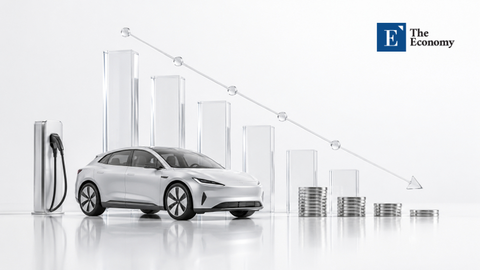
China’s cost advantage is also likely to weaken once high labor costs and stringent employment regulations are factored in. The International Energy Agency (IEA) estimates that BEV production costs in China are more than 30% lower than in advanced economies. It attributes half of the difference to greater production efficiency and automation and another 30% to cheaper procurement of critical minerals and battery components. European factories, however, must comply with local wage standards and labor laws while integrating regional component manufacturers into their supply chains, reducing the benefits of the vertically integrated model BYD has enjoyed in China. Average hourly labor costs in the eurozone’s industrial sector reached $46.30 last year, while labor costs across the EU rose 4.1% in a single year.
The Industrial Accelerator Act (IAA) being pursued by the European Commission is another variable that could drive up BYD’s localization costs. Under the proposed legislation, non-EU companies based in countries accounting for at least 40% of global production capacity in strategic industries—including batteries, EVs, solar power and critical minerals—would be required to obtain prior approval for investments exceeding $116 million in the EU. Companies would have to satisfy at least four of six conditions to secure approval, including a mandatory requirement that EU workers account for at least 50% of all production, technical and managerial personnel. Other review conditions include joint ventures with EU companies, the sharing of intellectual property and know-how, investment in research and development (R&D) within the EU and expansion of regional supply chains. In particular, companies would be expected to make efforts to source at least 30% of the inputs used in products sold in the EU from within the bloc and disclose the corresponding strategy. As a result, maintaining price competitiveness merely by importing Chinese components for local assembly will become increasingly difficult. The more factories BYD builds in Europe, the more it will inevitably spend not only on labor but also on technology transfers, R&D and the establishment of local component-supply networks.
Costs Surge Under Local Regulatory Compliance
The TSMC plant in Arizona offers an early example of how regulations and labor issues can generate unforeseen costs during the construction of overseas production bases. According to The New York Times (NYT), the Taiwanese semiconductor manufacturer spent $35 million revising approximately 18,000 regulations for its local chip plant, while some processes were subjected to as many as 15 rounds of permits and inspections. Faced with a shortage of skilled workers capable of installing equipment, TSMC attempted to bring in approximately 500 Taiwanese technicians, only to encounter opposition from local unions claiming that the move would displace American workers. TSMC ultimately had to renegotiate workforce recruitment, training and safety-management arrangements with the unions. The company expects the expansion of overseas plants in the United States, Japan and other locations to reduce its annual gross margin by 2 to 3 percentage points over the next five years.
The labor burden BYD is likely to face in Europe is already materializing at the construction site of its first local plant in Szeged. The Guardian reported that China Labor Watch (CLW), a labor-rights organization, surveyed approximately 50 workers at the site and found allegations among Chinese subcontracted workers of seven-day workweeks, excessive overtime, recruitment fees and violations of visa regulations. The European Commission said it was aware of the allegations and that Hungarian labor-inspection authorities were investigating the case. BYD has stated that both the company and its contractors must comply strictly with Hungarian and EU labor laws. As controversy over the working hours and recruitment procedures of Chinese subcontracted workers widens, however, BYD is being forced to overhaul its workforce-management system to comply with European labor standards.
Industry analysts say that if BYD can comply with Europe’s environmental, labor and trade regulations while securing stable profitability at its local factories, the global expansion of Chinese automakers can no longer be dismissed as a temporary price offensive. Chinese EVs have long faced criticism that their price competitiveness was built on government subsidies, low labor costs and domestically concentrated supply chains. If BYD can remain profitable despite Europe’s high wages, carbon costs and regional procurement requirements, however, its production efficiency and technological competitiveness may warrant a fresh assessment. The prevailing industry view nevertheless holds that maintaining both price competitiveness and profitability while absorbing high labor costs, carbon expenses and stringent labor and procurement regulations will be difficult.
Anne-Marie Nicholson is a fearless reporter covering international markets and global economic shifts. With a background in international relations, she provides a nuanced perspective on trade policies, foreign investments, and macroeconomic developments. Quick-witted and always on the move, she delivers hard-hitting stories that connect the dots in an ever-changing global economy.
Similar Post