“Neither Tariffs nor High Oil Prices Could Stop It”: AI Boom Drives Surprise U.S. Manufacturing Upswing

Siobhán Delaney is a Dublin-based writer for The Economy, focusing on culture, education, and international affairs. With a background in media and communication from University College Dublin, she contributes to cross-regional coverage and translation-based commentary. Her work emphasizes clarity and balance, especially in contexts shaped by cultural difference and policy translation.
Authored On
Modified
Intensifying AI infrastructure race drives wave of U.S. construction investment
Demand rapidly spreads from semiconductors and servers to heavy equipment and construction materials
Production and employment rebound despite cost shocks, signaling a manufacturing revival
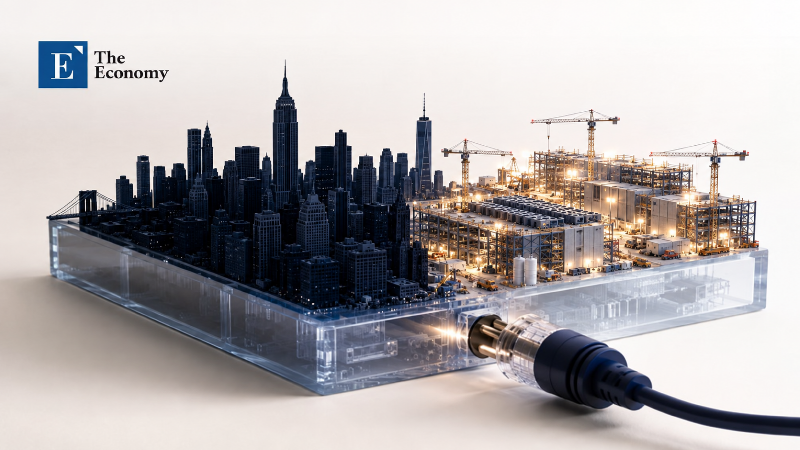
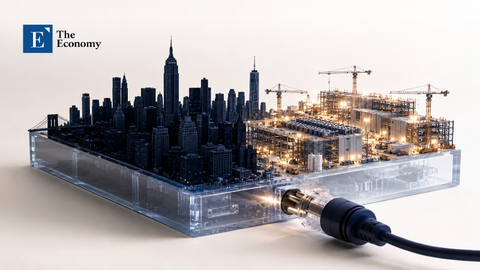
U.S. manufacturing has defied market expectations and entered a boom. Although tariffs, elevated oil prices and shortages of raw materials and components have increased production costs, output, orders and employment indicators have all rebounded, while factory expansions are proliferating across Texas. The driving force behind this exceptional recovery is the artificial intelligence (AI) data center construction boom. As investment previously concentrated in semiconductors and servers spreads to orders for generators, transformers, cooling systems, construction materials and heavy equipment, it is lifting production and capital expenditure across the manufacturing sector.
Across-the-Board Gains in Production, Orders and Employment Revitalize U.S. Manufacturing
According to Bloomberg on the 16th (local time; all subsequent dates are local), U.S. Treasury Secretary Scott Bessent appeared before the House Financial Services Committee (HFSC) the previous day and declared that the U.S. economy had entered a new industrial supercycle. Citing the expansion in manufacturing and a forecast that third-quarter gross domestic product (GDP) growth would exceed 4%, Bessent emphasized the concentration of capital in the United States. Indeed, the Institute for Supply Management’s (ISM) manufacturing purchasing managers’ index (PMI) stood at 54.6 in August, remaining in expansionary territory for an eighth consecutive month, while the production index surged to 58.3. With 15 of the 18 industries tracked by the ISM joining the expansion, the services PMI also reached 55.4 last month, highlighting an increasingly evident trend in which resilient domestic demand is supporting factory operations.
The recovery is most pronounced in Texas. The state’s manufacturing sector is consolidating its expansion as production, orders and employment recover in tandem. In the Federal Reserve Bank of Dallas’ August survey, the production index rose six points to 16.1, while the new orders index surged 15.6 points to 22.0. The capacity utilization and shipments indexes also reached 12.8 and 14.1, respectively, while the employment index remained in expansionary territory for a fourth consecutive month. Companies are also proceeding with a succession of factory expansions. Taiwanese server manufacturer Wiwynn plans to invest more than $1.6 billion in its plant in Socorro, near El Paso, Texas, creating approximately 1,000 jobs, while Nvidia supplier Coherent has begun an expansion in Sherman, north of Dallas, that will quadruple its production volume. The index measuring the outlook for production over the next six months climbed to 40.9, foreshadowing further capital investment and employment growth.
Production Holds Firm Despite Cost Shocks
The manufacturing boom has defied market expectations because it has emerged amid mounting cost pressures from tariffs and elevated oil prices. Rising energy and transportation costs stemming from the Iran war have coincided with steel and aluminum tariffs, while shortages of semiconductors, memory chips and electrical components have pushed production costs still higher. The ISM Prices Index consequently reached 71.1 in August, while the Supplier Deliveries Index stood at 59.3, signaling worsening procurement delays. In a first-quarter survey by the National Association of Manufacturers (NAM), 70.6% of respondents identified trade uncertainty as the greatest burden on business operations, while 63.3% said supply chain volatility had increased over the previous year. With cost, procurement and policy uncertainties converging simultaneously, forecasts that production and employment would contract gained traction.
As recently as June, skepticism over a U.S. manufacturing revival remained dominant. The Financial Times (FT) found that private spending on manufacturing construction had fallen 16% to $15.2 billion since the second Trump administration took office, while the sector had shed 77,000 factory jobs. Over the same period, 84 companies announced plans to invest more than $900 billion in U.S. manufacturing, but progress toward actual construction and hiring remained slow. Financial services company Wells Fargo estimated that restoring manufacturing employment to its 1979 peak would require at least $2.9 trillion in new capital and an additional 6.7 million workers. With high labor costs compounded by a shortage of skilled workers, recreating the manufacturing sector’s former heyday was sometimes classified as a long-term challenge.
Table 1. U.S. AI Data Center Investment and Construction
| Category | Scale | Key Details |
|---|---|---|
| Global Capital Expenditure | $750 billion | 2026 forecast for the world’s 14 largest publicly listed data center operators, up approximately $300 billion from last year |
| U.S. Construction Volume | 15.9GW | Accounts for 68.8% of the 23.1GW of data center capacity under construction across major economies |
| New U.S. Construction Starts | 3.8GW | Construction volume started in the third quarter of 2025, 58% above the quarterly average for the 2020s |
Power and Construction Boom Alongside Expanding AI Investment
The principal drivers of the U.S. manufacturing revival are AI data center construction and investment in power supply chains. BloombergNEF (BNEF) projects that capital expenditure by the world’s 14 largest publicly listed data center operators will reach $750 billion this year. Investment, which remained below $450 billion last year, has increased by approximately $300 billion in just one year. Of the 23.1 gigawatts (GW) of data center capacity currently under construction across major economies, the United States alone accounts for 15.9GW. In the third quarter of last year alone, construction began on 3.8GW of new capacity, 58% above the quarterly average recorded since the beginning of the 2020s.
AI investment previously concentrated in semiconductors and servers has used data center construction as a conduit to lift industrial demand across a broad range of products, from generators, transformers and cooling systems to construction materials and heavy equipment. U.S. generator manufacturer Generac plans to invest $250 million in production facilities by the end of next year to meet the related demand. Its existing backlog of data center generator orders alone has already reached $1.6 billion. German electrical and electronics company Siemens has also begun investing more than $200 million to construct two power-equipment factories in Georgia and Texas. Energy consultancy Wood Mackenzie expects the U.S. data center power-equipment market to double from $33 billion last year to $66 billion by 2030.
AI Power-Equipment Bottlenecks Spur U.S. Manufacturing Investment
Transformers and uninterruptible power supply (UPS) systems are among the products experiencing the fastest growth in demand. Because AI data centers perform large-scale computation around the clock, they require extensive equipment to regulate voltage reliably and maintain power supplies during outages. Yet power-equipment manufacturing capacity has struggled to expand at the pace of the sharp increase in orders. Under its high-growth scenario, Johns Hopkins University estimates that supply shortfalls for data center transformers and UPS systems will reach 76.4% and 82.3%, respectively, in 2027.
As equipment shortages become increasingly apparent, global manufacturers are accelerating efforts to expand production capacity. Swiss power-technology company Hitachi Energy plans to invest $528 million in a new transformer factory in Mississippi and hire more than 700 workers. Its broader U.S. power-equipment production expansion, which also encompasses Virginia, Tennessee and Pennsylvania, will involve $1.5 billion in investment and create more than 1,600 jobs. Data center-driven demand has also spread to the revenue and employment of small and midsize manufacturers. U.S. factories created 5,000 jobs in July alone, bringing the cumulative increase this year to 31,000. Compared with the loss of 113,000 manufacturing jobs last year, even the direction of employment has reversed.
Trump’s Increasingly Complex Tariff Calculus
As manufacturing activity recovers, the Trump administration’s tariff strategy has reached a crossroads. Tariffs designed to protect the domestic production base could increase the price of imported raw materials, placing pressure on factory expansion and the recovery in employment. Refined copper, in particular, is a critical material used extensively in transformers, cables, cooling systems and semiconductor manufacturing. With shortages of U.S. power equipment already intensifying, additional tariffs on refined copper would inevitably trigger successive increases in equipment manufacturers’ production costs and data center construction expenses.
For this reason, a decision on refined copper tariffs remains pending more than two months after the original deadline. The Department of Commerce reported market conditions and tariff options to the White House in late June, but a final decision has been deferred. The proposals under review include raising the tariff rate on refined copper from 15% in 2027 to 30% in 2028. The United States relies on imports for approximately half of its annual copper demand and has only two operating smelters. According to the U.S. Geological Survey (USGS), refined copper imports have increased sixteenfold since 2015, while domestic production has declined by 20%. Because mine development and smelter expansion require extended lead times, manufacturing costs are highly likely to surge before the tariffs deliver their intended effects.
Moreover, signs of cost pass-through are already emerging from tariffs currently imposed on semi-finished copper products. The Global Electronics Association noted that copper foil accounts for as much as 60% of the cost of printed circuit boards (PCBs), while the U.S. supply base is unable to accommodate large-scale demand. In an association survey, half of U.S. PCB manufacturers expected the tariffs to increase production costs by 16–30%, while one in four anticipated increases exceeding 30%. The PCB producer price index compiled by the U.S. Department of Labor also surged 45.4%, from 133.793 in August last year to 194.470 in August this year.
Siobhán Delaney is a Dublin-based writer for The Economy, focusing on culture, education, and international affairs. With a background in media and communication from University College Dublin, she contributes to cross-regional coverage and translation-based commentary. Her work emphasizes clarity and balance, especially in contexts shaped by cultural difference and policy translation.
Similar Post