“Samsung’s HBM4 and China’s Commodity DRAM Offensive”: SK hynix Loses Ground as Global Memory-Market Competition Reshapes

Aoife Brennan is a contributing writer for The Economy, with a focus on education, youth, and societal change. Based in Limerick, she holds a degree in political communication from Queen’s University Belfast. Aoife’s work draws connections between cultural narratives and public discourse in Europe and Asia.
Authored On
Modified
Samsung Electronics and SK hynix poised for further operating-profit growth on AI-driven demand
“From HBM to commodity DRAM”: SK hynix’s competitive advantage faces partial erosion
China’s CXMT-led pursuit intensifies as the HBM technology gap steadily narrows
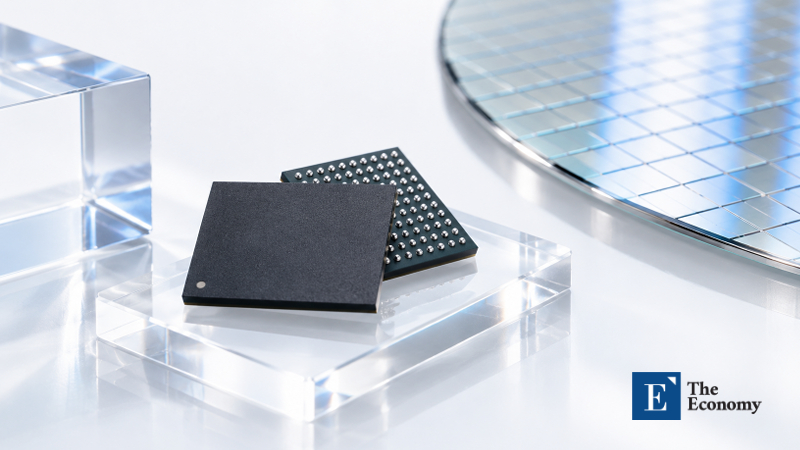
The growth outlooks for Samsung Electronics and SK hynix are beginning to diverge. Both companies are expected to deliver stronger results on the back of expanding memory demand from artificial intelligence (AI) data centers, but Samsung Electronics in particular is rapidly strengthening its position by improving yields for sixth-generation high-bandwidth memory (HBM4) and capitalizing on rising commodity DRAM prices. SK hynix, by contrast, has derived relatively limited benefits from the surge in commodity DRAM prices because of its high exposure to long-term agreements (LTAs) and reliance on HBM revenue. With Samsung Electronics and Chinese manufacturers simultaneously closing the gap, the company now faces greater difficulty preserving its established competitive advantage.
AI-Driven Semiconductor Supercycle Persists
According to a compilation of forecasts from major securities firms and investment banks (IBs) released on Sept. 15, Samsung Electronics’ third-quarter operating profit is projected to reach approximately $83.88 billion. The estimate represents an upward revision of $9.04 billion, or 12%, from the $74.98 billion forecast issued three months earlier and marks a 28% increase from the record $65.78 billion posted in the second quarter. SK hynix’s estimated third-quarter operating profit stands at $57.98 billion, up 4% from $55.72 billion three months earlier and 30% above the second quarter’s $44.55 billion. The optimism reflects expectations that the AI-driven supercycle will prove enduring. According to market research firm TrendForce, contract prices for commodity DRAM are expected to rise 13–18% quarter on quarter in the third quarter, while NAND flash prices are forecast to climb 10–15%, extending the upward trend that began in the second half of last year.
The outlooks for the two companies have nevertheless diverged to some extent in the HBM segment. Securities analysts have focused on the increase in HBM4’s share of Samsung Electronics’ HBM revenue, from 5% in the first quarter to approximately 35% in the second quarter. KB Securities recently forecast that Samsung Electronics’ HBM market share would rise from 33% in the second quarter to 40% in the fourth quarter, with HBM4 potentially accounting for more than 60% of the company’s total HBM revenue in the second half. SK hynix, meanwhile, risks seeing the premium attached to its position as the market’s leading supplier erode as Samsung Electronics improves the manufacturability of its HBM4 products. Reflecting these conditions, LS Securities recently lowered its forecast for SK hynix’s HBM operating margin in 2027 from approximately 80% to 60%.
HBM4 Emerges as Competitive Inflection Point
The shift reflects the differences between the companies’ technological strategies during the transition to HBM4. When Nvidia raised its required HBM4 speed to at least 11 gigabits per second (Gbps) per pin last year, Samsung Electronics adopted sixth-generation 10-nanometer-class (1c) DRAM for its HBM4 and deployed its own 4-nanometer foundry process for the base die. Having struggled to enter Nvidia’s supply chain during the previous generation of HBM competition, Samsung sought to secure a performance advantage in the HBM4 race by advancing its process technology from the outset. SK hynix, by contrast, opted to use mature fifth-generation 10-nanometer-class (1b) DRAM, for which it had already accumulated mass-production experience, in its initial HBM4 products. Its strategy was to ensure high yields and stable volume production by combining a proven DRAM process with its proprietary mass reflow molded underfill (MR-MUF) packaging technology. As recently as early this year, this approach had enabled SK hynix to secure the majority of Nvidia’s HBM4 orders.
The situation reversed, however, during Nvidia’s HBM4 qualification process. TrendForce reported in June that Samsung Electronics became the first major supplier to complete HBM4 validation and begin shipments, while SK hynix’s qualification schedule was delayed by interface-synchronization issues, pushing full-scale mass production back to the third quarter. SK hynix consequently reallocated part of its production capacity to commodity DRAM products such as DDR5 and LPDDR5 and reportedly lowered its full-year HBM4 shipment forecast. Samsung Electronics, meanwhile, accelerated process stabilization after commencing commercial HBM4 shipments in February, raising its HBM4 yield from below 60% during the initial production stage to approximately 80% as of last month. Shifts in the structure of the HBM4 market have also worked in Samsung Electronics’ favor. Nvidia’s move to secure multiple suppliers and expanding demand from AMD and Google have created broader avenues for late-moving suppliers to win orders.
Table 1. Comparison of Samsung Electronics’ and SK hynix’s HBM4 Strategies
| Company | Technology Strategy | Qualification and Mass-Production Status |
|---|---|---|
| Samsung Electronics | Performance advantage secured through the adoption of 1c DRAM and an in-house 4-nanometer base die | Early qualification and commercial shipments among major suppliers, with yields rising to approximately 80% |
| SK hynix | Yield and mass-production stability secured through proven 1b DRAM and MR-MUF packaging | Qualification and mass production delayed by interface-synchronization issues, with part of production capacity reallocated to commodity DRAM |
SK hynix’s Market Share Declines
SK hynix’s weakening position extends beyond HBM to the broader DRAM market. According to TrendForce, SK hynix’s second-quarter DRAM revenue increased 37.9% from the preceding quarter to $38.59 billion, but its market share fell 3.9 percentage points over the same period, from 28.8% to 24.9%. The decline was driven by the composition of the company’s product portfolio. Samsung Electronics and Micron benefited relatively more from the increase in average selling prices (ASPs) generated by soaring commodity DRAM prices in the second quarter. Samsung Electronics’ DRAM revenue surged 63.4% from the preceding quarter during the period, while Micron’s jumped 65.5%. SK hynix, by contrast, recorded an ASP increase of only 37.9% because HBM accounts for the largest share of its shipments among the three leading memory manufacturers.
Its high LTA exposure may also have affected its market share. SK hynix has so far concluded LTA negotiations with approximately 10 customers, including its key clients, and is continuing discussions with additional customers. Increasing the proportion of LTAs enables a company to secure stable volumes and prices through medium- and long-term contracts, but it also limits the extent to which short-term market-price increases can be reflected in revenue. This is because LTAs establish supply volumes and pricing terms for a predetermined period at the time the contract is signed.
Production-Capacity Gap Remains
A disparity also remains in absolute DRAM production capacity. According to market research firm Omdia, Samsung Electronics’ annual DRAM wafer capacity is estimated at 8.175 million wafers this year, compared with 6.66 million for SK hynix. On a monthly average basis, the figures translate to approximately 681,000 wafers for Samsung Electronics and 555,000 for SK hynix. In terms of production capacity alone, Samsung Electronics can process approximately 23% more DRAM wafers than SK hynix. This disparity has become a key determinant of commodity DRAM supply capacity amid the recent AI boom. Major memory manufacturers have sharply reduced commodity DRAM output as they prioritize high-capacity server DRAM and advanced products, leaving Samsung Electronics relatively better positioned under current market conditions.
Because its overall DRAM capacity is larger, Samsung Electronics can increase production of high-value-added server DRAM while maintaining a certain level of commodity-product output. The company has recently been expanding back-end production capacity for commodity DRAM by utilizing idle cleanroom space at its H1 facility in Hwaseong, while also building an additional 1c DRAM production line in Pyeongtaek. SK hynix, by contrast, has less total production capacity than Samsung Electronics and is simultaneously accelerating its transition to advanced products. Although migration to advanced processes can increase the number of bits produced per wafer over the long term, significantly expanding supply during the transition is difficult because existing equipment must be modified and production processes stabilized.
China’s CXMT Emerges as a Key Variable
The accelerating pursuit by China’s DRAM industry represents an additional burden for SK hynix. ChangXin Memory Technologies (CXMT), China’s largest DRAM manufacturer, recorded an operating margin of 82% in the second quarter, far exceeding those of the three leading memory manufacturers. While the three companies concentrated on producing high-value-added products such as HBM, CXMT, with its heavier exposure to commodity DRAM, absorbed a substantial share of market demand and enjoyed comparatively greater benefits. The speed at which commodity DRAM prices are reflected in earnings has also supported its growth. Contract prices for commodity DRAM are adjusted monthly or quarterly, whereas HBM is generally supplied to global companies under annual contracts, preventing increases in market prices from being immediately reflected in revenue. Consequently, revenue per wafer for DDR5 64-gigabyte (GB) registered dual in-line memory modules (RDIMMs) had already surpassed that of HBM in the first quarter.
China is expected to use the substantial profits generated in the DRAM market to accelerate its pursuit of HBM technology. According to the Korea Semiconductor Industry Association on Sept. 13, the memory-semiconductor technology gap between South Korea and China is estimated to have narrowed to three years in HBM, two years in DRAM and one year in NAND flash. CXMT is already testing fifth-generation HBM (HBM3E) with domestic fabless semiconductor companies, including Alibaba subsidiary T-Head, and plans to launch IT products incorporating the chips as early as next year. HBM3E is one generation behind HBM4, the product currently at the center of competition among Samsung Electronics, SK hynix and Micron.
Aoife Brennan is a contributing writer for The Economy, with a focus on education, youth, and societal change. Based in Limerick, she holds a degree in political communication from Queen’s University Belfast. Aoife’s work draws connections between cultural narratives and public discourse in Europe and Asia.
Similar Post