“Delivery and Price Competitiveness Already Proven”: South Korean Defense Industry Rises to Europe’s Standards, With Technology the Final Piece

Siobhán Delaney is a Dublin-based writer for The Economy, focusing on culture, education, and international affairs. With a background in media and communication from University College Dublin, she contributes to cross-regional coverage and translation-based commentary. Her work emphasizes clarity and balance, especially in contexts shaped by cultural difference and policy translation.
Authored On
Modified
Mass-production speed and cost advantages secure confidence among global buyers
Reconfiguration of existing platforms gains pace in response to customer-country requirements
Proof of technological maturity set to determine long-term program outcomes
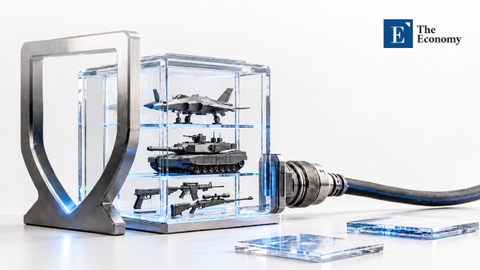
Having expanded on the strength of competitive pricing and rapid delivery, South Korea’s defense industry is recasting its export strategy around unmanned capabilities, integrated air defense and locally tailored development. Hanwha Aerospace’s mass production of the Arion-SMET and unveiling of a counter-drone Redback illustrate a strategy of swiftly reconfiguring existing platforms to meet overseas customers’ requirements. South Korea’s mass-production capacity and cost competitiveness have already been validated in global markets. Technology is the next battleground. Analysts say unmanned systems and multilayered air-defense technologies must prove themselves in operational environments if South Korean contractors are to sustain their advantage in long-term European and Middle Eastern programs.
Hanwha Aerospace Expands Ground-Based Unmanned Systems
On the 17th, Hanwha Aerospace unveiled plans to establish a production system under its contract to mass-produce the Arion-SMET, the first multipurpose unmanned ground vehicle to be adopted by the South Korean military, along with a roadmap for the unmanned transformation of its ground-defense portfolio. The Arion-SMET was placed under a mass-production contract with the Defense Acquisition Program Administration (DAPA) on the 4th and will be delivered progressively to Army and Marine Corps infantry units beginning next year. Production will take place at the company’s Changwon plant, which also manufactures systems including the Chunmoo multiple-launch rocket system and Cheongung-II.
To ensure stable mass production, Hanwha Aerospace has established a cooperative network with approximately 40 suppliers providing structures, batteries, navigation equipment, lidar systems and remote-control components. With most key components sourced domestically, the vehicle has a localization rate exceeding 98%. The company also plans to expand its unmanned ground vehicle (UGV) lineup. Beginning with mass production of the Arion-SMET, Hanwha Aerospace aims to secure six common UGV platforms spanning light, medium and heavy classes by 2030. Representative models include a light multipurpose unmanned vehicle weighing less than 10 metric tons, a medium-class tracked robotic combat vehicle (T-RCV) weighing less than 20 metric tons and a 30-metric-ton heavy unmanned ground vehicle (H-UGV).
40 mm Counter-Drone Redback Targets NATO Air-Defense Market
Hanwha Aerospace is simultaneously pursuing export-oriented upgrades of existing crewed armored vehicles. On the 16th local time, the company unveiled a new variant of its Redback infantry fighting vehicle (IFV), jointly developed with Lockheed Martin UK, at Defence Vehicle Dynamics 2026 (DVD 2026) in Millbrook, Bedfordshire, England. The model combines the Redback chassis, which demonstrated its performance in the Australian Army’s next-generation armored vehicle program, with CTA International’s NATO-certified 40 mm cannon and Lockheed Martin UK’s SkyKeeper command-and-control system. It can perform both infantry-support and counter-unmanned aircraft system (C-UAS) missions, while its Generic Vehicle Architecture (GVA) allows new technologies and capabilities to be integrated rapidly in the future.
Whereas South Korea’s previous defense exports centered on domestically completed systems, the new model is noteworthy for rapidly integrating a 40 mm cannon—a medium-caliber weapons system favored by NATO members—without modifying the existing chassis. The project demonstrates how quickly an operational platform can be reconfigured to meet customer requirements and provides tangible evidence of Hanwha Aerospace’s longstanding “customized platform” strategy. Combining a NATO-certified 40 mm weapons system with the Redback chassis already validated through the Australian program also offers purchasing countries the advantage of substantially reducing development risks and acquisition costs.
South Korea’s L-SAM Joins Switzerland’s Next-Generation Air-Defense ‘Leading Contenders’
South Korea’s defense industry is currently targeting Europe’s long-range air-defense market. Switzerland previously ordered five Patriot fire units from the United States in 2022 for delivery between 2027 and 2028, but the timetable was pushed back beyond 2032 after Washington prioritized supplies for Ukraine. The Swiss government subsequently suspended related payments until the delivery schedule and costs are finalized, while launching procedures to procure a second long-range ground-based air-defense system. South Korea, France, Germany and Israel responded to the request for information (RFI), with domestic and international defense-industry observers identifying South Korea’s long-range surface-to-air missile system (L-SAM) and the jointly developed Franco-Italian SAMP/T NG as the leading contenders.
While the Patriot has strengths in lower-tier terminal defense, the L-SAM reinforces the defensive network by intercepting ballistic missiles through direct collision at upper-tier altitudes of at least 40 kilometers. Its ability to operate both anti-ballistic missile (ABM) and anti-aircraft missile (AAM) interceptors enables it to counter threats from ballistic missiles and aircraft alike. The SAMP/T NG, however, is backed by a European production base and interoperability with neighboring countries’ air-defense networks, while the Swiss government has also expressed a preference for systems manufactured in Europe. South Korea must therefore present a proposal combining its advantages in price and delivery with local production, ammunition stockpiling, maintenance, repair and overhaul (MRO), and education and training. If its capacity to integrate locally tailored weapons systems extends into the air-defense sector, South Korea is expected to respond more flexibly to European demands for industrial participation.
Table 1. 2027 Defense Budget Increase and Advanced Force Investment Priorities
| Category | Key Details | Expected Benefits |
|---|---|---|
| Defense Budget | Approximately $53.45 billion allocated, up 8.2% year on year and marking the largest increase since 2007 | Stronger foundations for the development and mass production of advanced weapons systems |
| Defense Capability Improvement | Approximately $16.57 billion allocated for defense capability improvement, with deployment of the long-range L-SAM and medium-altitude reconnaissance unmanned aerial vehicles accelerated by approximately one year | Earlier acquisition of air-defense and reconnaissance capabilities |
| KF-21 Mass Production | Mass-production budget increased from approximately $1.02 billion to $2.41 billion | Greater production stability and an expanded operational track record for the domestically developed fighter jet |
| Unmanned Perimeter Security | Performance upgrades for the General Outpost (GOP) scientific perimeter surveillance system and introduction of unmanned ground surveillance sensors | Fewer surveillance gaps and faster adoption of unmanned ground capabilities |
| Industrial Base | Maintenance of mass-production facilities and accumulation of validation data for new technologies through stable domestic procurement | Stronger evidence for reducing development risks and acquisition costs in overseas tenders |
Technology After ‘Price and Delivery’
Technology will ultimately determine the outcome in the European market. The K9 self-propelled howitzer, K2 tank and Chunmoo rapidly absorbed the surge in demand for military replenishment following Russia’s 2022 invasion of Ukraine, demonstrating the South Korean defense industry’s mass-production capacity. NATO, however, identified interoperability, munitions standardization and the rapid adoption of emerging technologies as core priorities in its Defence Production Action Plan revised last year. The plan also included measures to expand joint design, development, production and sustainment frameworks. Securing long-term European programs will therefore require South Korean companies to satisfy local-production requirements while also acquiring advanced capabilities in areas such as artificial intelligence (AI)-enabled command and control, unmanned systems and multilayered air defense.
The government’s defense-budget increase will provide a foundation for technological advancement. The proposed 2027 defense budget stands at approximately $53.45 billion, an increase of 8.2% from this year and the largest rate of expansion since 2007. Of that amount, the government allocated approximately $16.57 billion to defense capability improvement and brought forward the deployment of the long-range L-SAM and medium-altitude reconnaissance unmanned aerial vehicles by approximately one year. The mass-production budget for the domestically developed KF-21 supersonic fighter was also increased from approximately $1.02 billion to $2.41 billion. Funding will additionally support performance upgrades for the General Outpost (GOP) scientific perimeter surveillance system and the introduction of unmanned ground surveillance sensors. Stable domestic orders will allow companies to maintain mass-production facilities while simultaneously establishing operational track records and reliability for new technologies. Validation data accumulated through service with the South Korean military is expected to provide evidence supporting lower development risks and acquisition costs in overseas tenders.
South Korean Defense Contractors Penetrate Middle Eastern Air-Defense Networks, Backed by European Track Record
The procurement track record accumulated in Europe will also support expansion in the Middle Eastern market. The Middle East has long relied heavily on American and European weapons systems and is regarded as a market that weighs operational records, logistics-support capabilities and security relations with supplier countries when making major arms purchases. South Korean companies entered the Middle Eastern market primarily through their advantages in price and delivery, but previously had relatively limited records in major European countries. The situation changed as Poland and other European countries successively adopted the K2 tank, K9 self-propelled howitzer and Chunmoo. The very fact that NATO members are procuring and operating South Korean weapons on a large scale can now serve as evidence that strengthens confidence among Middle Eastern buyers.
This shift is emerging first in the air-defense sector. Leveraging the Cheongung-II multifunction radar, Hanwha Systems secured supply contracts worth approximately $948 million in the United Arab Emirates (UAE) in 2022, $875 million in Saudi Arabia in 2024 and $627 million in Iraq last year. The Financial Times (FT) reported that each Cheongung-II interceptor costs $1.1 million, below the $3.7 million price of the US-made Patriot PAC-3, and achieved an interception success rate of 96% during the Iran war. Hanwha Systems also signed a term sheet with UAE state-owned defense contractor EDGE Group on the 15th to establish an integrated air-defense network. Its Middle Eastern operations, which began with the supply of missiles and radars, have consequently expanded into integrated air-defense networks connecting detection, command-and-control and interception systems. Continued ground-weapons and air-defense contracts in Europe, coupled with follow-on Middle Eastern programs built on operational experience, have established a foundation for pursuing both markets simultaneously.
Siobhán Delaney is a Dublin-based writer for The Economy, focusing on culture, education, and international affairs. With a background in media and communication from University College Dublin, she contributes to cross-regional coverage and translation-based commentary. Her work emphasizes clarity and balance, especially in contexts shaped by cultural difference and policy translation.
Similar Post