Oil Price Shocks Now Benefit the US as Venezuelan Crude Flows to Texas

Working across research, policy, and data-driven analysis, the Editorial Board ensures that published pieces reflect a consistent institutional perspective grounded in quantitative reasoning and long-term structural assessment.
Authored On
Modified
Oil price shocks no longer push America into recession
Shale output turned the US into a net petroleum exporter
Venezuela’s oil deal extends Washington’s reach over supply and refining
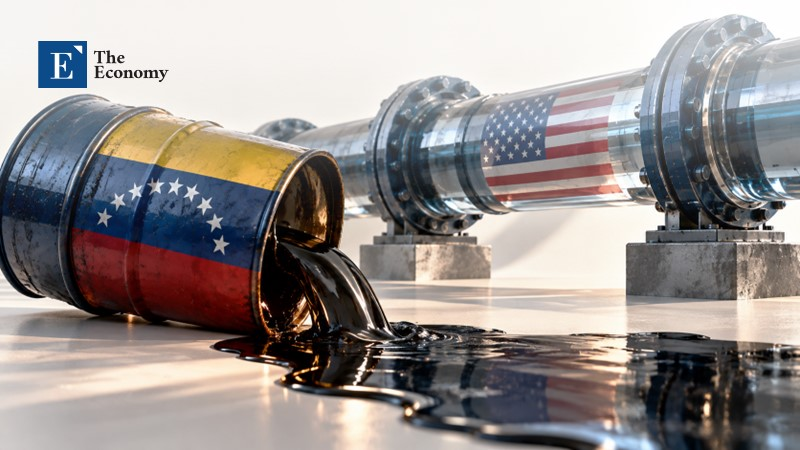
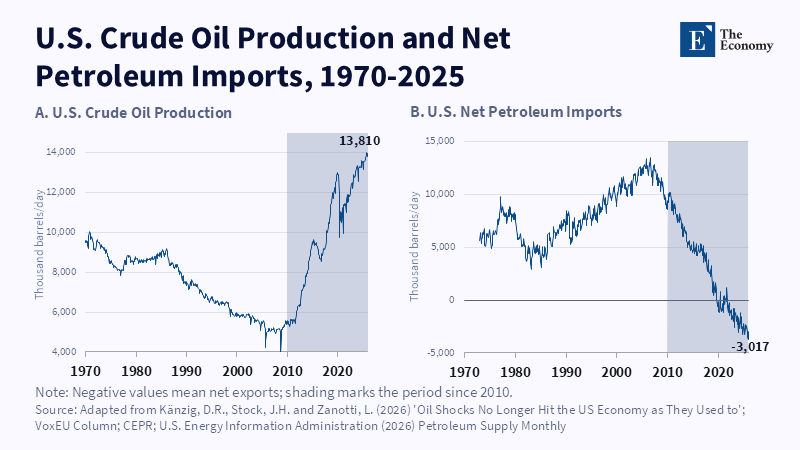
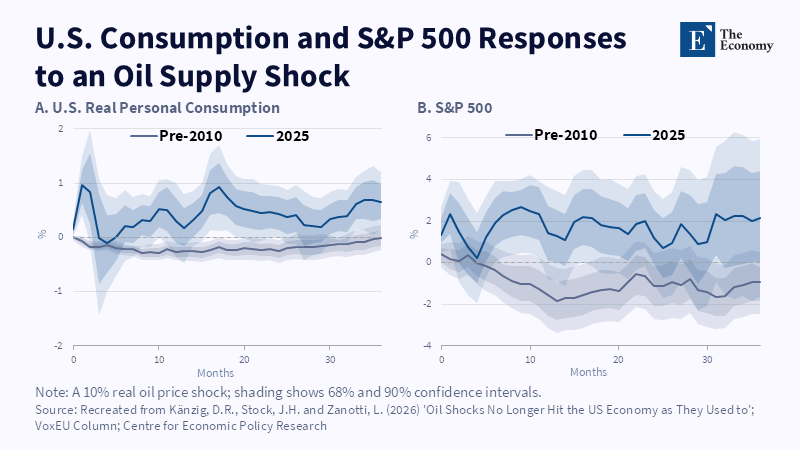
U.S. oil prices averaged $117 a barrel in April of 2026. That is after the U.S. began its war with Iran which cut off some oil flow through the Strait of Hormuz. Before the war started, oil was averaging $72 a barrel. Most oil shocks resulted in a U.S. recession and an increase in unemployment from 1973 until the early 2000's. This has changed and most people do not know it. Researchers from Northwestern and Harvard University have shown at the Brookings Papers on Economic Activity conference that the U.S. benefits from higher oil prices because the U.S. now produces about 14 million barrels of oil a day, compared to 5 million barrels in the late 2000's. The research does not cover Venezuela, but the same shift changes the stakes of Washington's Venezuela oil deal.
Oil Price Shocks No Longer Cause American Recessions
When the U.S. was importing most of its oil it was easy to see why higher oil prices caused a recession. As oil prices went up, the U.S. was transferring wealth from America to Saudi Arabia or Venezuela. Once that money left America, it could not be spent on American-made products. Northwestern and Harvard used oil shocks from OPEC announcements to study the effect oil price shocks have had on the American economy since 2010. With the civil war in Libya in 2011 and Russia's invasion of Ukraine in 2022, oil prices skyrocketed. Neither of those events caused a U.S. recession.
As the U.S. increased shale oil production, it reduced its net oil imports and became a net petroleum exporter in 2019. According to the EIA, the U.S. was still a net petroleum exporter in 2025. Exporting a record amount of energy in 2025 totaling 31 quadrillion Btu.
What is interesting about this is that employment outside of the mining sector increases by the same amount in oil-producing states as it does in states that do not produce oil. Manufacturing, construction, trade and services all benefit from oil shocks. Even stocks that were affected by high fuel costs, like airlines, are benefiting from higher oil prices now. Consumers will still pay more for gasoline when oil prices spike. Prices will react to oil shocks just as they always have. It is just the overall U.S. economy that now benefits from higher oil prices which creates some issues for the Federal Reserve. They can fight inflation without worrying about lowering output. Politicians will also have to deal with high oil prices.
Venezuelan Barrels Arrive in Texas Refineries
On the 27th of October, President Trump announced that the first million barrels of oil from the U.S. Venezuela oil deal arrived in Corpus Christi, Texas. This oil will be used by Texas refineries and is coming to the U.S. for free. Not bad for a year that started out crazy.
In January, the U.S. captured Venezuelan president Nicolas Maduro and brought him to New York to stand trial for narcoterrorism charges. In August, Secretary of State Marco Rubio and Secretary of War Pete Hegseth signed the largest oil deal in the world's history. Venezuela gave a private company called North American Blue Energy Partners a 100-year lease to 17 oil fields containing approximately 65 billion barrels of oil. The Department of War's Office of Strategic Capital receives a 35 percent equity stake in the company's parent. They will also be allowed to purchase 20 percent of all oil produced at cost and have the option to purchase the remaining 80 percent.
Texas produces light sweet oil from shale. Many refineries along the Gulf Coast were built to process heavy sour oil, which Venezuela produces. That is why the U.S. exports much of its light oil and imports heavier oil to feed those refineries. U.S. net crude oil imports were 2.2 million barrels per day in 2025. Down from 2.5 million barrels per day in 2024. The U.S. was still exporting more petroleum than it imported overall. Venezuela sent 110,000 barrels per day to the Gulf Coast in January and 575,000 barrels per day by June. According to the S&P Global Energy data, 43 percent of that oil went to Texas refineries that can process heavy oil. Saudi Arabia and Iraq accounted for over 12 percent of the U.S. Gulf Coast's oil imports in 2025. But when the war cut off oil from the Middle East, Venezuela took their place.
Control Over Venezuelan Oil Without a 51st State
President Trump said in May that he was considering making Venezuela the 51st state. He thought Venezuela had $40 trillion in oil. Venezuela's acting president, Delcy Rodriguez, denied that the U.S. would ever take over their country. She said Venezuela was not a colony and was a free country. Since then, there has not been any plan to make Venezuela a U.S. state. But with this oil deal, the U.S. is getting the benefits of making it a state without doing it.
The U.S. will now have 65 billion barrels of oil under its control. That is more oil than the U.S. has inside its borders. There are about 46 billion barrels of oil in the U.S. The board of directors will have a U.S. veto and will require most American citizens. This deal will be enforced under U.S. law. While the U.S. is not making Venezuela a state, it is taking over Venezuela's oil reserves.
Even though the U.S. has more oil under its control, it does not own it. Venezuela is still a country and the taxes and royalties on the oil are owed to the Venezuelan government. Those taxes are expected to total $200 billion over the next 25 years. But since the U.S. controls its exports and the money from those exports, it may have that under its control as well. The administration has not disclosed how much money is sitting in those accounts right now. Another issue with this deal is that a future Venezuelan government may want to take their oil back from the U.S.
It will take a long time to see the full effects of this deal. Venezuela is currently producing 1 million barrels of oil a day and the U.S. is buying about half of it. Venezuela was producing over 3 million barrels of oil per day in the early 2000's. Experts do not expect a big jump in Venezuelan oil production until the early 2030's. If North American Blue Energy Partners spends the $100 billion they are planning to spend, that may happen sooner. Either way, the U.S. has more control over Venezuelan oil and can decide who buys that oil and where it gets refined.
More Room to Maneuver When Oil Supply Breaks
The U.S. has benefited from lower oil prices for the last 50 years. Washington wanted its oil to be cheap and accessible. That has not changed. But the U.S. now has an extra incentive to keep oil flowing if it can sanction a country without affecting its economy. Or block off oil supplies without causing a recession, the U.S. has that option. With the U.S. war with Iran, this may play out. The research does not go into what will happen with the current oil shock. But its findings imply that prices near $100 a barrel in mid-September need not cause an American recession and the U.S. can use Venezuelan oil to supply its refineries with what they need. If oil from the Middle East stops coming in.
Many Americans will pay more for gasoline. So, it is not all good news for the average American. But when oil prices spike, employment will increase outside of the oil industry. It still has benefits across the country. The researchers believe that higher oil prices will not be good for everyone. But overall, the U.S. will benefit from higher oil prices.
A Government on Both Sides of the Oil Market
The White House will continue to say that it will lower the price of gasoline and diesel. They will also say that this oil deal will provide the U.S. with hundreds of billions of dollars. That will only happen if oil prices stay high. The U.S. is in a strange spot where its government wants to see oil prices go up and come down at the same time. Companies that produce oil have the same conflict of interest. They want to sell oil at higher prices and refine that oil at a lower cost. It is just that the U.S. government is doing this now, too.
The Gulf Coast exports more petroleum than it imports and its surplus makes the whole country a net exporter. That means the U.S. government can lower the price of gasoline and diesel by selling that oil at home. Or it can sell it abroad and make more money. It will all depend on what the private sector decides to do with that oil. Petroleum made up 63 percent of U.S. energy exports and 83 percent of U.S. energy imports in 2025. So, the U.S. will continue to buy and sell oil. The difference is that the U.S. is no longer just trying to buy oil. It is selling oil too.
Oil was averaging $117 a barrel in April of 2026. If that happened in 1979, Washington would have done everything in its power to lower oil prices. The U.S. now has 17 Venezuelan oil fields under its control. The U.S. owns 35 percent of the company that operates those fields and is receiving 5x more Venezuelan oil than it was in January. The research shows that higher oil prices no longer need to cause a U.S. recession, but it says nothing about why the administration took over the direction of Venezuela's oil. But what the U.S. will do with that information is up to its government.
The views expressed in this article are those of the author(s) and do not necessarily reflect the official position of The Economy or its affiliates.
References
FOX Television Stations (2026) ‘Trump “seriously considering” Venezuela as a possible 51st state’, FOX 4 News, 11 May.
Francis, Mickey (2026) ‘The United States is a major energy exporter and importer, especially for petroleum’, Today in Energy. Washington, DC: U.S. Energy Information Administration, 27 May.
Känzig, Diego R., Stock, James H. and Zanotti, Luca (2026) ‘From importer to exporter: oil shocks and the U.S. economy’, Brookings Papers on Economic Activity, Conference Draft, Fall 2026. Washington, DC: Brookings Institution.
Mulder, Brandon (2026) ‘Texas imports of Venezuelan oil soar as war chokes off Middle East supply’, The Texas Tribune, 28 July.
Skidmore, David (2026) ‘From importer to exporter: oil shocks and the US economy’, Brookings Papers on Economic Activity summary. Washington, DC: Brookings Institution, 23 September.
The White House (2026a) ‘Fact Sheet: President Donald J. Trump announces historic oil agreement to secure American energy dominance and drive Venezuela’s economic recovery’, Fact Sheets. Washington, DC: The White House, 31 August.
The White House (2026b) ‘President Trump announces arrival of first one million barrels of oil in Texas thanks to historic oil deal’, Releases. Washington, DC: The White House, 28 October.
Troderman, Jimmy (2026) ‘Annual U.S. crude oil exports decrease for first time since 2021’, Today in Energy. Washington, DC: U.S. Energy Information Administration, 10 March.
Working across research, policy, and data-driven analysis, the Editorial Board ensures that published pieces reflect a consistent institutional perspective grounded in quantitative reasoning and long-term structural assessment.