“No Copper, No AI”: Power Grid’s Critical Commodity Skyrockets on Data Center Boom

Anne-Marie Nicholson is a fearless reporter covering international markets and global economic shifts. With a background in international relations, she provides a nuanced perspective on trade policies, foreign investments, and macroeconomic developments. Quick-witted and always on the move, she delivers hard-hitting stories that connect the dots in an ever-changing global economy.
Authored On
Modified
AI data center and power grid investment surges, fueling explosive copper demand
Protracted mine development stalls production growth, deepening supply-demand imbalances
Price gap with nickel narrows sharply, raising prospect of first-ever crossover
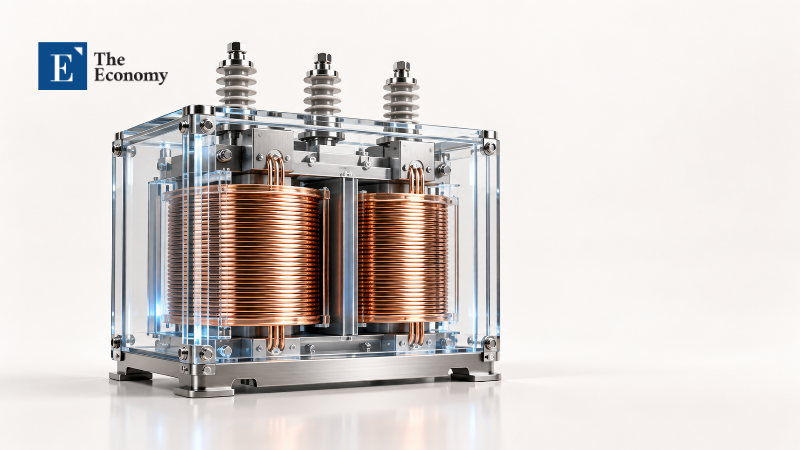
Copper, once classified as a conventional industrial base metal and undervalued relative to rare metals, is rapidly gaining in value. Demand has surged amid a boom in artificial intelligence (AI) data centers and power grid construction, but supply growth remains sluggish because new mines take years to develop. With supply failing to keep pace with demand, copper prices have repeatedly set record highs and are now closing in on nickel, which once traded at nearly three times the price of copper. As concerns mount over a prolonged supply shortage, Japan and China are accelerating their procurement drives, sweeping up even copper scrap.
Copper Closes 88% of Price Gap With Nickel in Four Years
On the London Metal Exchange (LME) on the 16th (local time), three-month copper traded at $14,237 per metric ton, while nickel changed hands at $16,130 per metric ton. Copper had climbed to 88.3% of the price of nickel. The ratio, which stood at 36.0% in 2022, has more than doubled in four years. At the time, copper and nickel were priced at $7,985 and $22,200 per metric ton, respectively, leaving a gap of $14,215 between the two metals.
Copper prices, however, rose from $8,225 in 2023 to $8,990 in 2024 and $9,823 in 2025 before reaching $14,672 on the 9th. Over the same period, nickel prices fell 24.9% from $22,200 to $16,675. The price gap between the two metals consequently narrowed to $2,003, an 85.9% contraction from 2022.
Copper has never traded above nickel since financial data provider LSEG began compiling the data in 2005. With copper setting successive record highs, market participants are now discussing the possibility of the first price crossover since the data series began. Commodity market experts said, “A price flip once considered unimaginable is now imminent,” adding that “copper has been elevated to the status of a de facto strategic rare metal capable of determining national security.”
Nickel Weakens Amid LFP Adoption and Oversupply
Supply and demand have driven the diverging fortunes of the two metals. The greatest downward pressure on nickel prices originated in Indonesia, the world’s largest producer. According to the U.S. Geological Survey (USGS), Indonesia produced 2.6 million metric tons of mined nickel last year, accounting for 66.7% of global production of 3.9 million metric tons. The figure was up 12.6% from the previous year, more than twice the 5.1% increase in global production over the same period. Supply expanded rapidly as Chinese capital poured into the construction of local smelters and the processing of low-grade ore using high-pressure acid leaching (HPAL) technology moved into full-scale operation.
In response, the Indonesian government lowered this year’s nickel ore production quota by roughly 30%, from 379 million metric tons last year to between 260 million and 270 million metric tons. The quota for Weda Bay, the world’s largest nickel mine, was also slashed from 42 million metric tons to 12 million metric tons. However, imports of Philippine nickel ore surged 67% year-on-year to 11.4 million metric tons between January and July, substantially diluting the impact of domestic production cuts.
Demand capable of absorbing the increased nickel supply has shown little sign of recovery. The stainless steel market, which has historically accounted for more than 70% of global primary nickel consumption according to the International Nickel Study Group (INSG), remained sluggish amid China’s economic slowdown. The electric vehicle battery market, once expected to become a major new source of demand, has also shifted toward nickel-free products. Lithium iron phosphate (LFP) batteries, which offer advantages in price and safety, now account for roughly half of global electric vehicle sales, eroding the position of ternary batteries that use nickel, cobalt and manganese.
Data Center Power Demand to Rise 5.5-Fold as Copper Procurement Race Intensifies
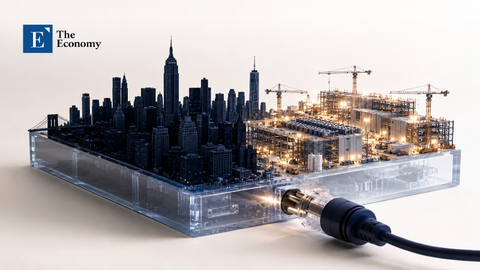
By contrast, the spread of generative AI and power grid expansion across major economies are driving copper prices higher. As Big Tech companies expand their data center investments, demand has risen in tandem for the copper used in server racks, uninterruptible power supplies (UPS), transformers, backup generators, liquid-cooling systems, and transmission and distribution lines. S&P Global estimates that global data center power demand will increase 5.5-fold, from 100 gigawatts (GW) in 2022 to 550GW in 2040. Data centers are also projected to account for 14% of total U.S. electricity consumption by 2030, up from 5% in 2025. The International Energy Agency (IEA) likewise expects global data center electricity consumption in 2030 to equal Japan’s current annual power consumption. As investment spending once concentrated on semiconductors spreads to generation, transmission and cooling infrastructure, demand flowing into the copper market has risen rapidly.
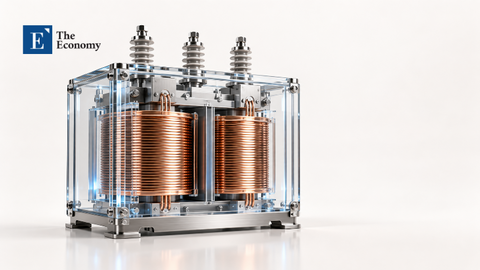
This rise in electricity consumption has served as a catalyst for the simultaneous expansion of power plants and transmission and distribution networks. Supplying vast amounts of electricity reliably around the clock requires generating capacity and power grids to be expanded in tandem. Copper, prized for its conductivity and durability, is indispensable in transformers, cables and power-conversion equipment throughout this process. Within data centers, the rising power density of high-performance graphics processing units (GPUs) has also increased the volume of copper used in power-distribution busbars, cables, UPS systems and liquid-cooling equipment.
Table 1. Copper Supply-Demand Outlook and Constraints on Supply Expansion
| Category | Key Details |
|---|---|
| Demand Growth | Global copper demand to increase 50%, from 28.3 million metric tons in 2025 to 42.4 million metric tons in 2040 |
| Mine Production | Production to peak at 25.8 million metric tons in 2030 before declining to 22 million metric tons in 2040 |
| Supply Shortfall | Recycled copper to account for only 31% of demand in 2040, leaving an annual shortfall of 10.1 million metric tons even if all mining projects under consideration proceed |
| Additional Supply | An additional 14 million metric tons of supply capacity required to meet growing demand |
| Production Costs | Average ore grades at global copper mines down 40% since 1991, while capital expenditure per unit of capacity for brownfield mine expansions has risen 65% since 2020 |
| Development Constraints | Only 5% of copper deposits discovered over the past 35 years were identified in the past decade, with an average of 17 years required from discovery to commercial production |
Sluggish Output Growth Raises Fears of Copper Shortage Despite Surging Demand
Supply capacity, by contrast, is steadily diminishing. Global copper demand is projected to rise 50%, from 28.3 million metric tons in 2025 to 42.4 million metric tons in 2040, while mine production is expected to peak at 25.8 million metric tons in 2030 before falling to 22 million metric tons by 2040. Recycled copper is forecast to account for only 31% of total demand in 2040. Even after factoring in every mining project currently under consideration, the annual supply deficit for that year is estimated at 10.1 million metric tons. S&P Global estimates that an additional 14 million metric tons of supply capacity will be needed to meet rising demand. Yet with new mine development and smelter expansion requiring lengthy lead times, price pressure arising from the supply-demand imbalance has shown no sign of abating.
The supply shortage is unlikely to be resolved quickly because both the time and cost required to secure new production capacity are rising. According to the IEA, average ore grades at copper mines worldwide have declined 40% since 1991, while capital expenditure per unit of production capacity for brownfield mine expansions has risen 65% since 2020. New deposit discoveries have also plunged, with only 5% of the copper deposits discovered over the past 35 years identified during the past decade. It takes an average of 17 years from mine discovery to commercial production, while major development projects have repeatedly suffered construction delays and cost overruns. With declining ore grades raising the mining and processing costs required merely to sustain existing output, and too few new projects in the pipeline, the scope for near-term production increases remains inherently limited.
Japan and China Sweep Up Copper Scrap
Production declines supporting the long-term shortage outlook have also begun to materialize this year. Preliminary data from the International Copper Study Group (ICSG) showed that global copper mine production fell 1.1% year-on-year in the first half of the year. Although solvent extraction-electrowinning (SX-EW) output increased 4.3%, copper concentrate production declined 2.6%, leaving the increase insufficient to lift overall volumes. Mine capacity utilization also fell from 81.0% to 77.1% over the same period. Morgan Stanley downgraded its global mine production forecast for this year from growth to flat or slightly negative, raising the possibility of the first annual contraction in nine years since 2017.
Production pressure has been concentrated in Chile, the world’s largest copper-producing country. According to Chile’s National Statistics Institute (INE), copper mine production fell 9.4% year-on-year to 403,424 metric tons in July, marking the weakest July performance since 2011. Output at Escondida, the world’s largest copper mine, plunged 22.1% to 89,400 metric tons, while production by Chilean state-owned mining company Codelco declined 4.8% to just 112,800 metric tons. Heavy rain and snow disrupted mine and port operations in mid-July, while a collapse at the El Teniente mine later that month heightened uncertainty over a production recovery in the second half. The Chilean Copper Commission lowered its full-year production forecast to 5.27 million metric tons, implying a 2.6% decline from the previous year.
Supply disruptions originating at mines have spilled over into competition for recyclable feedstock. According to The Japan Metal Daily, Japan imported 106,000 metric tons of copper scrap in the first half of the year, surpassing 100,000 metric tons for the first time. Combined imports of copper, brass and bronze scrap reached 139,000 metric tons, twice the volume recorded in the first half of 2021. China’s buying drive has also intensified. According to Shanghai Metals Market (SMM), China imported 627,800 metric tons of copper scrap in the first quarter, up 9.7% year-on-year, while March imports jumped 19.9% to 227,600 metric tons. Facilities for dismantling, sorting and smelting low-grade scrap have been expanded across India, Southeast Asia and the Middle East, while the United States and Europe have curtailed exports of recyclable feedstock in response to manufacturing reshoring and rising domestic smelting demand. As sellers have consolidated their advantage, high-purity copper scrap prices have climbed to 97.5–98% of the LME three-month price, reaching as high as 99% in some transactions.
Anne-Marie Nicholson is a fearless reporter covering international markets and global economic shifts. With a background in international relations, she provides a nuanced perspective on trade policies, foreign investments, and macroeconomic developments. Quick-witted and always on the move, she delivers hard-hitting stories that connect the dots in an ever-changing global economy.
Similar Post