“Chinese Offensive and Subsidy Vacuum Trigger Investment Plunge”: US EV Industry Falters—Can Next-Generation Batteries Turn the Tide?

Aoife Brennan is a contributing writer for The Economy, with a focus on education, youth, and societal change. Based in Limerick, she holds a degree in political communication from Queen’s University Belfast. Aoife’s work draws connections between cultural narratives and public discourse in Europe and Asia.
Authored On
Modified
US EV and battery projects scrapped as market demand weakens
Focus shifts to next-generation battery technology, but tangible payoff remains uncertain
Chinese EV makers dominate global market and make inroads into US supply chains
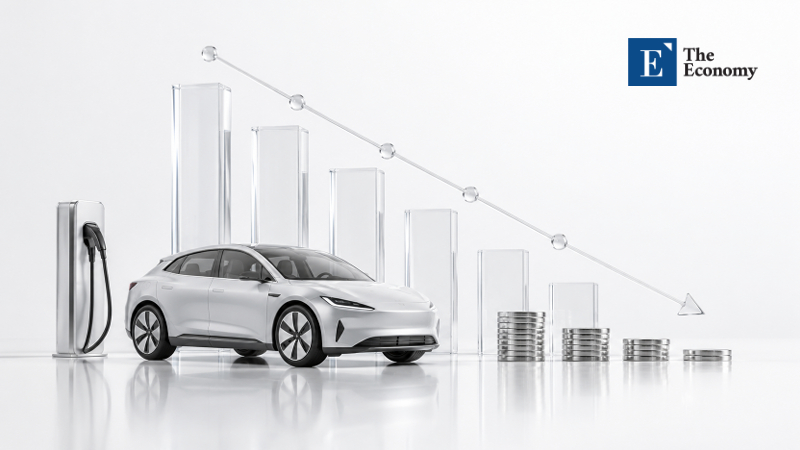
Investment in US electric vehicle (EV) and battery businesses is contracting. Market demand has plummeted since the Trump administration terminated EV tax credits, prompting industry players to withdraw or postpone plans to expand existing production facilities. Companies are increasingly shifting their focus toward next-generation battery technologies, including all-solid-state and lithium manganese-rich (LMR) batteries, in anticipation of a future market recovery, but whether this strategy will produce tangible results remains uncertain. The challenge stems from Chinese EV manufacturers’ rapid expansion of their overseas market share and supply-chain influence, which is placing mounting pressure on the US automotive industry.
US EV Industry Scales Back Investment
According to a Reuters report on the 15th, citing data from the Center for Automotive Research (CAR), capital investment in US automobile manufacturing more than doubled between 2019 and 2024 compared with the preceding six-year period, with EV-related businesses accounting for most of the increase. Investor confidence in electric vehicles was unmistakable at the time. That trend reversed last year. Data from Atlas Public Policy, a US data and policy research firm, show that canceled clean-energy manufacturing projects reached $20 billion last year, with the vast majority concentrated in battery and EV manufacturing. Announced investment in new projects, by contrast, totaled only approximately $6.5 billion. That was one-eighth of the $55 billion recorded in 2023.
The contraction in investment reflects the Trump administration’s reduction of EV support and the resulting slowdown in demand. The United States terminated a tax credit of up to $7,500 for new electric vehicles at the end of September last year. Consequently, US EV sales plunged to approximately 234,000 units in the fourth quarter, down 46% from the previous quarter and 36% from a year earlier. The sales slump has persisted this year. According to Kelley Blue Book (KBB), a subsidiary of market research firm Cox Automotive, US EV sales fell 27.3% year over year to 216,399 units in the first quarter and declined another 20.5% to 247,226 units in the second quarter. EVs accounted for only approximately 5.8% of all new-vehicle sales in both quarters. That was barely half the 10.6% recorded in the third quarter of last year.
Capital Retreat Extends to Battery Market
The pullback is equally pronounced when the scope is narrowed to the battery sector. According to Atlas data, canceled US battery manufacturing projects totaled $17.7 billion between the third quarter of 2023 and the third quarter of last year, equivalent to approximately 11% of all battery projects announced during the period. Capital flows into factories already under construction or expansion also declined. According to the Clean Investment Monitor (CIM), actual investment in US battery manufacturing facilities plunged 47% year over year to $5 billion in the first quarter of this year and remained at a similar level in the second quarter, representing a 34% contraction. Moreover, newly announced battery manufacturing projects totaled just $500 million in the second quarter, while announcements for the entire first half amounted to $915 million—the lowest level since the Inflation Reduction Act (IRA) was enacted in 2022.
US companies, however, are not abandoning the electrification market altogether. While adjusting production capacity for conventional EVs and lithium-ion batteries amid the immediate sales downturn, they are continuing to develop next-generation battery technologies in preparation for a future recovery in demand. Ford, for example, sharply scaled back its EV business last year by canceling plans to launch three models and ending production of the F-150 Lightning, but it has maintained its joint research and development (R&D) framework with US solid-state battery company Solid Power. General Motors (GM) is also investing $900 million to commercialize new battery chemistries and is developing a lower-cost LMR battery than conventional nickel-based products, targeting deployment in 2028. An industry official explained, “Under current demand conditions, it is rational to postpone large-scale capacity expansion until next-generation technologies capable of achieving price competitiveness without tax incentives reach maturity, rather than preemptively expanding conventional battery production facilities.”
Table 1. US EV Industry’s Response to Weakening Demand
| Category | Key Developments |
|---|---|
| Investment contraction | Sharp rise in canceled EV and battery projects, steep decline in new investment announcements |
| Policy shift | Weaker purchase incentives following the termination of EV tax credits |
| Demand slowdown | Simultaneous declines in EV sales and share of the new-vehicle market |
| Production adjustments | Cancellation of existing EV launches and postponement of battery capacity expansion |
| Technology development | Continued research into next-generation batteries, including all-solid-state and LMR technologies, to capture future demand |
Chinese EVs Accelerate Across Global Markets
The key question is whether this strategy can deliver results amid fierce competition from Chinese companies. Chinese automakers have recently been expanding their influence rapidly beyond their vast domestic market. According to the China Association of Automobile Manufacturers (CAAM), China exported 6.038 million passenger vehicles last year, up 21.9% from the previous year, while cumulative exports from January through August exceeded 6.2 million units, already surpassing the full-year total from last year. Overseas shipments reached approximately 890,000 vehicles last month alone, surging 67.1% from a year earlier.
Electric vehicles, in particular, have become the central pillar of the Chinese automotive industry’s overseas expansion. According to the International Energy Agency (IEA), sales of Chinese-made EVs in Europe increased by nearly 50% year over year to approximately 940,000 units last year, while Chinese vehicles accounted for around 60% of the European Union’s (EU) total EV imports. Growth was also steep in markets outside the United States and Europe. Chinese imports represented approximately 55% of EV sales in these markets, while regional sales of Chinese EVs increased by 130% in Southeast Asia, 60% in the Middle East and 55% in Latin America from the previous year. The US EV production base, by contrast, weakened over the same period. According to the International Council on Clean Transportation (ICCT), the US share of global EV production fell from 7% in 2024 to 5% last year, while production declined 3% year over year to approximately 1.14 million vehicles.
US Automotive Supply Chain Grows More Dependent on China
The influence of China’s EV industry is also extending into the US automotive supply chain. Although the United States is using high tariffs and regulations to block the direct entry of Chinese-made vehicles, it has been unable to exclude Chinese companies entirely from the broader supply chain. Critical minerals are a prime example. According to the US Department of Energy (DOE), China accounts for approximately 35–100% of the global refining and processing markets for major battery materials, including lithium, nickel, cobalt and graphite, and has effectively consolidated control of the global graphite-processing supply chain. US Geological Survey (USGS) data show that China was a leading supplier of 14 of the 33 critical minerals for which the United States had high import dependence last year.
US automakers also make extensive use of Chinese battery technology and supply chains. Ford plans to manufacture products at its $3 billion battery plant in Michigan by licensing lithium iron phosphate (LFP) technology from CATL. Ford will retain ownership and operational control of the factory, but its core manufacturing processes will be based on CATL technology. GM has likewise decided to source batteries for its entry-level Chevrolet Bolt from China’s CATL to maintain price competitiveness until a domestic US LFP production system is completed in 2027.
Prospect of Greater Polarization in Automotive Market
The possibility of an intensified Chinese EV offensive against the United States cannot be ruled out. In a Fox News interview on the 11th, President Donald Trump said, “If China wants to come in and open a factory to build cars in the United States, I’m okay with that.” He added, “Japan does that too, but they hire Americans,” emphasizing that “the important thing is that they hire Americans.” His remarks indicated that he could accept the entry of Chinese companies if their production facilities and employment were brought into the United States. Building local factories, however, would not immediately secure access to the market. The US Commerce Department’s Bureau of Industry and Security (BIS) prohibits connected vehicles manufactured by companies under Chinese or Russian ownership, control or jurisdiction from being sold in the United States beginning with model year 2027. The restriction also applies to vehicles manufactured on US soil.
Experts believe that if these regulatory barriers are eased and Chinese EVs enter the US market in earnest, polarization across the global automotive industry could become even more pronounced. A market expert said, “While Chinese companies equipped with advantages in pricing, production scale and battery procurement rapidly absorb EV demand, US automakers that have fallen behind in the electrification transition may have to focus on defending profitability in the internal-combustion-engine and hybrid segments.” The expert added, “Over time, this creates a widening gap in business foundations and growth potential between companies that have secured EVs as a new growth engine and those that must continue generating profits from conventional powertrains.”
Aoife Brennan is a contributing writer for The Economy, with a focus on education, youth, and societal change. Based in Limerick, she holds a degree in political communication from Queen’s University Belfast. Aoife’s work draws connections between cultural narratives and public discourse in Europe and Asia.
Similar Post