“Trying to Block China, but Destabilizing Supply Chains”: U.S. Curbs on Foreign Power Equipment Strain Industry as Domestic Production Falls Short

Aoife Brennan is a contributing writer for The Economy, with a focus on education, youth, and societal change. Based in Limerick, she holds a degree in political communication from Queen’s University Belfast. Aoife’s work draws connections between cultural narratives and public discourse in Europe and Asia.
Authored On
Modified
Trump administration raises barriers to imports and installation of foreign-made power equipment
U.S. energy developers grapple with vulnerabilities in domestic supply chains
China deepens grip on global supply chains, signals massive additional investment
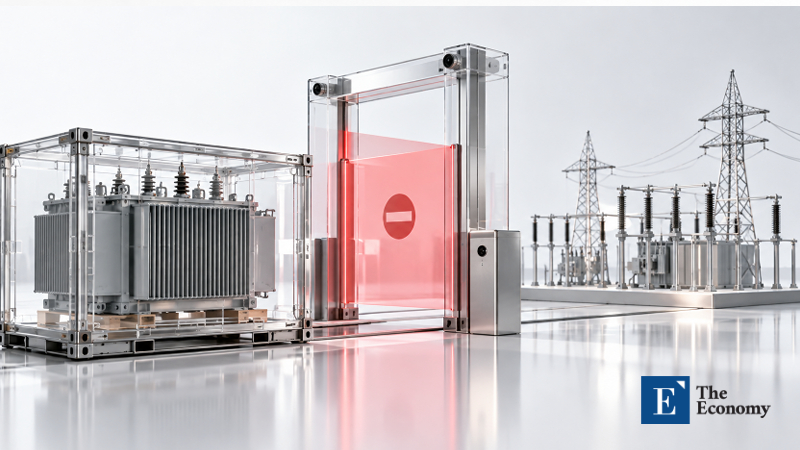
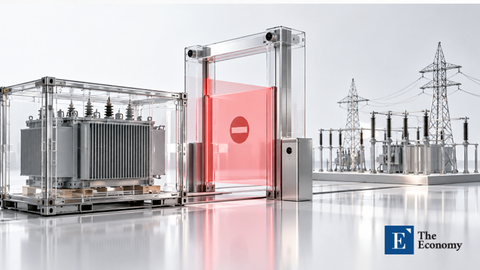
U.S. President Donald Trump’s administration has raised regulatory barriers against foreign-made power-grid equipment. Citing national security concerns, it has tightened import and installation requirements for critical power infrastructure, including transformers, inverters, and battery energy storage systems (BESS). Against this backdrop, market analysts warn that the United States may struggle to replace the relevant supply chains solely through domestic capacity. The country remains heavily dependent on China and other foreign suppliers for key power equipment.
U.S. Tightens Power Equipment Restrictions
On September 16 (local time), Nikkei Asia reported that U.S. clean-energy developers have recently begun putting equipment orders on hold. The shift follows Executive Order 14421, “Declaring a National Emergency to Secure the United States Bulk-Power System,” which President Trump signed last month. The order was introduced to address the potential national security threats posed by large foreign-made power equipment and authorizes restrictions on the import, purchase, and installation of foreign-made grid equipment deemed to present national security risks.
The restrictions cover major power infrastructure such as large transformers, generators, high-voltage circuit breakers, inverters, and BESS, as well as the software, firmware, and remote-access functions required to control such equipment. The U.S. energy secretary may prohibit transactions involving equipment supplied by companies linked to countries subject to U.S. sanctions or arms embargoes if it is deemed to heighten the risk of grid disruption, remote manipulation, or supply interruptions. The secretary may also order enhanced security measures, access restrictions, replacement, or removal of equipment already installed on the U.S. power grid. The Department of Energy must establish detailed implementation standards and authorization procedures within 120 days of the order’s signing.
Domestic Procurement Capacity Falls Short
U.S. energy developers are maintaining a cautious stance amid regulatory uncertainty. Until the Department of Energy releases detailed implementation standards, it remains unclear which manufacturers and products will be prohibited and how extensively the rules will apply to projects already under contract or construction. If previously contracted equipment becomes subject to restrictions midway through a project, developers could face enormous additional costs as they select new suppliers, revise designs, and replace equipment.
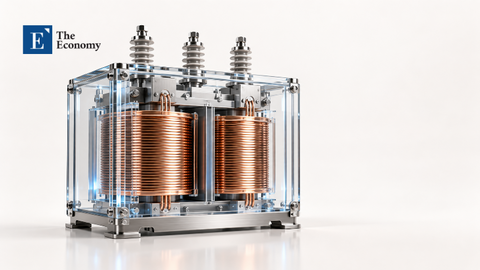
Replacing existing supply chains will also be difficult. Domestic U.S. production capacity is insufficient to meet demand for the relevant equipment in the short term. According to power and renewable-energy consultancy Wood Mackenzie and the Rocky Mountain Institute (RMI), a U.S. nonprofit energy think tank, domestic production met only about 20% of U.S. demand for large power transformers last year. Domestic manufacturers supplied only about 50% of distribution-transformer demand, while more than 90% of the roughly 200 gigawatts (GW) of inverters delivered to U.S. commercial, industrial, and utility-scale solar projects over the past decade were imported. BESS is likewise considered difficult to source domestically in the near term. Wood Mackenzie estimated that most battery cells used in U.S. utility-scale BESS last year were imported, with domestic battery-cell production capacity sufficient to meet only about 6% of demand.
Table 1. U.S. Power-Grid Ecosystem’s Reliance on China
| Item | Share Reliant on Chinese Supply |
|---|---|
| Utility-scale BESS battery cells | Virtually all supply to the U.S. market in 2024 |
| Complete lithium-ion BESS units | 69% of U.S. imports in 2024 |
| Lithium-ion batteries | 66.5% of total U.S. imports in the second quarter of 2026 |
| Solar inverters | More than 70GW of the 200GW supplied in the United States over the past decade |
| Low-voltage transformers | 54% of U.S. imports in 2024 |
| High-voltage transformers | Increase from 3% in 2020 to 10% in 2024 |
Chinese Products’ Supply-Chain Clout
China has filled much of the void in America’s domestic supply chains. According to Wood Mackenzie, virtually all battery cells installed in U.S. utility-scale BESS in 2024 were made in China. Congressional Research Service (CRS) data also showed that Chinese products accounted for 69% of the complete lithium-ion BESS units imported by the United States that year. This supply structure has changed little more recently. Data from global credit rating agency S&P Global showed that China accounted for 66.5% of total U.S. lithium-ion battery imports in the second quarter, far exceeding South Korea’s 9.9% and Japan’s 7.1%.
Chinese suppliers also command an enormous presence in the inverter market. Of the 200GW of inverters supplied to the U.S. commercial, industrial, and utility-scale solar markets over the past decade, more than 70GW came from companies headquartered in China. The situation is similar for transformers and other power-conversion equipment. According to the U.S.-China Economic and Security Review Commission (USCC), Chinese products accounted for 54% of U.S. low-voltage transformer imports in 2024, while China’s share of high-voltage transformer imports rose from 3% in 2020 to 10% in 2024.
Global Market Share ‘Overwhelming’
The influence of Chinese companies extends well beyond the United States and is equally pronounced across global markets. According to the International Energy Agency (IEA), China accounted for more than 80% of global battery-cell production last year. In the case of lithium iron phosphate (LFP) batteries, which are widely used in BESS, more than 98% of global production took place in China in 2024. Chinese companies are also rapidly expanding their presence in system integration. According to data released by Wood Mackenzie in June, Chinese companies held a 76% share of the global BESS system-integration market last year. System integration is the process of combining battery cells, power conversion systems (PCS), battery management systems (BMS), and cooling and control equipment into a single facility for delivery.
The inverter market is similarly concentrated. Global solar-inverter shipments rose 10% year on year to 589 gigawatts alternating current (GWac) in 2024. Huawei and Sungrow, the world’s two largest suppliers and both based in China, shipped 176GWac and 148GWac, respectively. Together, the two market leaders accounted for more than half of the global market. Excluding these companies, no individual inverter supplier held a global market share exceeding 5%.
Chinese Government Maintains Aggressive Investment Drive
China’s supply-chain competitiveness is expected to strengthen further as its government accelerates additional investment in power infrastructure. State-owned utility State Grid Corporation of China plans to invest up to about $560 billion in fixed assets during the 15th Five-Year Plan period from 2026 to 2030. This represents an increase of about 40% from the 14th Five-Year Plan period. Total investment will be even larger when spending by operators other than State Grid is included. China’s National Energy Administration (NEA) expects nationwide fixed-asset investment in power grids to exceed $700 billion over the next five years and estimates that total funding for core energy projects and related emerging industries could surpass $2.8 trillion.
The rapid expansion of renewable-energy generation capacity is widely cited as a key driver of this increased investment in power infrastructure. According to the NEA, China added more than 430GW of wind and solar capacity last year, comprising 318GW of solar and 120GW of wind installations. This represented more than 80% of all newly installed power-generation capacity. As weather-dependent wind and solar power account for a growing share of generation, China must expand storage facilities and grid-balancing capacity to absorb fluctuations in output. The geographical divide between generation and electricity consumption is also increasing the need for large-scale transmission investment. China’s renewable-energy facilities tend to be concentrated in the so-called “Three Norths” region spanning northern and western areas such as Inner Mongolia, Xinjiang, and Gansu, while large-scale electricity demand from manufacturing plants and data centers is concentrated along the eastern coast and in major urban regions. The Chinese government therefore plans to add 15 new ultra-high-voltage (UHV) direct-current transmission networks during the 15th Five-Year Plan period, while State Grid has set a target of expanding long-distance transmission capacity by 30% from the level recorded at the end of the 14th Five-Year Plan.
Aoife Brennan is a contributing writer for The Economy, with a focus on education, youth, and societal change. Based in Limerick, she holds a degree in political communication from Queen’s University Belfast. Aoife’s work draws connections between cultural narratives and public discourse in Europe and Asia.
Similar Post