“Decoupling Is Effectively Impossible” — China Seizes ESS Dominance After Its Battery Ascendancy, Overwhelming Rivals in Both Scale and Technology

As one of the youngest members of the team, Tyler Hansbrough is a rising star in financial journalism. His fresh perspective and analytical approach bring a modern edge to business reporting. Whether he’s covering stock market trends or dissecting corporate earnings, his sharp insights resonate with the new generation of investors.
Authored On
Modified
China’s ESS Industry Establishes an Overwhelming Global Presence
Technological Edge Becomes Increasingly Apparent, Turnkey Solution Capabilities Strengthen
Western Decoupling Strategy Faces Obstacles as Alternatives to China Remain Scarce Across the Battery Sector
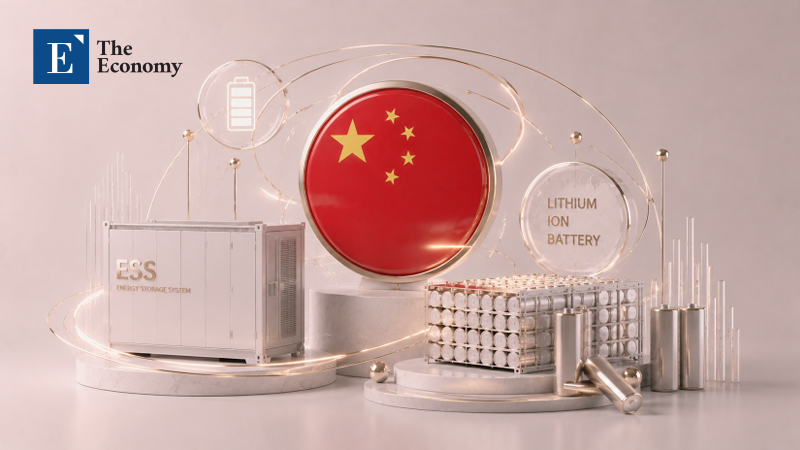
Chinese energy storage system (ESS) companies are rapidly expanding their influence. Growth that first accelerated in the domestic market is now spreading swiftly across global markets, cementing a commanding position. Market observers increasingly argue that China has evolved into a critical player equipped not only with manufacturing capacity but also with advanced technological expertise and turnkey system delivery capabilities, rendering Western efforts to exclude China from battery supply chains increasingly ineffective.
China’s ESS Surge
According to a report published on June 21 (local time) by the South China Morning Post (SCMP), citing Bank of America (BofA) Global Research, Chinese ESS manufacturers have recently secured large-scale construction orders exceeding a combined 25 gigawatt-hours (GWh) from the United States and Europe. Matty Zhao, Co-Head of China Equity Research at BofA Global Research, said persistent disruptions in oil and gas supply chains stemming from Middle East conflicts, combined with the need to modernize aging power grids across advanced economies, are driving an explosive increase in global ESS demand. Zhao added that regardless of whether the recent peace agreement between the United States and Iran ultimately takes hold, governments worldwide have become acutely aware of the necessity of “structural energy security,” prompting U.S. and European authorities to allocate enormous financial resources to the ESS sector.
China’s rapid rise in ESS is evident across multiple indicators. The strength of its domestic market is particularly notable. China’s National Energy Administration (NEA) reported that, as of the end of last year, installed and operational new-generation ESS capacity in China had reached 136 million kilowatts (kW), representing more than a fortyfold increase from 2020. Equivalent operating hours for newly deployed ESS systems reached 1,195 hours, up 300 hours from the previous year. Equivalent operating hours measure how frequently and efficiently a system is utilized by converting usage into continuous operation at rated output. Lithium-ion battery-based ESS overwhelmingly dominated by technology type, accounting for 96.1% of total installations.
This momentum has rapidly extended into global markets. Data released by SNE Research in January showed that the global lithium-ion battery-based ESS market expanded 79% year-over-year to 550 GWh last year. China accounted for 64% of that total, or 352 GWh, firmly securing its position as the world’s largest ESS market. Corporate performance figures paint a similar picture. CATL shipped 167 GWh and retained the top position with a 30% market share, while Chinese companies occupied every position through seventh place in the global rankings. Together, those seven firms controlled 83.3% of the market, underscoring China’s near-total dominance of the sector.
Accelerating Technological Advancement
China’s competitiveness in ESS extends far beyond sales volume and is increasingly evident in technology leadership. According to BloombergNEF’s “Q1 2026 Energy Storage Tier 1 List” released in February, 49 of the companies included in the ranking, or 83.1%, were Chinese firms such as CATL, BYD, and CALB. Only two U.S. companies—Tesla and Fluence—made the list, while LG Energy Solution was the sole South Korean company classified as Tier 1. Since the first quarter of 2024, BloombergNEF has published quarterly rankings evaluating ESS companies based on financial strength, fundraising capability, and large-scale project execution records. Eligible firms include battery cell manufacturers, power equipment suppliers, and system integrators that have delivered ESS products to at least three third-party customers through projects exceeding 10 megawatts (MW) and 10 megawatt-hours (MWh) within the past two years.
One of the most prominent examples of technological advancement in China’s ESS sector is grid-forming technology. Grid-forming systems stabilize power networks by autonomously controlling voltage and frequency during periods of instability, making them among the most sophisticated ESS technologies available. China has moved aggressively to accumulate commercial deployment data in this field. Last year, Yunnan Province launched the world’s first grid-forming sodium-ion ESS power station combining lithium-ion and sodium-ion batteries. Major companies including Huawei, CATL, and Sungrow have also commercialized large-scale ESS, microgrid platforms, and industrial power-control solutions, strengthening their next-generation grid management capabilities.
These technological gains have enabled rapid adaptation to changing business models. The global ESS market is increasingly shifting away from the supply of standalone battery cells toward software-driven turnkey systems. Rather than purchasing and assembling individual components, utilities and power companies are increasingly adopting integrated products capable of managing charging and discharging operations in real time while optimizing revenue generation. In response, Chinese ESS companies have elevated their turnkey capabilities—integrating power conversion systems (PCS), energy management systems (EMS), and battery packs into unified solutions—to world-leading levels. By providing complete packages encompassing design, construction, power management, and post-installation services, they are helping global customers reduce deployment costs and streamline operations.
Questions Over the Viability of Excluding China’s Supply Chain
Support from the Chinese government is further reinforcing this trajectory. China’s National Development and Reform Commission and the National Energy Administration unveiled a “Special Action Plan for Large-Scale New Energy Storage Deployment 2025–2027,” targeting more than 180 gigawatts (GW) of new-generation ESS capacity by 2027. If fully implemented, direct project investment is expected to reach approximately $35.2 billion. Chinese authorities plan to substantially expand ESS deployment across power generation and transmission networks while simultaneously promoting technological innovation, standardization, workforce development, and international cooperation. The initiative reflects Beijing’s determination to establish ESS as a core infrastructure component supporting renewable energy expansion and grid stability.
Against this backdrop, a growing number of market participants argue that removing China from ESS—and from the broader global battery supply chain—has become effectively impossible. As a result, the rationale behind Western decoupling strategies is increasingly being called into question. China already holds commanding positions across the entire battery value chain, including raw material refining, key materials production, cell manufacturing, and final assembly. According to the International Energy Agency (IEA), approximately 85% of global battery cell manufacturing capacity was concentrated in China in 2024, with Chinese companies directly controlling more than 75% of that capacity. The same pattern is evident in critical mineral supply chains. China accounts for roughly 65% of global lithium refining, 75% of cobalt refining, 80% of graphite mining, and more than 90% of graphite refining. The graphite supply chain, particularly for battery anode materials, remains heavily dependent on China’s dominance.
Finding technological alternatives is equally challenging. More than 98% of global lithium iron phosphate (LFP) cathode materials and LFP battery cells are reportedly produced in China, while efforts by Western nations to establish independent battery supply chains have delivered only limited results. The IEA noted that although battery production capacity outside China continues to expand, most planned facilities remain heavily reliant on the technological expertise of established Asian battery manufacturers from China, South Korea, and Japan. The situation is especially precarious in the European Union. Sweden’s Northvolt, once regarded as a symbol of Europe’s battery independence ambitions, entered bankruptcy proceedings last year, highlighting the technological, financial, and mass-production challenges confronting Europe’s efforts to build a self-sustaining battery ecosystem.
As one of the youngest members of the team, Tyler Hansbrough is a rising star in financial journalism. His fresh perspective and analytical approach bring a modern edge to business reporting. Whether he’s covering stock market trends or dissecting corporate earnings, his sharp insights resonate with the new generation of investors.
Similar Post