“Energy, Logistics and Agriculture on High Alert” Europe Reels From Heat Waves and Drought as Need for Climate Adaptation Investment Mounts

Oliver Griffin is a policy and tech reporter at The Economy, focusing on the intersection of artificial intelligence, government regulation, and macroeconomic strategy. Based in Dublin, Oliver has reported extensively on European Union policy shifts and their ripple effects across global markets. Prior to joining The Economy, he covered technology policy for an international think tank, producing research cited by major institutions, including the OECD and IMF. Oliver studied political economy at Trinity College Dublin and later completed a master’s in data journalism at Columbia University. His reporting blends field interviews with rigorous statistical analysis, offering readers a nuanced understanding of how policy decisions shape industries and everyday lives. Beyond his newsroom work, Oliver contributes op-eds on ethics in AI and has been a guest commentator on BBC World and CNBC Europe.
Authored On
Modified
Europe’s industrial foundations buckle under months of relentless heat and drought
Cooling-water shortages cripple power infrastructure as solar generation alone surges
Greater investment in climate adaptation policies needed to curb tangible losses
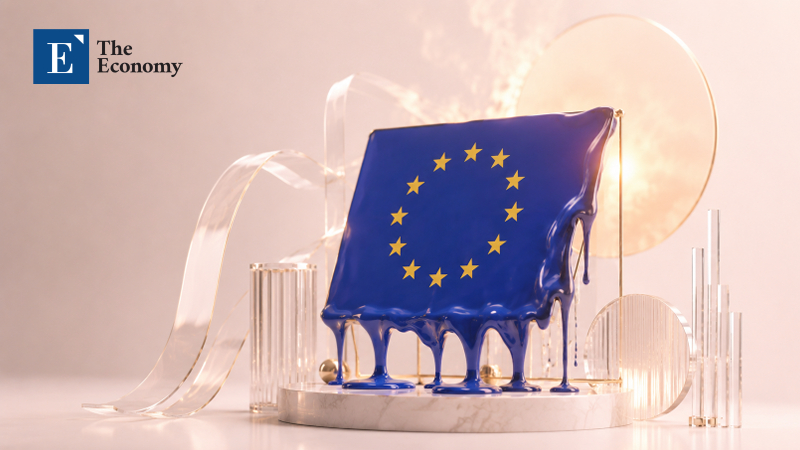
Europe has been battered by record-breaking heat waves and severe drought. Prolonged extreme weather has depleted water resources, destabilizing key industrial foundations spanning agriculture, logistics and power generation. As the pace of climate change across Europe far outstrips the capacity of existing social and industrial infrastructure to adapt, experts say the European Union (EU) must recalibrate its climate strategy, which has focused heavily on cutting greenhouse gas emissions, and strengthen investment in adaptation.
Extreme Weather Engulfs Europe
According to foreign media reports compiled on Aug. 7, European societies and markets have recently been grappling with heat waves and severe drought. Extreme weather events that have repeatedly struck Europe since the spring have persisted, intensifying disruption across the region. The heat began in earnest across Western Europe in mid-May before spreading to the Iberian Peninsula, France, the United Kingdom and Italy. By late June, it had expanded across Western and Central Europe and grown more intense. Western Europe recorded its hottest June since observations began, while prolonged dry weather prompted drought alerts across France, Germany, Austria and Hungary.
The heat showed no sign of abating last month. High temperatures originating on the Iberian Peninsula again spread across Western and Central Europe and the Mediterranean coast, while drought conditions remained severe across most of the continent through the middle of the month. By late July, several countries were also contending with major wildfires. In Spain, fires spread around Madrid, Ávila and Valencia, triggering mass evacuations. At least 12 people were killed in the Los Gallardos and Bédar areas of Almería province. In France, a massive wildfire in the southwestern Gironde region burned approximately 42,000 hectares, forcing more than 220,000 people to evacuate at one point.
Rivers Run Dry Under Relentless Drought
Amid such extreme weather, water resources across Europe are rapidly dwindling. According to a BBC report published on Aug. 3 local time, water levels on the Rhine measured in Cologne in western Germany and Lobith in the Netherlands recently fell to their lowest points since records began. The Danube, which runs from Germany to the Black Sea, has receded so sharply that the wreckage of Nazi warships sunk during World War II and mammoth remains have emerged from the riverbed. The Po, Italy’s longest river, is also setting new record lows almost daily.
These conditions are imposing enormous strain on the region’s agricultural sector. High temperatures have already severely disrupted crop growth, while shortages of irrigation water have made declining yields virtually inevitable. The Po basin is one of Italy’s leading agricultural regions and depends heavily on irrigation networks connected to the river. If water levels continue to fall, farmers could struggle to secure irrigation supplies, while seawater could flow upstream and increase salinity in farmland and groundwater. Such damage could weaken the region’s agricultural production base itself, with consequences extending well beyond a short-term decline in harvests.
The logistics industry has also been placed on high alert. When river levels fall too far, shipowners must reduce cargo loads to prevent vessels from running aground. Moving the same volume of freight consequently requires more ships. As of July 31, the “navigable depth” of the Rhine near Kaub, close to Koblenz in Germany, had dropped to approximately 25 centimeters, matching the record low set in 2018. Some cargo vessels are reportedly operating with loads amounting to less than 20% of their normal capacity.
Nuclear and Thermal Power Plants Face Disruptions
The impact on power generation is also intensifying. As water levels in major rivers plunge, power plants have begun struggling to secure sufficient cooling water. Hungary, for example, is progressively suspending operations at the Paks Nuclear Power Plant, which supplies approximately 40% of the country’s electricity. The shutdowns follow a steep decline in the Danube’s water level, which supplies the plant’s cooling water. Electricity generation at Paks has already fallen to approximately 10% of normal output, prompting the Hungarian government to ask companies and citizens to voluntarily reduce power consumption.
Romanian authorities have blasted rock formations in the drought-depleted Danube to redirect the waterway. The measure was intended to channel more water into the cooling system of the partially idled Cernavodă Nuclear Power Plant. Two Ford and Dacia automobile plants in Romania also decided to suspend production for more than two weeks to reduce electricity consumption. Serbia has similarly cut power generation after water shortages disrupted the cooling systems at its coal-fired power plants.
Table 1. Industry-Specific Damage From Europe’s Heat Waves and Drought
| Sector | Main Affected Areas | Direct Impact | Spillover Risks |
|---|---|---|---|
| Agriculture | Italy’s Po River basin and surrounding areas | Water shortages and high temperatures impair the growth of corn, wheat and sunflowers | Lower crop yields and rising salinity in farmland and groundwater due to seawater intrusion |
| Logistics | Germany’s Rhine and Danube rivers | Falling water levels reduce cargo-vessel loads to less than 20% of normal capacity | Higher logistics costs from deploying additional vessels and shifting freight to rail and road transport |
| Energy | Hungary, Romania and Serbia | Cooling-water shortages force nuclear and thermal power plants to halt operations or reduce output | Unstable electricity supplies and restrictions on industrial power use |
Solar Power Gains Prominence
The heat, however, has not proved detrimental to every source of power generation. For solar power, prolonged clear and dry weather has created favorable generating conditions. According to UK energy think tank Ember, solar generation across the EU reached a record 52 terawatt-hours (TWh) in June. The figure accounted for nearly 25% of total electricity generation across the bloc and exceeded output from every other major power source, including nuclear, gas, wind and hydropower. The trend continued into August. On Aug. 1, Spain generated 259 gigawatt-hours (GWh) of solar power in a single day, while France recorded 172 GWh, Italy 161 GWh and Portugal 28 GWh. All four figures marked record highs for August.
Despite this enormous volume of generation, countries continue to face power shortages because of solar power’s inherent limitations. Electricity supply from solar generation drops sharply after sunset, while insufficient storage capacity and transmission infrastructure make it difficult to transfer surplus daytime electricity to evening peak hours. Across Europe this summer, wholesale electricity prices have repeatedly fallen below zero during periods of abundant daytime solar supply, only to surge after evening demand sets in, producing extreme price volatility.
Europe’s Inadequate Adaptation Policies
Experts say the widening disparity between solar power and other generation sources underscores the importance of core infrastructure. With climate-related risks rapidly materializing, European countries need to develop more flexible and pragmatic responses. Europe’s cities and social infrastructure have failed to keep pace with rising temperatures. Fewer than half of EU member states have nationwide public-health plans for heat waves, while housing, schools, railways, roads and power facilities across Europe remain designed around the milder climate conditions of the past. Air-conditioning penetration is also exceptionally low. Household cooling systems have historically not been treated as essential infrastructure, while high electricity prices and stringent government climate policies have constrained their adoption.
Behind these vulnerabilities lies chronic underinvestment in climate adaptation aimed at limiting damage already materializing through heat waves, droughts, floods and wildfires. According to Reuters, 72% of climate-related spending under the EU’s common budget from 2021 to 2025 went toward “mitigation” policies designed to cut greenhouse gas emissions. Only 18% was allocated to climate adaptation, while 9% supported both areas. A study commissioned by the European Commission and conducted by researchers from climate consultancy Ricardo and the Euro-Mediterranean Center on Climate Change (CMCC), among others, estimates that the EU, its member-state governments and the private sector must invest approximately $80.6 billion annually in climate adaptation through 2050 to strengthen resilience against climate disasters.
Oliver Griffin is a policy and tech reporter at The Economy, focusing on the intersection of artificial intelligence, government regulation, and macroeconomic strategy. Based in Dublin, Oliver has reported extensively on European Union policy shifts and their ripple effects across global markets. Prior to joining The Economy, he covered technology policy for an international think tank, producing research cited by major institutions, including the OECD and IMF. Oliver studied political economy at Trinity College Dublin and later completed a master’s in data journalism at Columbia University. His reporting blends field interviews with rigorous statistical analysis, offering readers a nuanced understanding of how policy decisions shape industries and everyday lives. Beyond his newsroom work, Oliver contributes op-eds on ethics in AI and has been a guest commentator on BBC World and CNBC Europe.
Similar Post