“China’s Onslaught Intensifies”: German Green Startups Collapse as Warning Signs Spread Across Manufacturing

Oliver Griffin is a policy and tech reporter at The Economy, focusing on the intersection of artificial intelligence, government regulation, and macroeconomic strategy. Based in Dublin, Oliver has reported extensively on European Union policy shifts and their ripple effects across global markets. Prior to joining The Economy, he covered technology policy for an international think tank, producing research cited by major institutions, including the OECD and IMF. Oliver studied political economy at Trinity College Dublin and later completed a master’s in data journalism at Columbia University. His reporting blends field interviews with rigorous statistical analysis, offering readers a nuanced understanding of how policy decisions shape industries and everyday lives. Beyond his newsroom work, Oliver contributes op-eds on ethics in AI and has been a guest commentator on BBC World and CNBC Europe.
Authored On
Modified
German solar EV maker Sono Motors files for insolvency after prolonged financial distress
Wave of German green startup failures exposes eroding competitiveness under Chinese pressure
“China is closing in fast”: Alarm bells ring across Germany’s manufacturing ecosystem
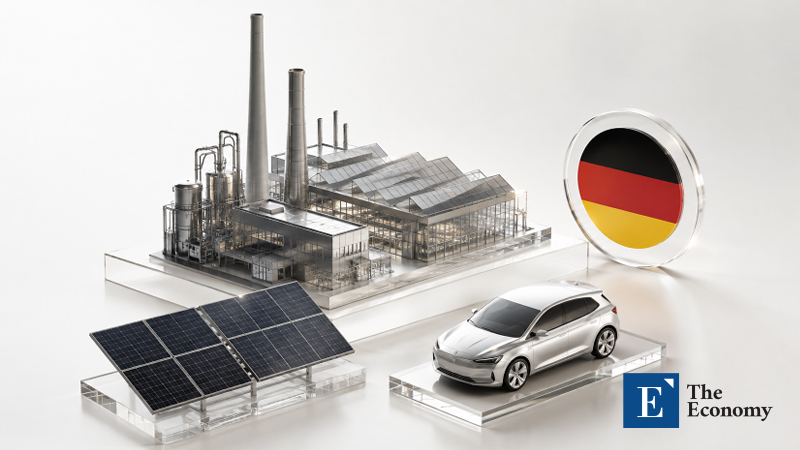
German solar electric vehicle startup Sono Motors is entering insolvency proceedings. The company was pushed to the brink after withdrawing from the EV business amid funding shortages and subsequently failing to generate meaningful revenue from its solar operations. Market attention is now turning to the plight of numerous German green startups facing circumstances similar to those of Sono Motors. Chinese manufacturers have rapidly expanded their global footprint on the strength of price and production-volume advantages, leaving Germany, once a manufacturing powerhouse, with steadily diminishing room to compete.
The Fall of Sono Motors
According to foreign media reports compiled on August 6, Sono Motors ceased operations and filed for insolvency with a court on July 31 local time. The company was founded in 2016 with the goal of integrating solar power generation into electric vehicles and grew through heavy reliance on crowdfunding and individual investors rather than institutional financing. Its flagship model, the five-door Sion EV, incorporated solar cells into the hood, roof, sides and rear, storing electricity generated while driving in its battery. The vehicle could also be charged conventionally, effectively making it a battery electric vehicle equipped with solar power generation capabilities. Sono Motors attracted investment by pledging to reduce the Sion’s selling price to approximately $28,900 through direct online sales and outsourced manufacturing.
Development costs for the vehicle, testing, certification and supply-chain construction increased far more rapidly than Sono Motors had anticipated. The company’s operating expenses reached $70.4 million in the first half of 2022, while revenue amounted to just $48,500. Battery and raw-material prices subsequently surged, making it virtually impossible for Sono Motors, which had no in-house manufacturing experience, to mass-produce an affordable EV at a profit. Development of the Sion was ultimately suspended in February 2023 amid mounting financial distress, and Sono Motors applied for self-administered insolvency proceedings with a German court in May of that year.
Abandoned by Its Parent Company
Sono Motors subsequently drew up a restructuring plan backed by US investment firm Yorkville Advisors, which the court approved in early 2024. The company emerged from insolvency proceedings and continued its solar-components business but failed to turn a profit. After abandoning the Sion, its remaining revenue sources were limited to solar kits for buses and trucks and vehicle-integrated photovoltaic technology. Demand for these products existed, but sales failed to grow rapidly enough to sustain stable operations.
Conditions deteriorated further in March this year when parent company Sono Group decided to withdraw from the solar business and concentrate on digital-asset management. Sono Group transferred Sono Motors to its existing management team in May, but the newly independent company failed to secure fresh investors or long-term financing. Sono Motors has now entered insolvency proceedings and is seeking buyers for individual assets, including the Sono Solar brand, vehicle-integrated photovoltaic patents, charging controllers, technical documentation and data services.
Germany’s Green Industry in Retreat
Numerous German green startups besides Sono Motors have collapsed or discontinued operations in recent years. A prominent example in the EV sector is Next.e.GO Mobile, founded in 2015 by researchers at RWTH Aachen University. The company sought to supply EVs at prices below Tesla’s with its compact urban model, the e.GO Life, but sales never reached a level sufficient to cover production-facility and development costs. It attracted new investors after undergoing insolvency proceedings in 2020, yet continued to struggle to establish competitiveness. The company filed for insolvency again in March 2024 and was liquidated that May.
ACM Adaptive City Mobility followed a similar trajectory. ACM developed the City One, a compact EV with rapidly swappable batteries and a cabin that could be reconfigured for passenger seating or cargo space. The COVID-19 pandemic delayed development and fundraising. Following an insolvency filing in late 2021, ACM’s investors attempted to sell and relaunch the business but ultimately failed to find a buyer.
In the solar sector, Eigensonne filed for insolvency in December 2023. The company had expanded through a platform-based business model offering online sales, leasing and installation services for residential solar systems. However, a combination of post-pandemic cost increases, inflation, changes to subsidy programs and a contraction in investment markets prevented it from securing additional financing. Eigensonne succeeded in selling its operations and workforce in April 2024, but the acquiring company filed for insolvency just one month later.
Zolar, once regarded as one of Germany’s leading residential solar startups, is also unraveling. In 2024, the company discontinued direct sales of solar systems to households, cut more than half its workforce and shifted its focus to a business-to-business model providing software and services to regional installers. These restructuring efforts failed to improve its financial position, and self-administered insolvency proceedings began last year. Zolar’s former solar sales and installation entity is now being liquidated, while only parts of its software operations and website have been transferred to another company.
Table 1. Insolvencies and Business Withdrawals among German Green Startups
| Company | Sector and Principal Business | Causes of Distress | Insolvency and Restructuring |
|---|---|---|---|
| Next.e.GO Mobile | Compact urban EV, the e.GO Life | Weak sales compounded the burden of production- facility and development costs | Attracted investment after insolvency proceedings in 2020; filed for insolvency again in March 2024; liquidated in May 2024 |
| ACM Adaptive City Mobility | Battery-swappable, multipurpose compact EV, the City One | COVID-19 delayed development and fundraising | Filed for insolvency in late 2021; attempted sale failed |
| Eigensonne | Residential solar-system sales, leasing and installation platform | Rising costs, inflation, subsidy changes and a contraction in investment markets | Filed for insolvency in December 2023; acquired in April 2024, followed by the acquirer’s insolvency |
| Zolar | Residential solar-system sales and installation | Weak business performance and deteriorating finances | Discontinued consumer-facing operations and implemented large-scale layoffs in 2024; filed for insolvency proceedings in 2025 |
Chinese EV and Solar Companies Seize the Market
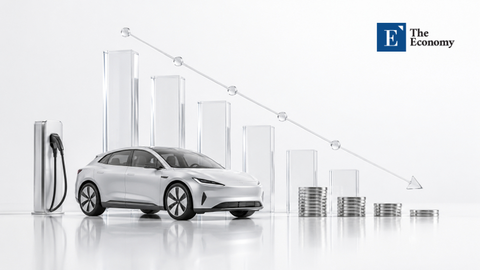
China’s industrial offensive appears to lie behind the successive collapse of German green companies. China’s EV industry has recently posted formidable growth across global markets. Chinese automakers supplied approximately 60% of all EVs sold worldwide last year, according to International Energy Agency (IEA) statistics. Europe has emerged as a particularly important target market for Chinese EV manufacturers. According to automotive intelligence provider JATO Dynamics, new-vehicle sales by Chinese brands across 28 European countries surged 91% year over year in the first half of last year, nearly doubling their market share from approximately 2.7% to 5.1%. BYD’s European sales soared 311% to 70,500 vehicles during the period, while SAIC sold 162,153 vehicles and overtook Tesla for the first time. The European Union (EU) has imposed steep tariffs on Chinese-made EVs for several years in an effort to protect domestic industry, yet it has failed to fully contain the expansion of Chinese manufacturers.
China’s solar industry has reached saturation amid overproduction and cutthroat competition. China accounts for more than 80% of global solar-module manufacturing capacity and approximately 95% of wafer production capacity. Its scale expanded rapidly through fierce competition in supply-chain integration and capital investment across the industry. This expansion drove international prices for solar products below production costs. Global solar-module prices fell from approximately 25 US cents per watt in 2022 to around 7 US cents last year. European manufacturers operate relatively small factories, face high energy and labor costs, and procure critical intermediate goods such as wafers and cells from abroad, leaving them effectively unable to match such pricing. According to analyses by SolarPower Europe, a nonprofit organization representing Europe’s solar industry, and Germany’s Fraunhofer Institute, solar modules manufactured in Europe cost an estimated 12 US cents more per watt than Chinese imports last year. Amid these conditions, the European Commission announced last month that it would prohibit the use of Chinese-made inverters in EU-funded energy projects, reflecting a gradual tightening of trade barriers.
Germany’s Manufacturing Decline Accelerates
China’s offensive is weighing on Germany’s entire manufacturing sector, with the damage spreading well beyond EVs and solar products. Chinese companies have combined established price competitiveness with rapidly improving product quality, making it increasingly difficult for German manufacturers to preserve their market position through their traditional focus on premium, high-value-added products. Germany’s Mittelstand, the backbone of the national economy, has borne the brunt of this Chinese pressure. Although the German term “Mittelstand” literally means middle class, in an economic context it encompasses small and medium-sized enterprises of varying sizes. A survey conducted by German state-owned development bank KfW last September found that 34% of industrial SMEs surveyed faced intensifying competitive pressure from lower-priced Chinese rivals. Another 28% identified improving Chinese product quality as a threat.
The shift is also evident across a range of industrial indicators. An analysis of data from Germany’s Federal Statistical Office by global accounting firm EY found that approximately 340,000 manufacturing jobs have disappeared since 2019. Employment in the first quarter of 2026 fell by another 127,000 from a year earlier, while industrial production declined by approximately 10% compared with early 2022. Meanwhile, inflows of Chinese products into Germany continue to increase. German imports from China rose 6.2% year over year to $83.6 billion between January and May this year. “Germany’s manufacturing slump cannot be viewed solely as part of an ordinary economic cycle,” one market expert said. “It reflects the rapid rise of China, once a major export market for Germany, into a formidable competitor and threat.”
Oliver Griffin is a policy and tech reporter at The Economy, focusing on the intersection of artificial intelligence, government regulation, and macroeconomic strategy. Based in Dublin, Oliver has reported extensively on European Union policy shifts and their ripple effects across global markets. Prior to joining The Economy, he covered technology policy for an international think tank, producing research cited by major institutions, including the OECD and IMF. Oliver studied political economy at Trinity College Dublin and later completed a master’s in data journalism at Columbia University. His reporting blends field interviews with rigorous statistical analysis, offering readers a nuanced understanding of how policy decisions shape industries and everyday lives. Beyond his newsroom work, Oliver contributes op-eds on ethics in AI and has been a guest commentator on BBC World and CNBC Europe.
Similar Post