[Europe as a Middle Power] Learning to Face the Decline

Working across research, policy, and data-driven analysis, the Editorial Board ensures that published pieces reflect a consistent institutional perspective grounded in quantitative reasoning and long-term structural assessment.
Authored On
Modified
The EU got Japan's tariff rate in 2025, ranking it a managed market, not an equal
Chinese EV tariffs failed; car exports rose 26% the next year anyway
Japan's faster defense buildup is a playbook Europe hasn't seriously adopted yet
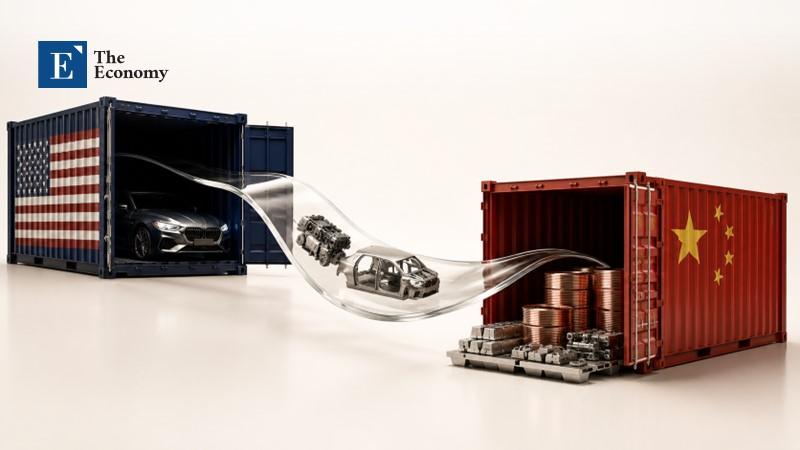
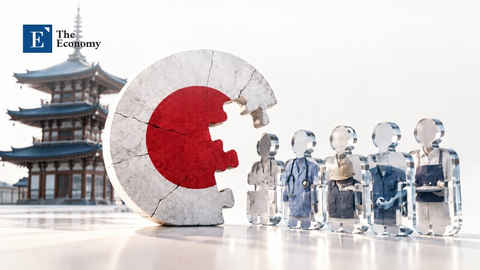
In 2025, Washington handed Brussels the same tariff rate it handed Tokyo. Fifteen percent, flat, on almost everything. No special carve-out, no senior discount for six decades of alliance. Japan got 15 percent. South Korea got roughly the same. The European Union, the bloc that likes to call itself America's oldest and closest partner, got the identical number. The comparison provided a clearer indication about Europe's real standing in the world than a hundred pages of communiqués. It was not treated as a peer setting terms with a peer. It was treated as one more capable, useful, replaceable country in a long queue of countries that needed a deal before an August deadline.
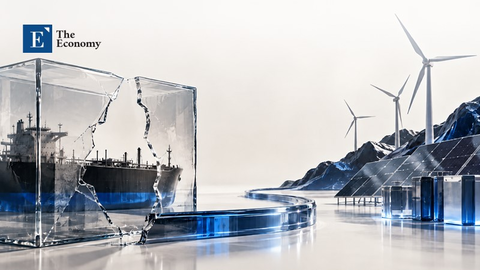
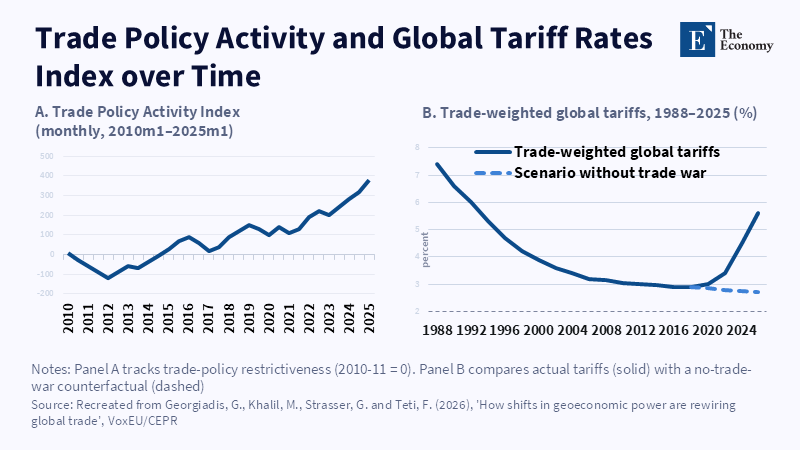
That is the fact pattern that warrants closer attention. Tariffs are not the whole story but they offer the plainest signal of how Washington actually ranks its partners when the flattering language gets stripped away. Viewed in that light, a recent academic account of the world trading system starts to look different. A working paper from four European Central Bank and Bundesbank economists describes how global trade has fragmented along geopolitical lines since the 2008 financial crisis, with China's rise eroding the leverage the West once took for granted. It is careful, data-rich work. It is also, in one important sense, still holding onto a story Europe would prefer to believe: that this is fundamentally a contest between two superpowers, with the EU caught unfairly in the middle, paying costs it did not choose. The evidence in that same paper points somewhere less comfortable. Europe is not caught between two great powers. It has become a second-tier actor being managed by both of them.
The Same Deal America Gave Japan
Washington’s position is clearest because the numbers are unambiguous. The trade agreement Ursula von der Leyen signed with Donald Trump in Turnberry set a 15 percent tariff ceiling on most EU exports to the United States, including cars, in exchange for European pledges to buy $750 billion in American energy and put another $600 billion into the U.S. economy. Reporters covering the announcement noted, almost as an aside, that this was the same baseline Trump had already secured from Japan weeks earlier. Before the deal, the EU had been staring down a threatened 30 percent rate. Fifteen percent was sold in Brussels as a relief, a disaster averted. Germany's chancellor said as much, framing the agreement as sparing the country's export-dependent economy from something worse. The framing is revealing: European leaders were grateful to be treated no worse than Japan, a country whose defense budget is a fraction of what any single large EU member spends, whose population is shrinking and whose economy has not led anything globally in over thirty years. Being pegged to Japan's rate was received as good news. That alone says something about the bargaining position Europe now occupies.
The ECB paper gets the mechanism right even if it stops short of the conclusion. Its authors note that the EU's tariffs on U.S. cars fell from 10 percent to 2.5 percent as part of the deal, a concession to secure predictability rather than leverage. They also point out, carefully, that Washington's tariff threats and the fight over Greenland's sovereignty reflect a divergence between U.S. and EU interests that didn't used to exist, because the old Cold War fault line ran straight through Europe and gave the continent automatic strategic weight. It doesn't run through Europe anymore. It runs through the Taiwan Strait and the South China Sea. Europe's centrality to American strategy was a function of geography and a specific adversary, not a permanent entitlement and both of those conditions have changed. What the paper frames as an unfortunate erosion of alignment reads, from Washington's side of the table, as a strategic reprioritization: allocate scarce attention and market access to where the contest is actually happening and let the legacy partners take what's offered.
Beijing Doesn't Negotiate With Equals Either
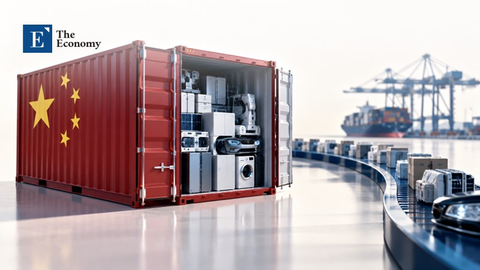
If Washington treats Europe as a useful middle power rather than an equal, Beijing treats it as a market to be defended, absorbed or punished depending on the week. The EU imposed anti-subsidy tariffs on Chinese electric vehicles in 2024, ranging from 7.8 percent on Tesla's China-built cars to 35.3 percent on SAIC, after an investigation found Beijing had subsidized battery production enough to sell EVs roughly 20 percent below European sticker prices. It was billed at the time as Europe finally getting tough. Two years on, the numbers say otherwise. According to Atlantic Council research by Piotr Arak, Chinese car exports to Europe rose 26 percent between 2024 and 2025 anyway, reaching almost 1.2 million vehicles, with imports of Chinese hybrids surging 155 percent as manufacturers simply routed around the tariff schedule. China now produces roughly 30 percent of the world's manufactured goods while consuming only about 13 percent of them, an imbalance the European Commission itself estimates could push global steel overcapacity to 721 million tonnes by 2027, nearly five times what the entire EU consumes in a year. Tariffs aimed at a handful of product categories cannot contain a mismatch of that size. They are a limited response to a structural imbalance.
Germany is where this shows up first and worst, because Germany bet its postwar economic model on exactly the industries China now wants for itself. Car production has fallen from 5.6 million units in 2017 to under 4 million in 2024. German auto exports to China dropped by a third in 2025 alone, according to a study by the consultancy EY, falling to €13.6 billion and knocking China from the industry's second-biggest export market down to sixth. Mercedes' profits fell 56 percent in the first half of 2025. Porsche's operating profit dropped 91 percent. And in a detail that captures the reversal more starkly than any tariff schedule, the value of cars and auto parts the EU imported from China in 2025 exceeded the value the EU exported to China, in an industry Germany invented and dominated for a century. Sander Tordoir and Brad Setser, writing for the Centre for European Reform, call this a second China shock, distinct from the first wave of Chinese manufacturing competition two decades ago because this one targets capital-intensive, high-wage sectors such as cars, machinery, chemicals that that European economies were told would always be safe from low-cost competition. They weren't. Beijing is not staging a trade war against Europe the way it is against Washington. It doesn't need to. It is simply exporting its way through a domestic demand shortfall and Europe happens to be standing in the way.
Brussels is not blind to this. The European Commission has quietly moved to phase Chinese-made inverters, telecoms equipment and strategic investment out of European infrastructure altogether, a campaign trade reporters have taken to calling Europe's slow erasure of Chinese industrial presence from its own critical systems. High-level talks between Brussels and Beijing through the middle of 2026 kept circling the same unresolved tension, one side protecting domestic industry while the other insists on securing a core export market, with neither side willing to concede the framing to the other. That neither side treats the disagreement as one between equals is itself the point.
A Market to Be Split, Not a Player to Be Consulted
Put those two stories side by side and the pattern is hard to miss. Washington sets Europe's tariff rate by comparing it to Japan's. Beijing floods Europe's industrial heartland the way it floods any market that lacks the leverage to say no. Neither superpower is consulting Europe as a strategic equal with its own veto. Both are managing it, the way a great power manages a useful but subordinate partner rather than a rival worth appeasing. This is precisely the position Japan occupied after 1985, when the Plaza Accord forced a yen revaluation that Washington judged necessary to correct its own trade deficit, with limited regard for what Tokyo actually wanted. Japan spent the following decades adjusting to a world in which its economic weight no longer translated into decision-making power, eventually settling into a role as America's most reliable Pacific partner rather than its rival. Nobody in Washington today worries that Tokyo might defect to Beijing's camp and nobody in Tokyo seriously imagines contesting Chinese or American primacy outright. Japan made peace with being a very capable second-tier power a long time ago and it has been rewarded for it with steady, if unglamorous, security guarantees.
Europe has not made that peace, not rhetorically anyway and the ECB researchers' own recommendations show why. They call on the EU to weigh the gains from specialization against the costs of dependency, to tighten internal political coordination and to build coalitions defending a rules-based order that used to be anchored in Washington. Sensible advice, all of it. But notice what's missing: any acknowledgment that the order they want to defend was never something Europe built or ran on its own terms. It was underwritten by American security guarantees and American market access, both of which are now being priced according to American interests rather than shared ones. Europe never had to develop the reflexes of a middle power, because for seventy years it didn't need them. Japan developed those reflexes early, out of necessity, after a very public demotion. Europe is being asked to develop them now, later, more slowly and with considerably less agreement among its own member states about what the new posture should even look like.
What Middle-Power Status Actually Requires
None of this means European industry, diplomacy or defense policy is powerless. It means the assumptions underneath European strategy need updating faster than European institutions currently update anything. NATO's European members and Canada raised defense spending by nearly 20 percent in real terms in 2025 compared with 2024, part of a commitment to reach 5 percent of GDP by 2035. That is real and it is overdue but it is also the kind of adjustment a middle power makes when it can no longer assume someone larger will cover the gap indefinitely, not the kind a leading power makes when it is setting the agenda. Compare it with Japan's own trajectory: Tokyo's Prime Minister moved up its defense-spending target from fiscal 2027 to the current fiscal year specifically because of doubts about how much longer Washington's security guarantees can be assumed rather than negotiated. Both economies are converging on the same conclusion from different starting points and both are converging on it because neither can any longer assume automatic protection.
For policymakers, the honest implication is that trade policy, industrial policy and defense policy in Europe need to stop being treated as three separate conversations run by three separate directorates. A tariff schedule on Chinese EVs that gets routed around within two years is not an industrial strategy; it is a delay tactic dressed up as one. A defense budget increase driven by fear of American disengagement is not sovereignty; it is insurance bought from the same supplier whose reliability prompted the purchase. For businesses and investors, the implication is more concrete still: German-style dependence on a single external market, whether American security or Chinese demand, is now a balance-sheet risk rather than a strategic bet and firms that have not modeled a world where both relationships get renegotiated on someone else's terms are behind, not cautious.
The obvious objection is that Europe is not Japan and shouldn't try to be. It has a larger combined economy, a currency with real reserve status and a diplomatic weight Tokyo never had. All true and none of it changes the tariff rate Brussels actually signed or the market share Chinese exporters actually took or the defense gap European governments are actually now scrambling to close. Scale without unified decision-making is not power in the way that matters at a negotiating table; it is potential that has not yet converted into leverage and potential is exactly what Washington and Beijing have both learned they can discount. The comparison to Japan is not a prediction that Europe will follow an identical path. It is a reminder that a large, wealthy, technologically capable economy can still end up negotiating from a position closer to a client than a peer and that the adjustment, once delayed this long, tends to arrive on someone else's schedule rather than your own.
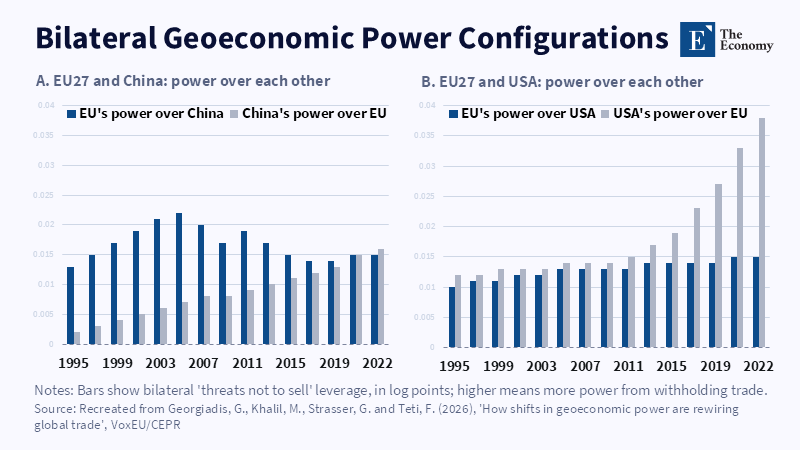
That is the reality the tariff numbers were already describing before anyone put a policy framework around them. Europe is not the fulcrum of a US-China contest. It is a market both powers are competing to shape on favorable terms, much as they once did and still do, with Japan. Recognizing that plainly, rather than dressing it up as an unfair cost imposed on an equal partner, is the first step toward building the kind of coordinated, clear-eyed strategy that might actually convert Europe's genuine economic weight into something Washington and Beijing have to negotiate with instead of merely pricing it in.
This article reflects the analytical judgment of The Economy Editorial Board and does not constitute policy advice or the official position of any affiliated institution.
References
Arak, P. (2026) ‘Europe has had enough of China’s export surge’, Atlantic Council, 3 June.
Czin, J.A., Hamilton, D.S., O’Hanlon, M.E., Thornton, S.A., Varma, T., Wright, T., Hass, R., Kim, P.M. and Kimball, E. (2025) ‘Between Washington and Beijing: How Europe fits into US-China strategic competition’, Brookings Institution Commentary, 11 September.
EY (2026) German Automotive Export Study 2025. London: Ernst & Young Global Limited.
Georgiadis, G., Khalil, M., Strasser, G. and Teti, F. (2026) ‘How shifts in geoeconomic power are rewiring global trade’, VoxEU.org, CEPR, 2 August.
Nicholson-Messmer, E. (2025) ‘Germany’s auto industry is facing decline. Here’s why’, Autoblog, 15 October.
North Atlantic Treaty Organization (2026) Defence Investment and NATO’s 5% Commitment. Brussels: NATO.
Sanger-Katz, division staff writers (2025) ‘What’s in Trump’s trade agreement with the European Union?’, ABC News, 28 July.
Tordoir, S. and Setser, B. (2025) ‘How German industry can survive the second China shock’, Centre for European Reform Policy Brief, January.
USNI News Staff (2025) ‘Japan poised to increase defense spending to $70 billion, 2% of its GDP’, USNI News, 3 December.
White House (2025) Fact Sheet: The United States and European Union Reach Massive Trade Deal. Washington, DC: The White House.
Working across research, policy, and data-driven analysis, the Editorial Board ensures that published pieces reflect a consistent institutional perspective grounded in quantitative reasoning and long-term structural assessment.