“Secret Talks With Houthis, but Saudi Military Aid Rejected”: Trump’s High-Stakes Bid to Force Iran’s Capitulation Faces Crucial Test This Week

Anne-Marie Nicholson is a fearless reporter covering international markets and global economic shifts. With a background in international relations, she provides a nuanced perspective on trade policies, foreign investments, and macroeconomic developments. Quick-witted and always on the move, she delivers hard-hitting stories that connect the dots in an ever-changing global economy.
Authored On
Modified
Trump in “Decision Mode,” Weighs Military, Economic and Diplomatic Options on Iran
Washington Pursues Separate Talks With Houthis, Rejects Saudi Military-Aid Request
Swift End to War Could Deliver Diplomatic Victory, While Protracted Conflict Risks Eroding Trust in U.S.
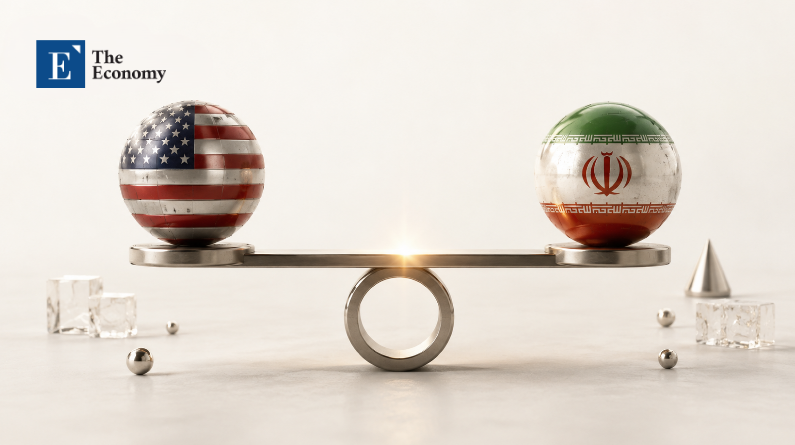
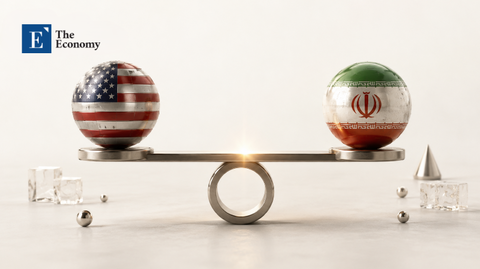
U.S. President Donald Trump has intensified military and economic pressure on Iran by raising the possibility of resuming large-scale attacks. Iran has expressed a willingness to return to negotiations on the conditions that the war end, its overseas frozen funds be released and the maritime blockade be lifted, but Washington has separately opened contact with Yemen’s Iran-aligned Houthi rebels while rebuffing Saudi Arabia’s request for military assistance against the group’s offensive. As Saudi Arabia responds to the gap left by the United States by turning toward China and a regional collective-defense framework, signs of strain are emerging in the Middle Eastern alliance order that Washington spent decades building. If this week’s United Nations General Assembly and U.S.–China summit produce an opening toward ending the war, President Trump will have grounds to present his high-stakes strategy of concentrating pressure on Iran as a diplomatic achievement. Conversely, if the negotiations collapse and the war becomes protracted, Saudi distrust of the United States and its alignment with China could accelerate, destabilizing the U.S.-centered alliance order in the Middle East.
Trump: “Large-Scale Attack That Could Wipe Out Iran” Remains Possible
On the 20th (all dates local), Fox News correspondent Trey Yingst said after speaking with President Trump by phone that “President Trump said he is in ‘deciding mode’ and that something very big will happen in the not-too-distant future.” His remarks indicated that he had entered the final stage of deliberations over several options concerning Iran. According to Yingst, President Trump identified a sweeping military assault on Iran, economic pressure and the conclusion of an agreement as possible courses of action. “It is a question of when to blow up the whole country,” he said, warning that Iran “had better behave.”
The United States maintains that it will continue its strategy of exerting economic pressure on Iran alongside its military options. U.S. Ambassador to the United Nations Mike Waltz said in a CNN interview that day that he would “not necessarily provide a timetable” for ending the war, which has continued for nearly seven months. Referring to the U.S. maritime blockade and “Operation Economic Fury,” he argued that “time is on the side of the president and the United States.” Waltz said Washington would use the United Nations General Assembly to demand that allies and partners rigorously enforce sanctions against Iran.
Iran Delivers Conditions to U.S. in Bid to “End the War”
President Trump also said on the 17th that he had reached a critical juncture at which he must decide whether to resume large-scale attacks in the Iran war. At the time, he said Iran was in direct contact with the United States and still wanted an agreement with Washington. According to Al Jazeera and other media outlets, Mohsen Rezaei, secretary of Iran’s Supreme National Security Council (SNSC), said in an interview on the 18th that Tehran had conveyed its conditions to mediators for restarting negotiations aimed at ending the war. Rezaei said Iran’s demands included an end to the war on all fronts, the release of Iranian funds frozen overseas and the termination of the maritime blockade.
Qatar reportedly delivered Iran’s demands to the White House. “We remain in contact with the Qatari mediator who conveyed our conditions for ending the war to Washington, and we are awaiting President Trump’s response,” Rezaei said. “Accepting these conditions is also in the interests of the United States,” he continued, adding that “President Trump’s threats will produce no results, and we are prepared for a decisive war.” Iran had previously demanded that the United States halt the war and release its frozen assets. Last month, Rezaei said Washington must suspend its military operations and unfreeze Iranian funds held overseas.
U.S. Rejects Saudi Aid Request, Holds Secret Talks With Houthis
Negotiations with the United States, however, have yet to resume. Instead, Washington has opted to engage the Houthi rebels directly and contain an expansion of the Yemeni front separately from its negotiations with Iran. According to Reuters, U.S. government officials recently held a private meeting with a Houthi delegation at the U.S. Embassy in Muscat, mediated by the Omani government. Houthi representatives told the U.S. officials that they “had no intention of attacking U.S. vessels and would comply with the ceasefire agreement reached with the United States last year.” They also reportedly said that, apart from Saudi-owned vessels, they would not strike Israeli ships or other commercial vessels.
The secret meeting came as the Houthi rebels gained momentum after driving Saudi-backed Yemeni government forces from their positions and seizing the entire Red Sea coastline, including the strategic port city of Mocha and Perim Island in the Bab el-Mandeb Strait. Saudi Arabia’s de facto ruler, Crown Prince Mohammed bin Salman, subsequently called President Trump to make an urgent request for military support, but Trump reportedly informed the Saudi side that the United States would not intervene directly. Asked by the Associated Press whether Saudi Arabia had requested U.S. intervention, a Trump administration official said only that “U.S. Central Command is strengthening intelligence sharing with the Saudi military and has activated a task force to assist Saudi operational planning.”
Saudi Arabia has also approached France, the United Kingdom, Pakistan and Egypt for air-defense assistance, but their responses have remained lukewarm. A spokesperson for the British prime minister’s office likewise said that “the United Kingdom maintains a close defense partnership with Saudi Arabia,” but declined to comment on whether Riyadh had requested military assistance or whether British forces were stationed in the kingdom. As the world’s largest crude exporter, Saudi Arabia must both defend itself against Houthi attacks and secure safe oil-shipping routes, yet it has failed to identify a clear solution to either challenge.
Denied Western Support, Saudi Arabia Turns to China and Regional Allies
With direct support from major Western powers increasingly difficult to secure, Saudi Arabia has turned to China. Reuters reported that Beijing, acting at Riyadh’s request, privately urged Iran to restrain the Houthi offensive. The message was considerably more direct than China’s public calls for restraint and dialogue. China’s ability to exert influence over Iran is underpinned by the two countries’ close economic relationship. China is Iran’s largest trading partner and a major buyer of Iranian crude, while also maintaining extensive trade relations with Gulf states including Saudi Arabia. The Chinese economy could face direct repercussions if energy and logistics flows through the Strait of Hormuz and the Bab el-Mandeb Strait are disrupted simultaneously.
The latest Houthi offensive is also the first test of the Mecca Joint Defense pact signed by Saudi Arabia, Türkiye and Pakistan. The agreement, concluded by the three countries on August 7, is designed to strengthen collective deterrence by treating an armed attack against any one of them as an attack against all three. Pakistan, however, has remained reluctant to intervene in the Middle Eastern conflict amid chronic economic difficulties and concerns over border friction with Iran. Türkiye has likewise taken a cautious approach to direct military intervention in consideration of its complex relationship with Iran, but Foreign Minister Hakan Fidan signaled possible military support on the 19th, saying that “the signatories to the agreement are closely monitoring the Houthis’ latest attacks against Saudi Arabia.”
Table 1. Key Agendas and Scenario-Based Implications of the U.S.–GCC and U.S.–China Summits
| Category | Meeting/Scenario | Diplomatic and Security Implications | Economic and Political Implications |
|---|---|---|---|
| Summit Diplomacy | U.S.–GCC Summit September 22 | Discussions on ending the Iran war and shaping the postwar order, with efforts to restore regional coordination between the United States and Gulf states | Foundation for cooperation to ease Middle Eastern security instability and disruptions to maritime transport |
| U.S.–China Summit September 24 | Use of China’s influence over Iran and cooperation in restraining the Houthis as negotiating leverage | Efforts to ease uncertainty in energy and financial markets and advanced-technology supply chains through negotiations on a tariff truce, AI and rare earths | |
| Scenario-Based Outlook | Progress Toward Ending War | Iran’s return to negotiations, Chinese cooperation in restraining the Houthis and normalizing maritime transport, and a reduced burden on the United States to intervene directly in Yemen | Reduced pressure from global oil prices and inflation, possible extension of the U.S.–China tariff truce, and a foundation for President Trump to reverse his midterm-election fortunes |
| Absence of Negotiated Breakthrough | Prolonged Iran war and weakened U.S.–Gulf alliance, expanded Saudi cooperation with China and regional defense partners, and weaker responses to future U.S. requests for troop deployments and naval support | Persistent geopolitical risk and maritime-transport instability in the Middle East, with greater uncertainty across energy and financial markets and advanced-technology supply chains |
A Fateful Superweek Puts Trump’s Middle East Gambit to the Test
Saudi Arabia’s effort to fill the gap left by the United States through China and a regional defense pact is expected to hinge directly on the outcome of this week’s successive rounds of summit diplomacy. On the sidelines of the United Nations General Assembly on the 22nd, President Trump is scheduled to meet representatives of the six Gulf Cooperation Council (GCC) states, including Saudi Arabia, the United Arab Emirates (UAE) and Qatar, to discuss ending the Iran war and shaping the postwar order. Two days later, on the 24th, he will hold talks at the White House with Chinese President Xi Jinping on a tariff truce, artificial intelligence (AI), rare earths and Iran. While the meeting with the Gulf states will focus on restoring regional coordination, the U.S.–China summit will serve as a venue where Washington must also leverage Beijing’s influence over Iran.
If the two meetings produce an opening toward ending the war, President Trump’s chosen gamble is likely to be judged a success. If Iran returns to negotiations and China cooperates in restraining the Houthis and normalizing maritime transport, the United States will gain grounds to conclude the Middle Eastern war without intervening directly in the Yemeni front. If pressure from global oil prices and inflation subsides, President Trump could present the outcome as a diplomatic achievement and secure an opportunity to reverse unfavorable momentum ahead of the November midterm elections. An agreement to extend the U.S.–China tariff truce would also reduce the uncertainty weighing on energy and financial markets and advanced-technology supply chains.
Conversely, if the two meetings conclude without results and the Iran war becomes protracted, President Trump’s gamble could be judged a strategic misstep that destabilized the U.S. alliance system in the Middle East. Because Washington has pursued separate negotiations with the Houthis to secure the safety of U.S. vessels while declining Saudi Arabia’s request for military assistance, Riyadh could gain stronger grounds to expand security and economic cooperation with China. If the perception that U.S. support cannot be relied upon spreads among Gulf states, Washington is likely to face greater difficulty securing their cooperation should it later request troop deployments and naval support to defend the Strait of Hormuz.
Anne-Marie Nicholson is a fearless reporter covering international markets and global economic shifts. With a background in international relations, she provides a nuanced perspective on trade policies, foreign investments, and macroeconomic developments. Quick-witted and always on the move, she delivers hard-hitting stories that connect the dots in an ever-changing global economy.
- Previous “$65 Billion Bet on OpenAI’s Listing” IPO Delay Turns SoftBank’s Debt Pile Into a ‘Ticking Time Bomb,’ as Rising US Rates Compound Refinancing Pressure
- Next “Frontline Workers in High Demand, College Graduates Struggle to Find Jobs”: The ‘College Premium’ Erodes as Foundational Skills Decline and AI Takes Over Entry-Level Work
Similar Post