“Saudi Arabia, Türkiye and Pakistan Unite” Saudi-Led Security Bloc Squeezes Out Iran, Forcing US, China and Russia to Recalculate as Regional Order Shifts

Aoife Brennan is a contributing writer for The Economy, with a focus on education, youth, and societal change. Based in Limerick, she holds a degree in political communication from Queen’s University Belfast. Aoife’s work draws connections between cultural narratives and public discourse in Europe and Asia.
Authored On
Modified
Saudi Arabia, Türkiye and Pakistan Sign Mutual Defense Pact in Mecca
Saudi Arabia Seeks Regional Primacy Through Diplomatic Influence and Partners’ Military Strength
Middle East Power Map Poised for Realignment Across the US, China, Russia and Other Major Powers
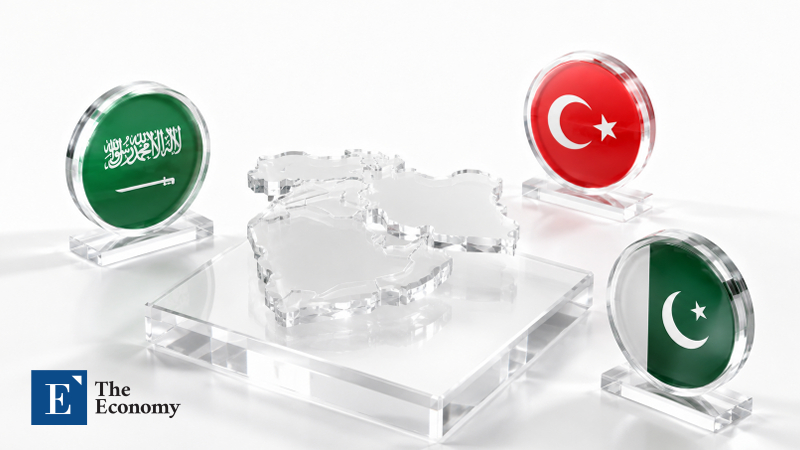
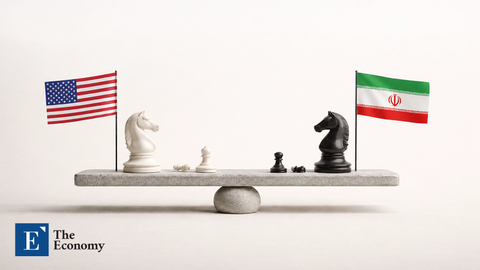
Saudi Arabia, Türkiye and Pakistan have signed a mutual defense pact. The agreement appears designed to reshape a Middle Eastern order long centered on the United States and Iran by combining Saudi financial and diplomatic power, Türkiye’s military capabilities and Pakistan’s nuclear deterrent. Experts say that if other regional countries, including Egypt, subsequently join the pact, it could evolve beyond trilateral military cooperation into a force capable of disrupting the region’s diplomatic order, long shaped by competition among the United States, China and Russia.
New Defense Cooperation Framework Emerges in the Middle East
According to a review of foreign media reports on Tuesday, Saudi Crown Prince Mohammed bin Salman, Turkish President Recep Tayyip Erdoğan and Pakistani Prime Minister Shehbaz Sharif gathered in the Islamic holy city of Mecca on August 7 local time and signed the Mecca Mutual Defense Pact. In a joint statement, the three leaders said, “This agreement strengthens collective deterrence against any act of aggression,” adding, “An armed attack against any one of the three countries will be regarded as an attack against all three.” Turkish Foreign Minister Hakan Fidan said in an August 8 interview with Türkiye’s state-run Anadolu Agency that the provision was “technically equivalent to Article 5 of the North Atlantic Treaty Organization.” NATO’s Article 5 is a collective defense clause stipulating that an attack against one of the alliance’s 32 members is considered an attack against them all.
The three countries agreed to establish a committee comprising their foreign and defense ministers and senior military commanders to build a NATO-style integrated military command structure, along with a permanent secretariat in Saudi Arabia. “NATO is a vast military alliance of 32 countries, while we have started with three,” Fidan said. “We need to take very modest yet concrete steps.” The Mecca Mutual Defense Pact, however, does not guarantee automatic military intervention when a member state comes under attack. According to Fidan, the country facing an armed assault must formally request assistance from the other members when necessary, after which the remaining two countries will determine whether to share military intelligence, provide logistical support or deploy troops based on the scale of the threat and damage.
Strategic Gains for the Signatories
The signatories are expected to secure distinct strategic benefits from the agreement. According to an analysis by the US-based Atlantic Council, the Mecca Mutual Defense Pact could provide Saudi Arabia with an opportunity to strengthen its regional bargaining power and strategic leverage. The pact’s prospective diplomatic impact on Saudi Arabia warrants greater attention than its immediate military effects. Since the early stages of the Iran war, Saudi Arabia has exploited the turbulent regional environment to demonstrate its leadership. As Iran and Israel increasingly came to be viewed as destabilizing forces generating geopolitical uncertainty, Riyadh began reinforcing its standing by presenting itself as the region’s principal anchor of stability.
Pakistan is expected to become more deeply integrated into the emerging Middle Eastern security order. It signed a new mutual defense agreement with Saudi Arabia last year and has subsequently pursued stronger defense cooperation with other regional partners, including Egypt and Jordan. For Türkiye, the pact could provide an opportunity to expand the security umbrella it has long extended to allies such as Qatar, Syria and Libya. Ankara’s strategy seeks to consolidate an Islamic collective defense framework by bringing the economic power of Saudi Arabia and the nuclear capabilities of Pakistan into the same alignment. This would significantly strengthen deterrence against Israel. The Israeli leadership has recently escalated pressure on Türkiye, publicly raising the possibility of a future confrontation.
Table 1. Strategic Interests of the Mecca Mutual Defense Pact Members
| Country | Primary Expected Benefit | Strategic Direction |
|---|---|---|
| Saudi Arabia | Deterrence against Iran and stronger regional bargaining power | Secure diplomatic leverage and reinforce leadership as the region’s principal anchor of stability |
| Pakistan | Expanded influence in the Middle Eastern security order | Strengthen defense cooperation with Gulf states and deepen integration into the regional security framework |
| Türkiye | Stronger existing security umbrella and greater deterrence against Israel | Build an Islamic collective defense framework by combining Saudi economic power with Pakistan’s nuclear capabilities |
Signs of a Regional Order in Flux
With the Middle East’s diplomatic and security order approaching an inflection point, Iran has responded by emphasizing pan-Islamic solidarity. Shortly after the three countries signed the mutual defense pact in Mecca, Iranian Foreign Minister Abbas Araghchi wrote on X, formerly Twitter, that “Iran’s powerful armed forces have demonstrated their full preparedness, capabilities and stature in confronting the military with the world’s largest budget,” referring to the US military. “When Muslims stand united, we can directly confront any challenge posed by malicious external forces,” he added. “The time has come to rely solely on ourselves and embrace genuine brotherhood.” His remarks amounted to a call for the signatories to join Iran in rejecting the United States and other outside powers.
Türkiye subsequently stressed that the Mecca Mutual Defense Pact was not directed against Iran, while Pakistan described the agreement as “purely defensive.” Analysts, however, increasingly assess that the pact’s structure and timing indicate that the three countries have effectively established a new regional collective security framework with Iran as a central strategic variable. The agreement is widely seen as an advancement of Saudi Arabia’s longstanding vision for an Islamic security coalition. Riyadh previously led the establishment of the Islamic Military Counter Terrorism Coalition in 2015 and convened its first defense ministers’ meeting in 2017 with participation from 41 countries. At the time, however, the coalition remained a loosely organized consultative body operating under the banner of counterterrorism cooperation. The withdrawal of Iran and Iraq also raised concerns that it could evolve into an anti-Iran alliance of Sunni states.
Expanding Prospects for Saudi Influence
The latest arrangement carries materially different implications. By formally codifying mutual defense obligations among its members, the Mecca Mutual Defense Pact has introduced substantive military commitments into a Saudi-led Islamic security alignment for the first time. The framework gives Saudi Arabia an opportunity to convert its longstanding economic power and religious stature into tangible security influence and assume a more assertive role in shaping the regional order. Saudi Arabia has long held the status of the Middle East’s leading financial power and custodian of Islam’s holiest sites, yet it has struggled to eclipse Iranian influence in the region’s military and security architecture. Iran has projected power beyond its borders through its own military capabilities and a network of allied groups and armed factions spanning Iraq, Lebanon, Syria and Yemen. Saudi Arabia, heavily dependent on the US security umbrella, has faced persistent difficulties translating its vast economic resources into autonomous regional security leadership.
The central question now concerns how far the framework’s influence will extend. Fidan has already said that other countries have expressed interest in joining the pact, identifying Egypt as a “natural partner,” while Pakistan has also stated that the agreement remains open to other regional states. Should Egypt and other Middle Eastern countries seeking to curb Iranian influence while reducing their dependence on US security guarantees join the framework, the Mecca Mutual Defense Pact could develop into a central collective security architecture connecting the major Sunni powers.
Shifting Positions of External Powers
International attention is also focused on how the Mecca Mutual Defense Pact could affect the standing of external powers such as the United States, China and Russia in the Middle East. Following Iran’s 1979 revolution and the Soviet invasion of Afghanistan, the United States sharply expanded its military and strategic involvement in the Gulf and has continued to serve as the principal security guarantor for Saudi Arabia and other Gulf states. “The United States could use the signing of the Mecca Mutual Defense Pact as an opportunity to reduce its direct deployment of troops and financial resources while strengthening the military capabilities of key partners such as Saudi Arabia to preserve the regional balance,” a diplomatic expert said. “Just as Washington has relied on the military capabilities of allies such as Japan and South Korea to contain China in Asia, it could reinforce a form of regional burden-sharing in the Middle East by expanding the role of local powers centered on Saudi Arabia to deter Iran.”
For China, the pact could impose a substantial strategic burden. Beijing has maintained long-term strategic cooperation and energy trade with Iran, effectively using Tehran as leverage against the United States. If the agreement shifts the center of Middle Eastern security toward Saudi Arabia, which has maintained longstanding security ties with Washington, Iran’s relative influence would weaken and China’s strategic room for maneuver would narrow accordingly. China, however, is likely to absorb the impact by reducing its strategic reliance on Iran and strengthening relations with wealthy Gulf states such as Saudi Arabia and the United Arab Emirates, instead of facing immediate exclusion from the region’s power competition.
Russia also faces a high probability of a severe diplomatic setback. Moscow has treated Iran as a central strategic partner in the Middle East amid mounting Western pressure, but the outbreak of the Iran war has disrupted its ability to preserve that alignment. Chatham House, a British foreign policy and security think tank, assessed that Western military pressure on Iran and leadership changes in Tehran have weakened Russia’s strategic position in the Middle East and could continue to erode Moscow’s regional influence. The Carnegie Endowment for International Peace likewise concluded that the war involving the United States, Israel and Iran had damaged Russia’s established Middle East strategy. If Saudi Arabia displaces Iran and emerges as the new center of the region’s security architecture, Russia will be compelled to recalibrate its broader diplomatic strategy in the Middle East.
Aoife Brennan is a contributing writer for The Economy, with a focus on education, youth, and societal change. Based in Limerick, she holds a degree in political communication from Queen’s University Belfast. Aoife’s work draws connections between cultural narratives and public discourse in Europe and Asia.
Similar Post