“Public Investment—and Private Capital Too”: China Channels Funding into Tech While Walking a Tightrope Between Market Opening and Control

As one of the youngest members of the team, Tyler Hansbrough is a rising star in financial journalism. His fresh perspective and analytical approach bring a modern edge to business reporting. Whether he’s covering stock market trends or dissecting corporate earnings, his sharp insights resonate with the new generation of investors.
Authored On
Modified
Beijing actively steers private capital into semiconductor and AI sectors
China lowers financial-market barriers and accelerates renminbi internationalization
Foreign holdings of Chinese bonds and renminbi’s share of global trading remain subdued
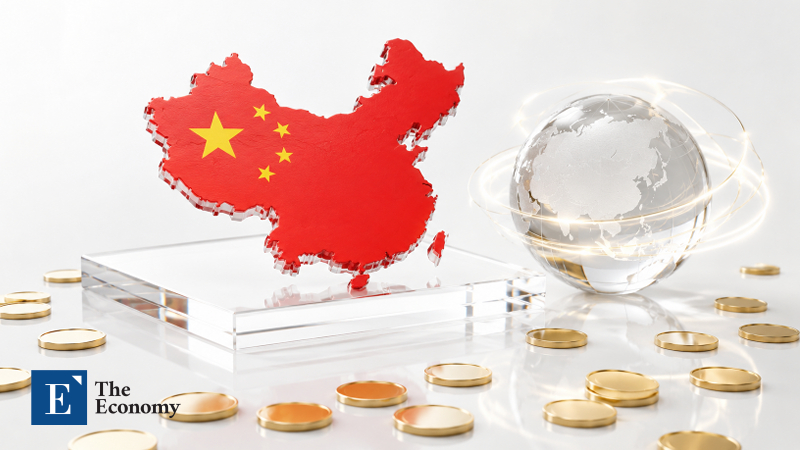
China has begun actively harnessing market capital in its drive to gain the upper hand in the race for artificial intelligence (AI) supremacy. Beijing has built a framework that channels private funds into strategic industries through equities and bonds, supplementing state-led institutional and financial support. The Chinese government is also broadening foreign investors’ market access and expanding the scope of renminbi use in an effort to widen its financial-market reach, while retaining stringent controls designed to curb capital flight and financial instability.
Chinese Tech Sector Draws in Private Capital
According to Bloomberg on the 10th (local time), Chinese technology companies have raised nearly $217 billion through initial public offerings (IPOs) and bond issuance since 2024. The figure reflects China’s growing use of equities, bonds and other sources of private capital as policy instruments after years of developing strategic industries primarily through subsidies, tax incentives and government investment. Memory-chip manufacturer ChangXin Memory Technologies (CXMT) offers a prominent example of this shift. CXMT shares surged more than 500% within hours of their Shanghai market debut last month, propelling the company’s market capitalization past Industrial and Commercial Bank of China, which had ranked as mainland China’s most valuable listed company for years.
China reportedly orchestrated CXMT’s listing at the state level. Authorities deployed a “pre-review” mechanism reserved for strategically important companies for the first time, completing in eight months a vetting process that can take several years and facilitating additional fundraising through bond issuance. The Chinese authorities’ unusually swift intervention to restore confidence during last month’s technology-stock rout was also reportedly driven by the goal of supporting CXMT. Backed by this state support, CXMT has gained easier access to private capital, including nearly $26 trillion in Chinese household savings.
Direct State Investment Retains Momentum
Direct government support for the technology sector also remains robust. Bloomberg reported in June that China was pursuing a plan to invest $296.4 billion over the next five years to connect data centers nationwide and establish an integrated computing network as part of its response to the AI supremacy race with the United States. The initiative, drafted by agencies including the National Development and Reform Commission (NDRC), reportedly seeks to consolidate geographically dispersed AI computing resources and strengthen infrastructure self-sufficiency around domestically produced AI chips from companies such as Huawei.
The Chinese government has since begun translating the initiative into a national infrastructure program. The NDRC included the nationwide integrated computing network among the major projects under the 15th Five-Year Plan, while the Ministry of Industry and Information Technology proposed a “1+M+N” architecture linking regional and industry-specific nodes to central hubs. Physical infrastructure is also expanding. According to the ministry, China’s AI computing capacity reached 2,185 exaFLOPS (EFLOPS) as of the end of June, while the number of large computing facilities equipped with more than 10,000 AI accelerators rose to 52. Large-scale projects combining data centers with power grids have also moved into full-scale development in regions including Inner Mongolia and Gansu.
China’s Financial-Market Policy Framework
The Chinese government is also gradually lowering barriers to entry in its financial markets. China began opening the sector after joining the World Trade Organization (WTO) in 2001 but has since maintained strict control over the pace and scope of liberalization. Around the launch of the China International Import Expo in 2018, Beijing introduced a series of measures to expand market access, including the phased removal of foreign-ownership caps and relaxed entry requirements for overseas financial institutions. Regulatory oversight also intensified under the banner of financial risk management and national security. The National Financial Regulatory Administration (NFRA) was established in 2023 shortly after President Xi Jinping began his third term to lead that supervisory push.
The NFRA regulates and supervises financial institutions across the sector, excluding the securities industry. The arrangement places the government directly in charge of containing asset outflows and systemic risk as China’s financial markets become more accessible to foreign participants. During the regulator’s first year, total fines imposed on financial institutions reached $1.16 billion, nearly three times the previous year’s level. This dual-track policy reflects China’s treatment of financial-market liberalization as an issue of “economic sovereignty” with implications extending across industrial policy. “China’s financial industry remained less competitive than those of the United States and other major economies for an extended period,” one market expert said. “Rapid market opening could have triggered large-scale outflows from renminbi-denominated assets and, under extreme circumstances, precipitated a collapse in asset prices or a financial crisis.”
Channels for Foreign Capital Expand
Cracks have nevertheless begun to appear in China’s defensive posture. An economic slowdown and declining foreign investment have heightened the need to attract overseas capital, while Beijing’s development of capital-flow and financial-risk controls has created greater room for liberalization. In line with this shift, the State Administration of Foreign Exchange (SAFE) announced in June that it would redirect its capital-market opening strategy from expanding individual investment channels toward “institutional opening” aligned with international standards. The plan seeks to bring rules governing foreign access to securities issuance and trading markets in line with global norms and increase participation by overseas financial institutions. China will also streamline foreign-exchange procedures for outbound direct investment (ODI) and external debt undertaken by domestic companies, while allocating additional quotas under the Qualified Domestic Institutional Investor (QDII) program for investment in overseas assets.
Financial-market liberalization aimed at promoting renminbi internationalization is also gaining pace. In June, the People’s Bank of China (PBOC) authorized six major banks, including Industrial and Commercial Bank of China and Bank of China, to conduct offshore renminbi foreign-exchange transactions in the Shanghai Free Trade Zone. It also introduced a framework enabling foreign central banks, international organizations and sovereign wealth funds to obtain renminbi liquidity directly from the PBOC by pledging Chinese government bonds and other assets as collateral. Last month, China also raised the annual quota for Southbound Bond Connect, which mainland investors use to purchase Hong Kong bonds, from $74.1 billion to $118.5 billion.
Table 1. Expansion of China’s Financial-Market Opening
| Area | Key Measures |
|---|---|
| Capital-market framework | Align rules governing foreign securities issuance and trading with international standards; expand participation by overseas financial institutions |
| Corporate foreign-exchange operations | Streamline procedures for outbound direct investment and external debt; allocate additional QDII quotas |
| Offshore renminbi trading | Authorize six major banks in the Shanghai Free Trade Zone to conduct offshore renminbi foreign-exchange transactions |
| Renminbi liquidity | Allow foreign central banks, international organizations and sovereign wealth funds to obtain renminbi directly from the PBOC using Chinese government bonds and other assets as collateral |
| Bond Connect | Raise the quota for mainland Chinese investors purchasing Hong Kong bonds |
| Panda bonds | Streamline procedures for renminbi-denominated bond issuance by foreign institutions and broaden permitted uses of proceeds |
Tangible Policy Outcomes Remain Uncertain
China is also actively cultivating the panda-bond market, in which foreign institutions issue renminbi-denominated bonds on the mainland. Panda-bond issuance exceeded $23.7 billion in the first half of this year, rising more than 60% from the same period a year earlier. Demand increased as China’s low interest rates reduced borrowing costs and institutional reforms streamlined issuance procedures and broadened the permitted uses of proceeds. The PBOC has signaled that it intends to further invigorate panda-bond issuance and trading in the second half of the year while supporting foreign institutions’ demand for renminbi funding.
The extent to which these measures are translating into full-scale market liberalization and greater renminbi influence remains uncertain. The Financial Times (FT) recently assessed that China had succeeded in significantly expanding renminbi use in trade settlement and overseas lending, while the open capital account and deep, liquid financial markets required to establish the currency as a global investment and reserve asset remain underdeveloped. Foreign holdings of Chinese bonds have declined from $666.8 billion in 2024 to $474.2 billion recently. The renminbi internationalization strategy faces similar constraints. According to the Bank for International Settlements (BIS), the renminbi accounted for 8.8% of global foreign-exchange trading last year. The share has risen markedly from 2% in 2013 but remains well below China’s weight in the global economy and international trade. International Monetary Fund (IMF) data also showed that the renminbi accounted for only 1.99% of global foreign-exchange reserves in the first quarter of this year. The dollar represented 57.13%, while the single European currency accounted for 20.03%.
As one of the youngest members of the team, Tyler Hansbrough is a rising star in financial journalism. His fresh perspective and analytical approach bring a modern edge to business reporting. Whether he’s covering stock market trends or dissecting corporate earnings, his sharp insights resonate with the new generation of investors.
- Previous “Saudi Arabia, Türkiye and Pakistan Unite” Saudi-Led Security Bloc Squeezes Out Iran, Forcing US, China and Russia to Recalculate as Regional Order Shifts
- Next “Alternative Amid Memory Supply Crunch” CXMT Pushes into Apple’s Supply Chain, Expanding Its Commodity DRAM Footprint Despite Technological Constraints and U.S. Sanctions
Similar Post