"Coupang Lobbying Shakes Washington" U.S. House 'Discrimination Report' Revives Coupang Risk in U.S.-Korea Relations

Siobhán Delaney is a Dublin-based writer for The Economy, focusing on culture, education, and international affairs. With a background in media and communication from University College Dublin, she contributes to cross-regional coverage and translation-based commentary. Her work emphasizes clarity and balance, especially in contexts shaped by cultural difference and policy translation.
Authored On
Modified
'Coupang Discrimination' Report Alleges Bias Against U.S. Technology Firm
Coupang Narrative Dominates Report as Lobbying Spending Draws Scrutiny
White House Joins Dispute, Voices Public Concern Over South Korean Sanctions
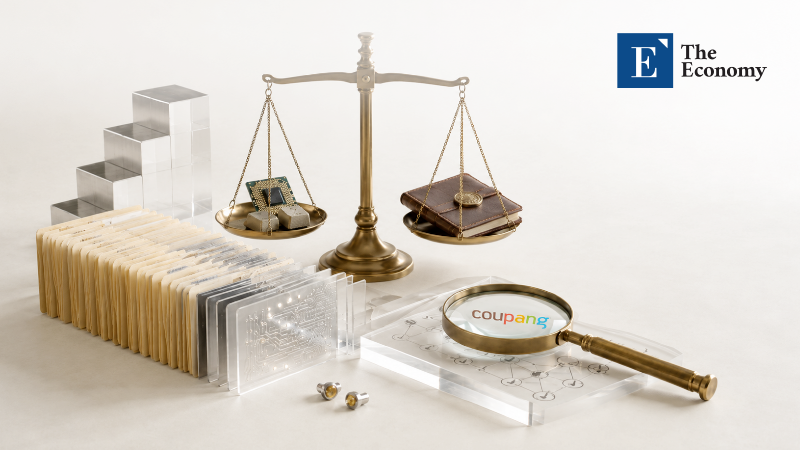
The U.S. Congress has released an investigative report characterizing the South Korean government's regulatory actions against Coupang as discrimination against an American company. The report argues that Seoul's response to the company's personal data breach amounted to a discriminatory campaign that may have violated the Korea-U.S. Free Trade Agreement (FTA), devoting the majority of its content to the Coupang case. With Congress effectively embracing Coupang's claims and the White House publicly weighing in, what began as a domestic regulatory dispute is increasingly evolving into a bilateral trade issue between Washington and Seoul.
U.S. House Claims Data Breach Investigation Was Excessive, Raises Allegations Involving South Korea's Intelligence Agency
On July 1 (local time), the House Judiciary Committee released a 35-page report titled Closed for Competition: South Korea's Discriminatory Attacks on American-owned Businesses. Although published under the committee's name, the document is not a bipartisan House report carrying an official report number. Rather, it is an interim investigative report prepared by majority staff under Judiciary Committee Chairman Jim Jordan and Rep. Scott Fitzgerald, chairman of the Subcommittee on the Administrative State, Regulatory Reform, and Antitrust.
More than half of the report is devoted to Coupang. It argues that the fine imposed on the company by South Korea's Personal Information Protection Commission on June 10 amounted to nearly twice Coupang's net profit for the previous year and represented a substantially harsher penalty than those imposed on domestic competitors. The report compares the sanction with penalties imposed on SK Telecom following a data breach affecting approximately 27 million individuals and on Kakao following the exposure of roughly 40 million accounts. According to the committee, the regulatory action erased more than 40% of Coupang's market capitalization while inflicting significant losses on investors.
The report also sharply criticizes the role of South Korea's National Intelligence Service (NIS). It claims that after a former Coupang employee provided devices and a written statement to a Shanghai-based law firm in December of last year, the NIS informed Coupang that "operations could not be conducted in China" and requested that the company dispatch an employee to the law firm to retrieve the materials instead. According to the report, the NIS sent an official document on Dec. 2 citing Article 5 of the National Intelligence Service Act, stating that cooperation constituted a legal obligation. When Coupang later expressed concern about the risks of sending an employee to China, the agency allegedly reiterated the same legal basis while continuing to pressure the company.
The report further characterizes the data breach as an unauthorized access incident carried out by a disgruntled former employee and details Coupang's claim that the South Korean government subsequently launched a government-wide campaign against the company. Citing testimony from Harold Rogers, Coupang Korea's acting representative, the report includes allegations that South Korean authorities attempted to steer Coupang customers toward domestic competitors. It also reproduces related official correspondence alongside Coupang's account that the NIS played a leading role in recovering the suspect's laptop in China. The report additionally includes claims that a senior presidential office official instructed the NIS to cooperate in the matter and that the issue was reported to President Lee Jae-myung at the time.
Coupang Donations Before and During Investigation Raise Lobbying Questions
The report, however, stands in direct contrast to the NIS's long-standing official position and appears to reflect, virtually without modification, testimony delivered by acting representative Rogers before the House Judiciary Committee in February. Moreover, the report presents the facts almost exclusively through Coupang's account, without including explanations or rebuttals from the South Korean government or relevant agencies. It also makes little mention of the unique characteristics of the case, including its implications for U.S.-China technology rivalry, national security, personal information protection, or the possibility that sensitive data had been transferred to China. In effect, the report was prepared largely on the basis of testimony that effectively adopted Coupang's position without meaningful consideration of the South Korean government's perspective.
Coupang's extensive lobbying campaign in Washington also appears to have played a significant role in shaping the latest developments. Since the personal data breach surfaced, the company has mounted an aggressive lobbying effort in the United States aimed at framing its legal and regulatory challenges as a bilateral trade issue. According to U.S. congressional lobbying disclosures, Coupang Inc. spent approximately $1.79 million through multiple lobbying firms during the first quarter of this year alone. The lobbying campaign reportedly targeted not only members of the House and Senate but also the White House, the Office of the Vice President, the Department of Commerce, the Office of the U.S. Trade Representative (USTR), the Treasury Department, and other key executive branch agencies.
Rep. Scott Fitzgerald, who oversaw preparation of the report, was also found to have received a $1,000 political contribution in January from COUPAC, Coupang's political action committee, just three weeks before the congressional investigation began. While the Judiciary Committee's inquiry was still underway, additional contributions were directed to the highest levels of House leadership. In March, COUPAC donated $5,000 to House Speaker Mike Johnson while the committee's investigation remained ongoing. As Speaker, Johnson sits atop the Republican leadership structure with authority over House operations and the legislative agenda. Although no quid pro quo has been established, the fact that both the lead investigator and the House's top leadership were connected to the same network of political contributions from Coupang raises significant concerns over potential conflicts of interest.
Coupang 'Discrimination' Dispute Reaches the White House, Renewing Risk of U.S.-South Korea Trade Tensions
The report's implications for U.S.-South Korea relations could prove substantial. After the South Korean government rejected the report's conclusions, the White House itself entered the debate. On July 1, following publication of the report, South Korea's Ministry of Foreign Affairs stated that all investigations and regulatory actions involving Coupang had been conducted lawfully, fairly, and without discrimination under domestic law, adding that the government guarantees a level playing field for businesses regardless of nationality. On the same day, the NIS also dismissed the Judiciary Committee's allegations that it had contacted the former Coupang employee responsible for leaking personal data, calling the claims unilateral and false assertions made by Coupang.
In response, the White House issued an official statement on July 2, declaring, "Under any reasonable standard, Coupang has clearly been singled out by the Lee Jae-myung administration," adding that "the U.S. government is deeply concerned about the discriminatory targeting of American companies by the South Korean government." It further warned that "the Trump administration will not tolerate unfair trade practices, including restricting market access for U.S. digital services." This marks the first time the White House has issued a formal public statement directly addressing the Coupang controversy. Until now, concerns had primarily been raised within Congress, while discussions by the executive branch had largely taken place through private diplomatic channels.
A senior figure closely associated with President Donald Trump also joined the criticism of Seoul's regulatory actions against Coupang. Fred Fleitz, vice chairman of the America First Policy Institute and former chief of staff to the White House National Security Advisor during the first Trump administration, wrote in a July 2 opinion piece for a U.S. media outlet that "the regulation of Coupang has the potential to create fractures in the U.S.-South Korea alliance." He argued that "while the issue may appear minor on the surface, it has the potential to undermine the trust and goodwill that underpin one of America's most important strategic partnerships." Fleitz further stated that the report "signals that Washington will not stand by while actions undermine America's economic competitiveness or its trade commitments," adding that it reinforces the Trump administration's broader approach of pressuring South Korea over the treatment of Coupang and other American companies.
The report also draws attention because it suggests that U.S. trade pressure on South Korea, which had appeared to be subsiding, could intensify once again. In January, GreenOaks and Altimeter, both investors in Coupang, petitioned the Office of the U.S. Trade Representative (USTR) to launch an investigation under Section 301 of the Trade Act, arguing that the South Korean government's investigation and regulatory actions against Coupang constituted discrimination against an American company. Although the petition was voluntarily withdrawn in March, giving the impression that the dispute had been resolved, the Personal Information Protection Commission's decision to impose a fine last month prompted renewed criticism from both Congress and the White House, transforming the matter into a fresh bilateral trade issue. In particular, the possibility cannot be ruled out that the United States could invoke Section 301 to impose broad retaliatory tariffs on South Korea's key exports, including automobiles and semiconductors. Washington could also levy targeted tariffs on information and communications technology (ICT) products by citing digital trade barriers or further tighten non-tariff barriers affecting South Korean steel and chemical products.
Siobhán Delaney is a Dublin-based writer for The Economy, focusing on culture, education, and international affairs. With a background in media and communication from University College Dublin, she contributes to cross-regional coverage and translation-based commentary. Her work emphasizes clarity and balance, especially in contexts shaped by cultural difference and policy translation.
Similar Post