Will Uniqlo Fill the Vacuum Left by Chinese Ultra-Low-Cost Platforms as Regulatory Barriers Rise Across North America and Europe?

As one of the youngest members of the team, Tyler Hansbrough is a rising star in financial journalism. His fresh perspective and analytical approach bring a modern edge to business reporting. Whether he’s covering stock market trends or dissecting corporate earnings, his sharp insights resonate with the new generation of investors.
Authored On
Modified
Uniqlo Gains Momentum Across North American and European Markets
EU Tightens Crackdown on Chinese Fashion Platforms Including Shein
Mid-Market European Fashion Brands Collapse Under Pressure from Chinese Competition
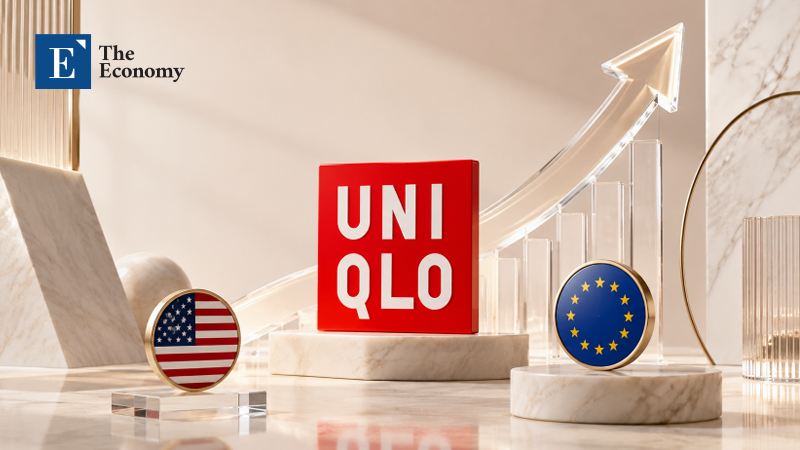
Japanese specialty retailer of private-label apparel (SPA) brand Uniqlo is rapidly expanding its presence across North America and Europe. By refining its localization strategy, the company has captured growing demand for practical everyday apparel while strengthening its position as a global lifestyle clothing brand centered on functionality and quality. In contrast, Chinese ultra-low-cost e-commerce platforms such as Shein and Temu, which had expanded aggressively across Europe in recent years, have seen their momentum curtailed amid intensifying regulatory scrutiny and mounting product quality controversies.
Uniqlo Emerges as a Major Force in North America and Europe
According to the Financial Times (FT) on July 2, Fast Retailing, Uniqlo's parent company, reported consolidated revenue of approximately $13.11 billion for the first half of fiscal 2026 (September 2025–February 2026), up 14.8% from a year earlier. Operating profit climbed 28.3% to roughly $2.47 billion, while net profit increased 19.6% to approximately $1.78 billion. Reflecting the stronger-than-expected first-half performance, the company raised its full-year fiscal 2026 revenue forecast to approximately $24.89 billion, an upward revision of around $638 million. It also lifted its projections for business profit and operating profit to approximately $4.40 billion and $4.47 billion, respectively.
The primary driver behind Fast Retailing's earnings growth was its overseas business. During the first half of fiscal 2026, Uniqlo's international operations generated revenue of approximately $7.93 billion, up 22.4% year over year, while business profit rose 37.4% to roughly $1.49 billion. Fast Retailing stated that both its North American and European businesses recorded double-digit growth in revenue and earnings during the period, while outlining its long-term objective of generating annual revenue of approximately $6.38 billion in each of the two regions.
A key factor behind Uniqlo's growing success in North America and Europe has been its shift toward localization. The company initially struggled after attempting to replicate its Japanese and broader Asian merchandising and store management model in the U.S. market. It subsequently revised its sizing system to better reflect local consumer preferences while expanding region-specific product development through research and development hubs in cities including New York. The company also invested heavily in brand building. Collaboration collections with renowned designers such as Jil Sander helped move the brand beyond its "low-cost basics" image, while sports marketing initiatives—including sponsorship of Roger Federer and partnerships with the Los Angeles Dodgers—broadened consumer engagement.
Uniqlo's distinctive merchandising and retail strategy has also supported its improving financial performance. The company releases only about 800 essential core designs each year and refreshes only half of them every six months. Combined with its vertically integrated SPA business model, this approach has enabled the company to maintain an effective balance between quality and affordability. Persistently elevated inflation has also encouraged North American and European consumers to favor durable wardrobe staples and functional fabrics. As Uniqlo's identity as a provider of simple, long-lasting apparel gains broader acceptance, demand for its functional basics continues to expand steadily.
Shein's Growth Faces Regulatory Headwinds
In contrast, Shein, widely regarded as the symbol of ultra-low-cost apparel, is seeing its position in Western markets become increasingly precarious. In February, the European Commission announced that it had launched a formal investigation into Shein under the Digital Services Act (DSA), legislation governing online platforms' obligations to combat illegal content. Specifically, the Commission reportedly took issue with products sold on Shein, including adult dolls designed to resemble children, weapons, and toys and cosmetics that failed to meet safety standards.
The controversy surrounding these product categories first surfaced in France in November last year. At the time, French authorities raised concerns that certain products sold on Shein could constitute child sexual abuse material, prompting local prosecutors to launch an investigation. During the same period, the European Commission also requested information from Shein regarding measures to prevent the distribution of illegal products. In addition, regulators have been examining the addictive risks associated with so-called "gamification" features, including bonus points awarded based on purchase activity and game-like shopping experiences. The transparency and operation of algorithms used to recommend products to users have likewise become subjects of regulatory scrutiny.
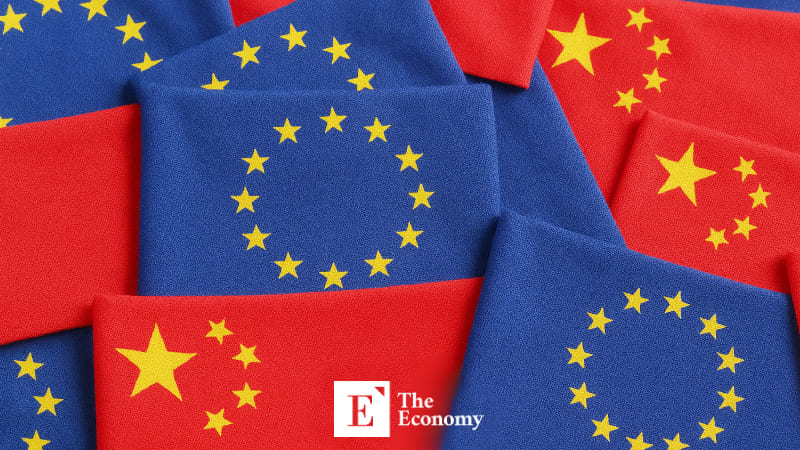
More recently, tangible regulatory action has begun to emerge. France passed legislation imposing penalties on ultra-low-cost fast-fashion companies. The bill would levy fines of up to approximately $7 per item on ultra-low-cost apparel while prohibiting advertising and influencer marketing by companies designated as fast-fashion businesses. Chinese platforms Shein and Temu fall within the scope of the legislation, whereas European retailers including H&M and Zara are excluded. Responding to France's move, Shein argued that it initially manufactures products only in limited quantities and replenishes inventory only after demand has been verified, insisting that its production model avoids the problems targeted by the legislation. Temu likewise maintained that it merely operates an online marketplace connecting consumers directly with manufacturers, arguing that this structure is what enables its competitive pricing.
Crisis Deepens Across Europe's Fashion Industry
Europe's increasingly hard-line regulatory stance reflects the visible deterioration in the competitiveness of the region's fashion industry following the entry of Chinese platforms. While luxury and heritage brands have largely weathered China's low-price offensive through strong brand equity and premium positioning, mid-market apparel companies have steadily lost ground. Commenting on the situation, one industry source said, "The Shein and Temu model minimizes the need for extensive brick-and-mortar store networks, long-term inventory holdings, and traditional wholesale distribution channels by shipping low-cost products directly from Chinese manufacturing bases to European consumers. European mid-market brands not only struggle to compete on price within the same product categories, but also face increasing difficulty differentiating themselves through quality, design, or brand storytelling."
France has been among the first countries where the cracks became visible. In the country's ready-to-wear market, a succession of mid-priced brands—including Camaïeu, Kookaï, Jennyfer, André, San Marina, Minelli, and Comptoir des Cotonniers—have entered restructuring proceedings, receivership, or liquidation. More recently, French premium apparel group IKKS entered restructuring proceedings amid weakening consumer demand and mounting debt repayment burdens, while Marseille-based down jacket brand JOTT has also entered court-supervised administration and is seeking a buyer. In the United Kingdom, prominent digital fashion companies such as Boohoo and ASOS have lost ground to Chinese rivals competing on both price and speed. Meanwhile, brick-and-mortar retailer River Island is pursuing store closures affecting 33 locations and lease renegotiations covering 71 stores as part of its restructuring efforts.
Germany has also seen growing concern over the expansion of Chinese ultra-low-cost platforms. In April, German economic research and consulting firm IW Consult, in a report commissioned by the German Retail Federation (HDE), concluded that the rapid expansion of Chinese e-commerce platforms could erode value creation and tax revenues within Germany's retail sector while putting approximately 40,000 jobs at risk. At the heart of the debate lies the source of Chinese platforms' price competitiveness. While traditional German retailers must bear the costs of store rents, labor, value-added taxes, and compliance with product safety and environmental regulations, Chinese platforms are able to circumvent much of those regulatory and tax burdens through direct-to-consumer shipping models and platform-based sales structures. This is why the German retail industry frequently characterizes the expansion of Chinese e-commerce as a form of "unfair competition."
As one of the youngest members of the team, Tyler Hansbrough is a rising star in financial journalism. His fresh perspective and analytical approach bring a modern edge to business reporting. Whether he’s covering stock market trends or dissecting corporate earnings, his sharp insights resonate with the new generation of investors.
Similar Post