Technical Hurdles and a China-Led Price War Complicate Tesla Optimus’s Road to Mass Production

Matthew Reuter is a senior economic correspondent at The Economy, where he covers global financial markets, emerging technologies, and cross-border trade dynamics. With over a decade of experience reporting from major financial hubs—including London, New York, and Hong Kong—Matthew has developed a reputation for breaking complex economic stories into sharp, accessible narratives. Before joining The Economy, he worked at a leading European financial daily, where his investigative reporting on post-crisis banking reforms earned him recognition from the European Press Association. A graduate of the London School of Economics, Matthew holds dual degrees in economics and international relations. He is particularly interested in how data science and AI are reshaping market analysis and policymaking, often blending quantitative insights into his articles. Outside journalism, Matthew frequently moderates panels at global finance summits and guest lectures on financial journalism at top universities.
Authored On
Modified
Tesla Profitability Erodes as Investment in Robot Development and Mass-Production Facilities Expands
R&D Spending and Capital Expenditure Surge Despite Lack of Optimus Revenue
Prolonged Upfront Investment Burden Expected Until Real-World Productivity Is Proven

Tesla’s humanoid robot, Optimus, has entered a critical test of whether it can generate returns on the company’s investment. Tesla’s operating income and cash flow have deteriorated sharply despite a rebound in revenue, as the company pours vast sums into robot development and production infrastructure. With a dedicated component supply chain and general-purpose autonomous task capabilities still underdeveloped, mounting low-cost competition from Chinese manufacturers is pushing the monetization timeline further into the future. As Tesla seeks to overcome slowing growth in its electric vehicle business, it will have to shoulder a prolonged upfront investment burden until Optimus proves its real-world productivity and cost competitiveness.
Optimus Investment Burden Obscures Tesla’s Revenue Rebound
According to Tesla’s quarterly report filed with the US Securities and Exchange Commission on July 28, the company posted second-quarter revenue of $28.236 billion, up 26% year on year. Net income attributable to common stockholders fell 5% to $1.114 billion over the same period, while operating income plunged 57% from $923 million to $398 million. As revenue growth failed to translate into higher profits, Tesla’s operating margin declined from 4.1% to 1.4%.
The principal factor weighing on profitability was upfront investment in the robotics business. Research and development expenses climbed 49% to $2.371 billion, while quarterly capital expenditure surged 142% to $5.79 billion. Consequently, free cash flow swung into negative territory for the first time since 2024, recording a deficit of $1.09 billion. In effect, Tesla has begun recognizing substantial costs even though Optimus has yet to establish itself as an independent revenue stream.
Capital markets have already priced in both the need for additional investment and the risk of sustained cash burn. Tesla shares plunged 14.5% the day after the earnings announcement. Morgan Stanley acknowledged that investment would be necessary for Tesla to secure leadership in autonomous driving and robotics, but lowered its price target from $417 to $400, citing rising capital expenditure and the prospect of prolonged cash burn. The market’s valuation criteria have shifted toward visibility into investment returns rather than the rebound in revenue itself.
Steep Hurdles in Replicating Hands, Feet and Vision, Alongside Compute Costs
Scepticism is also spreading among experts over Optimus’s technological limitations in replicating the human body and the prospect of slow revenue generation relative to the enormous investment required. Ross Gerber, CEO of US-based Gerber Kawasaki Wealth and Investment Management, recently told financial news outlet Benzinga that Tesla’s robotics business was unlikely to generate meaningful financial results in the near term.
Gerber identified the difficulty of replicating distinctive human physical capabilities as the greatest obstacle to the commercialisation of humanoid robots. The dexterity of human hands and feet, along with visual perception, is the product of a long evolutionary process and is exceedingly difficult to reproduce perfectly in machines. He also cited limited battery life and the immense cost of real-time perceptual computing as key technological constraints on commercialisation.
Gerber raised particularly strong doubts about the commercial viability of mass-market humanoid robots aimed at consumers. He argued that investing billions of dollars to develop robots capable of performing simple household chores lacks economic justification. Wheeled or tracked mobile systems have been comparatively straightforward to implement, but commercialising machines capable of walking upright like humans presents an entirely different order of difficulty.
Table 1. Key Issues Surrounding the Commercialisation of Optimus
| Category | Key Point | Business Implication |
|---|---|---|
| Supply Chain Development | The supply ecosystem for critical components—including actuators, hands, power systems and control boards—remains underdeveloped | In-house design and component localisation are effectively unavoidable, increasing production complexity and the initial investment burden |
| Revenue Visibility | Optimus is expected to take several years before making a meaningful contribution to Tesla’s revenue | The market expects substantive revenue generation to begin around 2029 |
| Profitability Validation | Validation is required not only for production volume but also for unit costs, task success rates, uptime, maintenance expenses, liability for workplace accidents and customer deployment costs | The longer revenue recognition is delayed, the greater the burden of R&D spending and capital expenditure |
| Autonomous Task Capability | Remote operators intervened in some movements and conversations during the 2024 “We, Robot” event | The intervention exposed the gap between the polish of the demonstration and actual fully autonomous task performance |
| Performance Data | Tesla has not disclosed quantitative data demonstrating sustained autonomous operation in complex real-world environments | There is insufficient evidence to assess commercial viability and real-world productivity |
| Data Accumulation | Initial production units will be deployed to the “Optimus Academy” to collect data on successful and failed tasks | Tesla aims to improve task accuracy and autonomy through iterative learning |
| Technical Complexity | The robot must simultaneously maintain balance, recognise objects, regulate force, coordinate both hands and use tools | Optimus requires more complex judgment and precision control than autonomous vehicles |
| Deployment Requirements | Hand dexterity, joint durability, fall prevention and battery endurance must all be secured | Failure to meet these core performance requirements would restrict both applicable tasks and the scope of commercialisation |
Optimus Faces Mass-Production Challenges, With Monetisation a Long-Term Undertaking
CEO Elon Musk has acknowledged that scaling Optimus production could become the most difficult manufacturing challenge in Tesla’s history. Automobiles can rely on a component ecosystem built over decades, whereas humanoid robots lack a sufficiently developed supply base for critical component categories such as actuators, hands, power systems and control boards. This supply-chain gap also explains Tesla’s efforts to expand in-house design and vertically integrate component production.
Earlier this year, Musk indicated that it could take several years for Optimus to make a meaningful contribution to Tesla’s revenue. Some market participants have accordingly cited around 2029 as the point at which substantive revenue generation could begin. Even so, investors have already priced Optimus’s long-term earnings potential into Tesla’s valuation. Given that Tesla has promoted Optimus as a central driver of its enterprise value since late last year, market expectations appear to have formed considerably faster than the actual business has progressed.
The problem lies in the gap between Tesla’s long-term vision and its quarterly financial performance. Tesla believes Optimus will ultimately be capable of performing general-purpose tasks at a human level and is developing a learning architecture that connects visual inputs to action control in a manner similar to its vehicle-based autonomous driving software. If the objective is achieved, Tesla could secure a platform applicable across manufacturing, logistics and household services. The value of the robot, however, cannot be determined solely by production-volume targets. Unit costs, task success rates, uptime, maintenance expenses, liability for workplace accidents and customer deployment costs must all be validated. The longer revenue recognition is delayed, the greater the R&D and capital expenditure burden Tesla will have to bear.
Gap Between Demonstration Polish and Real-World Performance
The duration for which Optimus can operate autonomously without human intervention will be a critical measure of its commercial viability. At Tesla’s 2024 “We, Robot” event, Optimus poured drinks and conversed with attendees, but Bloomberg subsequently reported that remote operators had intervened in a substantial number of the interactions. The robots were able to walk independently, but human assistance was used for complex movements and conversations. Tesla has likewise yet to disclose quantitative data showing that the third-generation Optimus can autonomously perform useful tasks for extended periods in complex real-world environments.
Tesla plans to transplant its autonomous-driving AI technology into the robot and use footage of factory workers, as well as demonstration movements performed by a dedicated data-collection team, as training material. The proprietary AI chips and software used by Tesla’s autonomous vehicles to interpret camera footage will also be deployed in Optimus. Initial production units will be assigned to the “Optimus Academy,” where they will repeatedly perform tasks and accumulate data on successes and failures. Road driving, however, primarily involves decisions concerning travel routes, steering, acceleration and deceleration. A humanoid robot must continuously combine balance, object recognition, force modulation, bimanual coordination and tool use. Unless hand dexterity, joint durability, fall prevention and battery endurance are achieved simultaneously, the range of tasks suitable for real-world deployment will inevitably remain limited.
China’s Early Grip on the Humanoid Supply Chain
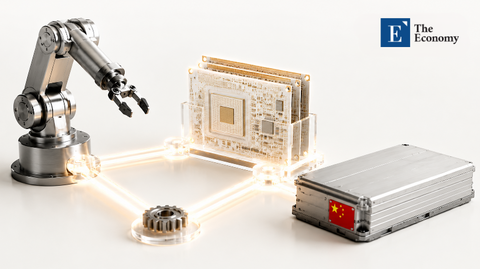
The aggressive pricing of Chinese manufacturers is another factor complicating the monetisation environment for Optimus. While Tesla is still building its production system, China has already established the world’s largest industrial robotics market. Domestic companies including Unitree, UBTECH and AgiBot are accelerating efforts to cut humanoid robot prices and unveil new products, supported by government backing and an extensive manufacturing base. According to the International Federation of Robotics’ World Robotics 2025 report, China accounted for 295,000, or 54%, of the 542,000 industrial robots newly installed worldwide last year. The market share of domestic manufacturers within China also rose to 57%.
China’s first-mover advantage is also evident in humanoid robot shipments. According to market research firm Omdia, global humanoid shipments reached 13,000 units last year, approximately 85% of which were produced by Chinese companies. AgiBot and Unitree are each estimated to have shipped more than 5,000 units, while Tesla’s shipments remained in the hundreds. Chinese products were priced across a broad range, from $6,000 to more than $99,000, enabling manufacturers to rapidly capture initial demand from research institutions, the education market and local-government projects.
Low selling prices, however, do not necessarily translate into high real-world productivity or reliability. Chinese robotics companies are also experiencing a combination of expanding revenue and persistent losses as R&D and capital expenditure burdens accumulate. UBTECH’s annual results for last year showed that revenue increased 53.3% to approximately $295.7 million, while humanoid-related revenue surged twenty-threefold to approximately $121.2 million. Nevertheless, the company posted a net loss of approximately $116.6 million for the same year. A substantial deficit therefore remained even after the sharp increase in revenue.
This competitive landscape imposes a dual burden on Tesla. Optimus will require enormous development expenditure and an extended validation period to achieve a high degree of technological maturity and reliability. Yet if Chinese manufacturers flood the market with low-cost products, the market’s overall pricing benchmark could fall. Conversely, if Tesla accelerates sales to compete on price, it could face pressure to commercialise Optimus before its general-purpose task capabilities, safety and durability have been sufficiently validated. Ultimately, monetising Optimus will require Tesla to solve three challenges simultaneously: achieving technological maturity, reducing costs and responding to price competition from China.
Matthew Reuter is a senior economic correspondent at The Economy, where he covers global financial markets, emerging technologies, and cross-border trade dynamics. With over a decade of experience reporting from major financial hubs—including London, New York, and Hong Kong—Matthew has developed a reputation for breaking complex economic stories into sharp, accessible narratives. Before joining The Economy, he worked at a leading European financial daily, where his investigative reporting on post-crisis banking reforms earned him recognition from the European Press Association. A graduate of the London School of Economics, Matthew holds dual degrees in economics and international relations. He is particularly interested in how data science and AI are reshaping market analysis and policymaking, often blending quantitative insights into his articles. Outside journalism, Matthew frequently moderates panels at global finance summits and guest lectures on financial journalism at top universities.
Similar Post