"Curbing China's Low-Cost Export Advantage": Europe Targets Yuan Exchange Rate as China Faces Twin Pressures on Exports and Domestic Demand

Oliver Griffin is a policy and tech reporter at The Economy, focusing on the intersection of artificial intelligence, government regulation, and macroeconomic strategy. Based in Dublin, Oliver has reported extensively on European Union policy shifts and their ripple effects across global markets. Prior to joining The Economy, he covered technology policy for an international think tank, producing research cited by major institutions, including the OECD and IMF. Oliver studied political economy at Trinity College Dublin and later completed a master’s in data journalism at Columbia University. His reporting blends field interviews with rigorous statistical analysis, offering readers a nuanced understanding of how policy decisions shape industries and everyday lives. Beyond his newsroom work, Oliver contributes op-eds on ethics in AI and has been a guest commentator on BBC World and CNBC Europe.
Authored On
Modified
EU steps up pressure for yuan appreciation in response to undervaluation and Chinese overproduction
Compromise in auto trade talks, but exchange-rate pressure aims to weaken China's price competitiveness
China strengthens exchange-rate stabilization measures amid mounting concerns over export competitiveness and weak domestic demand
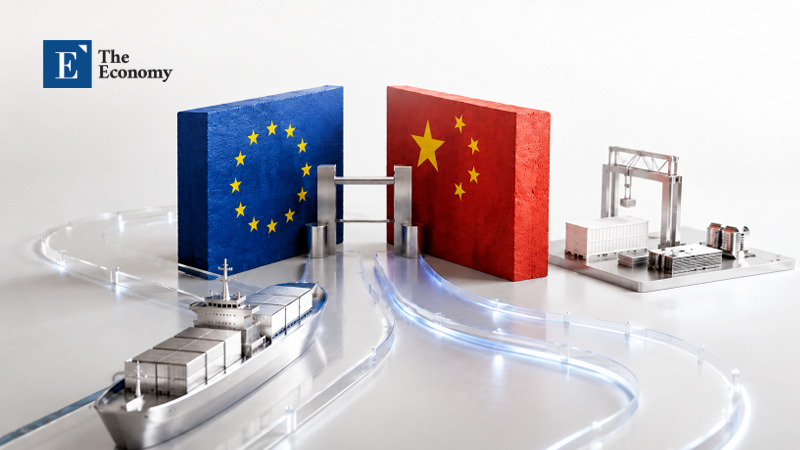
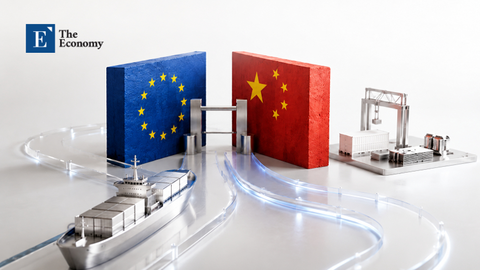
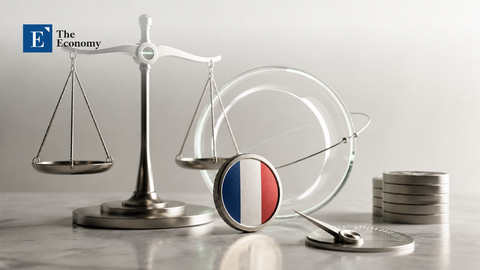
Europe is stepping up exchange-rate and trade pressure on China, judging that an undervalued yuan and persistent overproduction by Chinese companies have boosted the price competitiveness of Chinese goods and squeezed European manufacturing. China, meanwhile, is defending its current exchange-rate policy and remains wary of these Western demands. With a rapid appreciation of the yuan threatening to simultaneously weigh on exporters' profitability, employment and domestic demand, Beijing appears intent on controlling the pace of appreciation while preserving its export growth engine.
EU Leadership Mobilizes to Pressure China
According to Hong Kong's South China Morning Post (SCMP) on the 28th of last month (local time), the European Commission plans to hold a macroeconomic dialogue with Chinese authorities in Beijing around the upcoming 23rd. The talks will be led by Maarten Verwey, director-general of the Commission's Directorate-General for Economic and Financial Affairs, with China's exchange-rate policy and substantial trade imbalances reportedly among the main agenda items. Plans are also being pursued for European Central Bank (ECB) President Christine Lagarde, European Commissioner for Economy and Productivity Valdis Dombrovskis, and Eurogroup President Kyriakos Pierrakakis to visit Beijing between late this year and early next year for high-level consultations with People's Bank of China (PBOC) Governor Pan Gongsheng and Finance Minister Lan Fo'an.
The crisis facing manufacturers within the EU is driving this succession of talks between EU leaders and China. The EU believes that an undervalued yuan and the practice of offloading excess output through exports have boosted the export price competitiveness of Chinese products, threatening European manufacturing in key industries such as automobiles and machinery. Indeed, an analysis published on the Council on Foreign Relations (CFR) website in September by Brad Setser, a CFR senior fellow and former senior U.S. Treasury official, estimated that the yuan was recently undervalued by around 30–35%. Setser noted that although China's official current-account surplus stands at about 4% of gross domestic product (GDP), adjustments for surging gold imports and discrepancies in overseas investment income statistics could put the actual surplus at 5.5–6% of GDP. Applying these figures to the International Monetary Fund's (IMF) external balance assessment methodology would imply that the yuan is undervalued by more than 30%, he explained.
Germany and France Also Step Up Pressure
Leaders of major European countries have also publicly pressed for yuan appreciation for some time. At a press conference immediately after the EU summit in June, German Chancellor Friedrich Merz argued that the yuan was undervalued by about 30% and raised the need for international coordination similar to the 1985 Plaza Accord, signed by the United States, Japan, West Germany, France and the United Kingdom to bring down the dollar's value. At the Berlin Global Dialogue on the 21st of last month, he also said that China's massive excess production capacity, high state subsidies for industries such as automobiles, and artificially undervalued currency had combined to expose European companies to unfair price competition. Merz further emphasized that, with the EU's annual trade deficit with China well above EUR 300 billion, new trade defense instruments were needed to protect European industry.
French President Emmanuel Macron is also calling for a change in China's exchange-rate policy. At a joint press conference with Merz in Brühl, Germany, in July, Macron said, "The current exchange-rate relationship between the yuan and the euro is not sustainable and does not reflect actual trading conditions," urging the resumption of a European-level strategic dialogue to address China's enormous trade surplus and the yuan's undervaluation. On the 5th of last month, he and Merz also sent a joint letter to European Commission President Ursula von der Leyen proposing a new trade defense framework that could respond swiftly to unfair trade practices. An accompanying policy paper identified currency manipulation and undervaluation, industrial subsidies, and structural overproduction as sources of market distortion. It argued that the Commission's powers should be strengthened so that, in cases of serious harm, it could restrict access to the EU single market for third countries engaging in unfair trade practices.
The Bigger Picture Behind the EU's Trade Strategy
Market observers are noting that the EU is diversifying its response to trade imbalances with China beyond simple import restrictions. A prominent example of this trend is the import quota system for hybrid vehicles. Last month, European Commissioner for Trade and Economic Security Maroš Šefčovič reached an agreement to adjust export volumes of Chinese-made hybrid and plug-in hybrid vehicles to the EU after two days of negotiations in Beijing with Chinese Commerce Minister Wang Wentao and other officials. The European Commission's proposal at the time was to cap annual imports of Chinese-made hybrid vehicles at 350,000 units and then increase the allowance by 6% each year. That would more than halve the influx of Chinese-made hybrid vehicles into Europe, which is expected to reach about 800,000 units this year. The Chinese government, however, said the agreement guaranteed continued export growth for its companies based on last year's export performance, with terms no less favorable than those granted to other trading partners.
The key point is that if the yuan rises against the euro, even some continued inflows of Chinese goods into Europe would find it harder to capture market share within the bloc. If Chinese companies maintain their yuan-denominated selling prices, their prices in euros would rise, weakening their price competitiveness. Conversely, Chinese consumers' purchasing power in euros would increase. This would make expensive European consumer goods such as cars and luxury products more affordable and could also increase the spending power of Chinese visitors to major European tourist destinations such as France, Italy and Spain.
Table 1. Effects of Yuan Appreciation on the EU and Chinese Economies
| Region | Area Affected | Main Effects |
|---|---|---|
| EU | Internal Market | Higher euro-denominated prices for Chinese goods help European companies defend their market share |
| Exports and Tourism | Greater purchasing power for Chinese consumers could boost demand for European cars and luxury goods, as well as tourism spending | |
| China | Export Industries | Higher overseas selling prices weaken price competitiveness; maintaining prices reduces corporate profitability |
| Domestic Demand and Employment | Weak exports constrain wage increases and new hiring, risking weaker consumer confidence and a delayed recovery in domestic demand |
China Faces Hits to Both Exports and Domestic Demand
For China, however, a rapid appreciation of the yuan could place considerable strain on the broader economy. First, it would likely cool the export sector, which has become a major engine of economic growth. China currently has production capacity exceeding domestic demand in major manufacturing sectors such as automobiles, steel, electronics and machinery, and is maintaining factory utilization rates by offloading inventories onto overseas markets. If the yuan appreciates under these circumstances, Chinese exporters would have to either raise overseas selling prices and accept weaker competitiveness or maintain existing prices and accept lower profitability.
Negative spillover effects on the domestic economy are also a concern. Chinese household sentiment is already depressed by declining asset values resulting from falling property prices, employment insecurity among young people, and uncertainty over future income. According to China's National Bureau of Statistics, cumulative retail sales growth from January through September was just 1.1% year on year. This contrasts with industrial production growth of 5.5% over the same period. If weaker manufacturing exports compound these problems, companies would have less room to raise wages and would cut new hiring, potentially further delaying the recovery in domestic demand.
PBOC Steps Up Its Response
To minimize these risks, the Chinese government is emphasizing the legitimacy of its existing exchange-rate policy. In an official statement on yuan exchange-rate policy last month, the PBOC said, "China neither needs nor intends to gain a competitive trade advantage through currency depreciation, and has never pursued competitive devaluation." It said the yuan had appreciated by a cumulative 23% against the dollar since the 2005 exchange-rate regime reform, while the nominal and real effective exchange rates calculated by the Bank for International Settlements (BIS) had risen by more than 50% and by 35%, respectively. It identified changes in the international division of labor, flaws in the international monetary system, and high fiscal deficits and consumption levels in some countries as causes of global trade imbalances.
In addition, the PBOC has announced that it will raise the foreign-currency deposit reserve requirement ratio for financial institutions by 2 percentage points, from 4% to 6%, starting on the upcoming 15th. This will be China's first adjustment to the ratio in about 3 years and 2 months, since September 2023. A higher foreign-currency deposit reserve requirement means financial institutions must deposit more foreign currency with the central bank, reducing dollar liquidity in circulation and offsetting pressure for further yuan appreciation. Reuters estimated that the measure would drain USD 24 billion in foreign-currency liquidity from financial markets.
Oliver Griffin is a policy and tech reporter at The Economy, focusing on the intersection of artificial intelligence, government regulation, and macroeconomic strategy. Based in Dublin, Oliver has reported extensively on European Union policy shifts and their ripple effects across global markets. Prior to joining The Economy, he covered technology policy for an international think tank, producing research cited by major institutions, including the OECD and IMF. Oliver studied political economy at Trinity College Dublin and later completed a master’s in data journalism at Columbia University. His reporting blends field interviews with rigorous statistical analysis, offering readers a nuanced understanding of how policy decisions shape industries and everyday lives. Beyond his newsroom work, Oliver contributes op-eds on ethics in AI and has been a guest commentator on BBC World and CNBC Europe.
Similar Post