“Power, land and talent”: Malaysia emerges as a battleground for AI data center investment as Google, Microsoft and Amazon pour in

Anne-Marie Nicholson is a fearless reporter covering international markets and global economic shifts. With a background in international relations, she provides a nuanced perspective on trade policies, foreign investments, and macroeconomic developments. Quick-witted and always on the move, she delivers hard-hitting stories that connect the dots in an ever-changing global economy.
Authored On
Modified
Malaysia rises amid tech giants’ race to expand data centers
Ready access to power and land favors construction of large-scale facilities
Low construction costs and English-speaking workforce enhance investment appeal
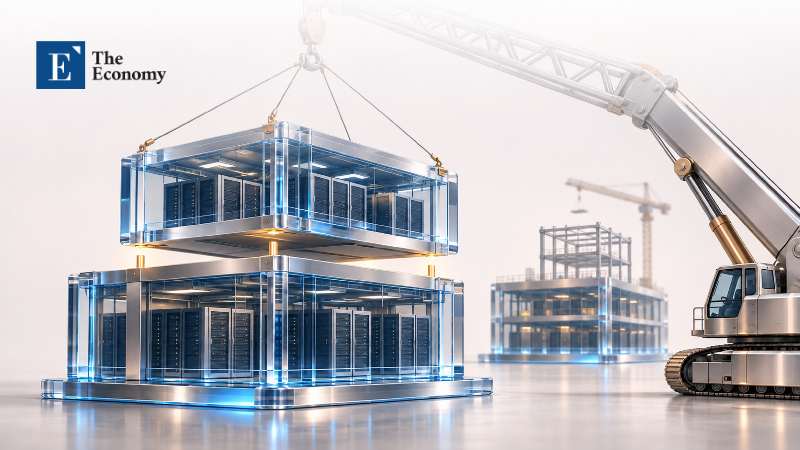
Global tech giants are pouring data center investment into Malaysia. As Google signals substantial additional investment, Microsoft (MS), Amazon Web Services (AWS) and Oracle are also expanding their local cloud facilities. What has drawn these companies is the ability to secure power, land and talent in one place. With an electricity supply supported by domestic natural gas, low construction costs and an English-speaking workforce, Malaysia is considered an ideal location for operating large-scale facilities.
Google expands cloud infrastructure in Malaysia
According to Reuters on the 5th (all dates hereafter are local time), Google plans to invest USD 15 billion in Malaysian data centers and related infrastructure in 2027–2028. Ruth Porat, president and chief investment officer (CIO) of Alphabet and Google, unveiled the investment plan the previous day at an event attended by Malaysian Prime Minister Anwar Ibrahim. The centerpiece is the construction of new data center campuses in Selangor and Negeri Sembilan, expanding its local facilities following its first data center at Elmina Business Park in Selangor, which is already operational. Computing resources secured in Selangor will also support the upcoming Google Cloud region in Malaysia. They will support corporate customers’ development and operation of artificial intelligence (AI) services and strengthen the processing infrastructure for services such as Google Search and Maps used across the Asia-Pacific region.
Alongside the data center expansion, Google will pursue projects to add more than 1 gigawatt (GW) of clean energy generation capacity to the national grid. It will work with Malaysian utility Tenaga Nasional (TNB) to support the development of new generation facilities under the Corporate Renewable Energy Supply Scheme. In particular, the two companies agreed to jointly explore projects that supply clean electricity around the clock, taking into account fluctuations in output from sources such as solar power. The aim appears to be to ensure a stable electricity supply to data centers by compensating for generation that varies with weather and time of day. Google also outlined its approach to bearing the costs of electricity consumption and supply infrastructure. It will cover not only the data centers’ electricity bills but also all direct infrastructure costs required to connect the facilities to the existing grid. From 2027, it also plans to fund community projects that reduce household electricity costs and improve power supply reliability in areas hosting its data centers.
Support ranges from securing water supplies to training local talent
Alongside expanding power supply infrastructure, Google is pursuing projects to secure the water needed to operate data centers and manage local water resources. In Negeri Sembilan, Google is developing an off-river storage reservoir and a water treatment plant. The project will expand water supply infrastructure by providing facilities both to store water drawn from rivers and to treat it. It will also manage water quality at the source to ensure a reliable supply. Working with the Global Environment Centre (GEC), Google plans to create constructed wetlands in the Sungai Buloh and Sungai Selangor river basins, improve riverbanks using vegetation and other measures, and expand pollution monitoring. The aim is to improve raw water quality and ease the treatment burden on downstream water plants by reducing sediment and urban pollutants entering the two river basins.
Google has also developed school-based water supply projects. At each of four schools in Selangor, it has installed a 20,000-liter storage tank, rainwater harvesting facilities and self-closing taps so that collected rainwater can be used for non-drinking purposes and unnecessary water waste can be reduced. The stored water also serves as an emergency supply during outages. Google said the systems were designed to provide emergency water for at least two weeks to as many as 2,000 local residents per school in the event of an unannounced water outage.
In addition to securing power and water, Google will provide AI education and technical workforce training for local residents. It has set out four new training programs targeting approximately 800,000 people from 2027 to 2031. The programs will serve teachers and young people, microbusiness owners, local government officials and vocationally trained job seekers, starting in areas where the data centers are being built. In schools, teacher training will support AI education for students aged 11–14, while microbusiness owners will receive hands-on instruction in listing their businesses online and setting up digital storefronts. Training for local government officials will target 19 local councils in Selangor and Negeri Sembilan, focusing on using AI tools for repetitive paperwork and similar tasks. Google will also establish data center training institutions at selected technical colleges in the two states, offering job seekers 10 weeks of practical training from 2027. Trainees will use data center simulators supplied by Google to learn facility installation and operations skills.
Table 1. Global companies’ cloud investments in Malaysia
| Company | Category | Key details |
|---|---|---|
| Microsoft (MS) | Investment plan | Announced in 2024: USD 2.2 billion investment over four years |
| First region launch | Malaysia West launched in Greater Kuala Lumpur in May 2025 Operates three availability zones and offers approximately 200 services | |
| Further expansion | Building its second region, Southeast Asia 3, in Johor Bahru Plans to expand it into the company’s largest cloud region in Southeast Asia | |
| Amazon Web Services (AWS) | Investment plan | USD 6.2 billion investment through 2038 |
| Region operations | Malaysia region launched in August 2024 Operates three availability zones with independent power, cooling and security facilities Redundant network connections between zones support local data storage and application operations | |
| Estimated employment impact | Expected to support an annual average of more than 3,500 full-time-equivalent jobs at partner companies and in related industries through 2038 Includes construction, facility maintenance, engineering and telecommunications | |
| Oracle | Investment plan | Announced in October 2024: investment of more than USD 6.5 billion Plans to build its first public cloud region in Malaysia |
| Planned service offerings | Plans to offer more than 150 services, including databases and enterprise applications Supports migration of existing business systems and provides computing resources for data analytics and AI development | |
| AI development and operations support | Plans to support local AI model operations using generative AI and high-performance computing Includes NVIDIA enterprise AI software and cloud-based AI development services |
Microsoft, AWS and Oracle also expand their Malaysian presence
Google is not the only company expanding data centers and cloud infrastructure in Malaysia. Under its four-year, USD 2.2 billion investment plan announced in 2024, Microsoft launched its first cloud region, Malaysia West, in Greater Kuala Lumpur in May last year. The region stores and processes data locally across three availability zones and currently offers approximately 200 services. Further investment is also underway. According to a business update Microsoft released on the 5th, it is building its second cloud region, Southeast Asia 3, in Johor Bahru and plans to expand it into its largest cloud region in Southeast Asia. The aim appears to be to distribute workloads and data across the two locations so that services can continue using one region even if the other experiences a disruption.
AWS has also established a cloud hub in Malaysia and continues to make long-term investments. Its Malaysia region, launched in August 2024, enables businesses and public institutions to store data and operate applications within the country. To ensure reliable service, facilities are spread across three geographically separate availability zones. Each zone has independent power, cooling and security facilities, with redundant network connections between zones to reduce the risk that a failure at some facilities will cause a complete service outage. Local partners also participate in facility construction, maintenance and network operations. AWS estimated that this activity would support an annual average of more than 3,500 full-time-equivalent jobs through 2038 at partner companies and in related industries, including construction, facility maintenance, engineering and telecommunications.
Oracle has also announced plans to invest more than USD 6.5 billion to build its first public cloud region in Malaysia. The plan, announced in October 2024, includes offering more than 150 cloud services locally, including databases and enterprise applications. The project will allow businesses to move existing business systems to Oracle Cloud and access the computing resources needed for data analytics and AI service development. In particular, Oracle plans to help customers operate AI models within the country through generative AI and high-performance computing services. NVIDIA’s enterprise AI software and cloud-based AI development services are also included in the planned offerings, providing tools needed from model development through deployment and operation.
Malaysia draws on competitive advantages in power and land
Global companies’ expansion of computing facilities in Malaysia reflects a strategy to secure power supply infrastructure while lowering construction and operating costs. Malaysia has supplied fuel for power generation from its offshore gas fields to meet rising electricity demand from data centers. According to Bloomberg, when electricity demand in Peninsular Malaysia rose 11.5% year on year in April this year, gas-fired power generation increased 50.5%, meeting a substantial share of the additional demand. A policy of pricing gas supplied to the power sector below international liquefied natural gas (LNG) benchmarks is also cited as an investment incentive. Sumit Ritolia, an analyst at energy consultancy Energy Aspects, said competitively priced gas for power generation was a factor attracting data center investment. For businesses that run servers and cooling equipment around the clock, fuel supply infrastructure and electricity procurement costs are key determinants of long-term operating expenses.
Land for facilities and access to nearby markets also strengthen the investment case. Johor Bahru is connected to Singapore by road, making it well suited for global companies to expand computing facilities nearby while maintaining their Asian regional headquarters in Singapore. Indeed, when Singapore restricted new data center construction from 2019 to 2022 over concerns including electricity consumption, investment demand flowed into neighboring Malaysia. Johor was already positioned to accommodate this demand, with large sites capable of housing server buildings alongside power and cooling facilities. Construction costs are also relatively low. In a survey released this month by UK consultancy Turner & Townsend, data center construction costs in Kuala Lumpur and Johor Bahru were USD 10.06 per watt (W) of IT capacity, ranking them 49th and 50th, respectively, among the 62 markets surveyed. These locations allow companies to lower initial construction costs while leveraging corporate customers and existing business hubs in Singapore.
Table 1. Incentives for data center investment in Malaysia
| Category | Key factors | Key details |
|---|---|---|
| Power infrastructure | Use of domestic gas fields | Fuel supply for power generation from offshore gas fields Electricity demand in Peninsular Malaysia rose 11.5% in April this year, while gas-fired generation increased 50.5% Compared with the same month a year earlier |
| Gas prices for power generation | Priced below international LNG benchmarks Incentive to reduce operating costs for continuously running servers and cooling equipment | |
| Location and construction costs | Access to Singapore | Johor Bahru and Singapore connected by road Investment demand flowed in during Singapore’s restrictions on new data center construction in 2019–2022 |
| Large sites | Land available in Johor to accommodate large facilities Favorable for developing integrated campuses with server buildings, power and cooling facilities | |
| Competitive construction costs | USD 10.06 per 1 W of IT capacity in both Kuala Lumpur and Johor Bahru Ranked 49th and 50th, respectively, in construction costs among 62 markets surveyed | |
| Workforce and labor costs | Language and education foundations | Ranked 24th among 123 countries and regions in EF’s 2025 English Proficiency Index Local campuses operated by the University of Nottingham, University of Southampton and Heriot-Watt University |
| Technical workforce development | MARA and DayOne pursuing a training-to-employment program Data center technical job opportunities for graduates who meet competency standards after completing training | |
| Entry-level technical salaries | Monthly base salary of MYR 5,000–5,500 Requires an additional data center professional certification alongside a mechanical or electrical engineering degree or a TVET qualification |
Low labor costs ease the burden of data center operations
Malaysia also has the language and education foundations needed to hire local staff to operate facilities. It ranked 24th among 123 countries and regions in EF’s 2025 English Proficiency Index, earning a “high proficiency” rating. This is an advantage in recruiting staff who can coordinate with overseas headquarters and work with equipment suppliers’ technical documents and operating guidelines. The country also has a higher education infrastructure that supports the supply of skilled professionals. According to the Malaysian Investment Development Authority (MIDA), overseas universities including the University of Nottingham, University of Southampton and Heriot-Watt University operate local campuses, while private educational institutions offer degree programs in partnership with foreign universities. In vocational education, the Penang Skills Development Centre (PSDC) trains technical workers to meet industry needs through programs that combine instruction with workplace training.
Technical salary levels and employment-linked training also support the use of local workers. According to a joint report by Boston Consulting Group (BCG) and data center operator DayOne, entry-level data center technical roles in Malaysia pay monthly base salaries of around MYR 5,000–5,500. These roles require a data center professional certification in addition to a mechanical or electrical engineering degree or a technical and vocational education and training (TVET) qualification. Companies can therefore hire workers with the training and qualifications needed to operate facilities at a monthly base salary in the USD 1,000 range. Programs to train and recruit the necessary workers locally are also being developed. MARA and DayOne are pursuing a linked training and recruitment program to hire graduates who complete training and meet competency standards for data center technical roles. Companies participate from the training stage, helping trainees acquire the skills needed on site and linking that training to employment. This allows companies to develop and secure the workers they need directly, while reducing the housing and relocation costs associated with deploying staff from overseas.
Anne-Marie Nicholson is a fearless reporter covering international markets and global economic shifts. With a background in international relations, she provides a nuanced perspective on trade policies, foreign investments, and macroeconomic developments. Quick-witted and always on the move, she delivers hard-hitting stories that connect the dots in an ever-changing global economy.
Similar Post