TV Costs Rise and Auto Production Halts as China's Supply Chain Dominance Shakes Global Manufacturing

Siobhán Delaney is a Dublin-based writer for The Economy, focusing on culture, education, and international affairs. With a background in media and communication from University College Dublin, she contributes to cross-regional coverage and translation-based commentary. Her work emphasizes clarity and balance, especially in contexts shaped by cultural difference and policy translation.
Authored On
Modified
Global supply chains heavily reliant on Chinese materials and components
Price increases and export restrictions compound manufacturers' burden
EU pursues alternative raw materials and expanded production within the bloc
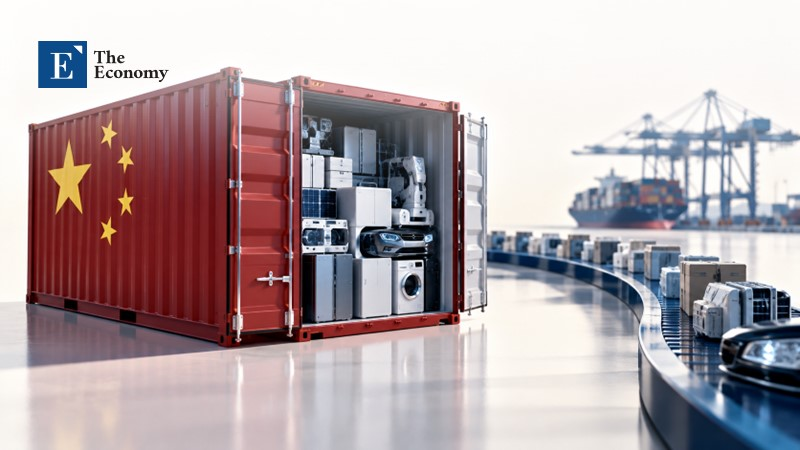
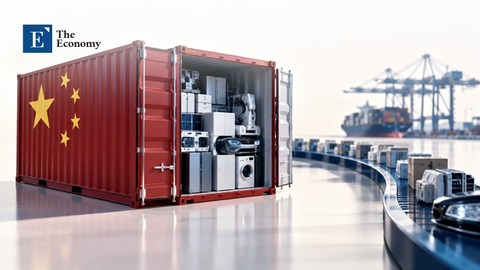
The concentration of critical materials and components supply chains in China is becoming a burden for global manufacturing. Price increases and production cuts by Chinese LCD panel makers have raised TV production costs for Samsung Electronics and LG Electronics, while rare earth export controls have disrupted automobile and aerospace materials production in the United States and Europe. With few alternative suppliers, overseas companies are being forced to accept Chinese suppliers' pricing demands or adjust production schedules while awaiting export licenses.
Three Chinese Panel Makers Dominate LCD Supply Chain
According to market research firm TrendForce on the 6th, China's BOE, TCL CSOT and HKC have notified major South Korean TV manufacturers, including Samsung Electronics and LG Electronics, of price increases for liquid crystal display (LCD) panels, adding to the TV industry's cost burden ahead of the year-end peak season. Higher procurement costs for materials and components needed to manufacture panels contributed to the demands for price increases. TrendForce estimated that TV panel production costs would rise 4–7% in the fourth quarter from the previous quarter as growing artificial intelligence (AI) demand diverts upstream materials production capacity to other uses. The three Chinese companies also pursued production shutdowns and output cuts over the National Day holiday. These measures, intended to defend panel prices by curbing inventory accumulation, have made it harder for TV manufacturers to manage costs and secure stable supplies.
The Chinese companies' bargaining power is underpinned by a TV LCD supply structure concentrated among a handful of companies. According to TrendForce, China's top three suppliers account for approximately 70% of supply. Samsung Display ended TV LCD production in 2022, while LG Display sold its stakes in its Guangzhou LCD production and module subsidiaries to TCL CSOT in April last year. As South Korean companies withdrew from production, their Chinese rivals expanded their supply base by acquiring existing factories as well. Because Samsung Electronics and LG Electronics must procure large volumes of panels externally to continue selling LCD TVs, analysts say they have less room to switch suppliers in response to price increases by major vendors.
Panel Prices Add to Burden Amid Sluggish Sales
Panel procurement costs are putting additional pressure on South Korean TV businesses whose profitability has already weakened amid slowing demand. According to results Samsung Electronics released on the 29th of last month, its Visual Display (VD) and Digital Appliances (DA) businesses posted combined third-quarter revenue of USD 10.7 billion and an operating loss of USD 154 million. The company explained that TV revenue fell as demand declined following the end of global sporting events, while increased premium product sales and cost efficiencies limited the decline in profitability. Sales conditions across the market are also challenging. In August, TrendForce forecast that global TV shipments this year would fall 0.8% year on year to 194.65 million units, while Samsung Electronics also projected that TV demand would remain flat or decline slightly next year. Sluggish sales combined with rising component procurement costs have added to the challenges facing a recovery in TV business earnings.
Chinese companies are also stepping up their offensive in the mid- to high-end TV market, where Samsung Electronics and LG Electronics are focusing their efforts to protect profitability. TCL, which owns panel supplier CSOT, has expanded its quantum dot and Mini LED TV ranges by leveraging the pricing power that comes with large-scale component purchases. Its TV shipments in the first half of this year rose 7.1% year on year to 15.08 million units. Because Mini LED TVs also use LCD panels, South Korean companies remain dependent on panel supply chains affiliated with their Chinese rivals even as they move upmarket. Mini LED technology improves brightness and contrast by densely arranging small LEDs as the light source behind an LCD. Since an LCD panel is still required to produce the image, increasing sales of high-end products does not eliminate exposure to Chinese suppliers' panel pricing policies. Hisense has also joined the push into the mid- to high-end market, expanding its RGB Mini LED lineup by leveraging its sales base in the market for ultra-large TVs of 100 inches or more. Hisense's first-half TV shipments totaled 14.23 million units, up 3% year on year.
Table 1. Profitability Pressures on South Korean TV Businesses and Competitive Trends Among Chinese Companies
| Category | Key Indicators and Factors | Details |
|---|---|---|
| Samsung Electronics | Third-quarter results | Combined VD and DA revenue of USD 10.7 billion; operating loss of USD 154 million TV revenue declined as demand slowed following the end of global sporting events |
| Profitability measures and demand outlook | Increased premium product sales and cost efficiencies limited the decline in profitability TV demand expected to remain flat or decline slightly next year | |
| Global TV market | Shipment forecast for this year | 194.65 million units, down 0.8% year on year Based on TrendForce's August forecast |
| TCL | First-half TV shipments | 15.08 million units, up 7.1% year on year |
| Push into the mid- to high-end market | Backed by affiliated panel supplier CSOT and bargaining power from large-scale component purchases Expansion of quantum dot and Mini LED TV ranges | |
| Hisense | Shipments and product strategy | First-half TV shipments of 14.23 million units, up 3% year on year Expanding RGB Mini LED products by leveraging its sales base in ultra-large TVs of 100 inches or more |
| South Korean TV manufacturers | Panel procurement burden | Mini LED TVs also require LCD panels Continued reliance on panel supply chains affiliated with Chinese rivals and exposure to their pricing policies, even when moving upmarket |
China's Rare Earth Export Controls Halt U.S. Production Lines
The growing procurement burden on overseas manufacturers following China's dominance of supply chains is also evident in the rare earth market. In April last year, China began controlling overseas shipments by introducing export licensing for seven rare earth elements, including dysprosium and terbium, and related magnets. With supplies of raw materials for magnets used in electric vehicle motors and wind turbines subject to official approval, overseas manufacturers have struggled even to guarantee delivery dates. In the United States, vehicle production was directly disrupted. Ford halted Explorer production at its Chicago plant for a week in May last year because of rare earth shortages. Rare earth magnets are used not only in electric vehicle drive motors but also in window and windshield wiper motors and various sensors, affecting the production of internal combustion engine vehicles as well.
Rare earth shortages have also disrupted production in the aerospace materials supply chain. Two North American coating materials companies that use yttrium were confirmed to have temporarily suspended production in February this year. Yttrium is a raw material for coatings that protect aircraft engines and power-generation turbines from high temperatures, making it necessary for engine manufacturing and maintenance. One company rejected orders from smaller and overseas customers to reserve supplies for major engine manufacturers, while the other had to stop selling products containing yttrium oxide after running out of inventory. Chinese customs statistics also show the decline in supply. In the eight months after export controls were introduced in April last year, China's exports of yttrium products to the United States totaled 17 tonnes, plunging from 333 tonnes in the preceding eight months. Although 60 tonnes of yttrium oxide were subsequently exported to the United States in March this year, exports over the latest 12-month period at that point remained 75% below the year-earlier level.
European Auto Production Also Disrupted
In Europe, raw material shortages at component manufacturers also disrupted automotive supply chains. The European Association of Automotive Suppliers (CLEPA) said in early June last year that several factories and production lines in the region had stopped operating because of shortages of rare earths and magnets. At the time, only about 25% of the hundreds of export license applications submitted by the industry had been approved. BMW said some of its suppliers were experiencing supply disruptions, while Mercedes-Benz discussed responses, including stockpiling rare earths, with major suppliers. Notably, although BMW uses technology that eliminates permanent magnets from the drive motors in its latest electric vehicles, it still needed rare earths for the small motors that operate windshield wipers and windows. Even after reducing raw material dependence in the core powertrain, it was difficult to avoid supply disruptions affecting components throughout the vehicle.
European companies also faced uncertain delivery schedules and demands to submit sensitive business information during the license review process. Germany's Bosch complained that suppliers were having to navigate complex, lengthy procedures to collect and submit the extensive information required for export licenses. CLEPA likewise noted that review procedures varied across regions in China, and that some applications were rejected on procedural grounds or faced demands for sensitive intellectual property information. Even after submitting documents, companies could not be certain when they would receive raw materials. Although the approval rate for European component suppliers rose to about 60% by late June last year, hundreds of applications remained pending, and reviews took longer for transactions involving end users in the United States or routes through third countries such as India. This added another burden: even when components were manufactured in Europe, the timing of raw material procurement varied depending on the final customer and trade route.
EU Pursues Power to Restrict Single-Market Access
As raw material procurement and production schedules become subject to China's export licensing, the European Union (EU) is strengthening its trade response tools while reducing supply chain dependence. Following a summit on the 16th of last month (all dates hereafter local time), European Commission President Ursula von der Leyen announced plans to introduce a new mechanism to swiftly restrict access to the bloc's single market. France and Germany had earlier put forward a joint proposal to bolster trade defense measures focused on individual products. The reasoning is that existing tools alone cannot adequately protect European companies when a particular country dominates supply chains across entire industries. The aim is to secure the authority to respond to economic pressure from another country by restricting its access to the EU market. The Commission also plans to present measures this coming December to limit dependence on specific suppliers for critical materials. Plans also include a mechanism to provide collective support to member states and industries facing coercion or retaliation from countries outside the bloc.
The EU is also accelerating efforts to secure alternative raw materials and expand its production base within the bloc. To secure critical minerals such as rare earths and tungsten from Vietnam, the EU considered providing loans, grants and technical assistance to local mining and processing projects. Expanding cooperation on critical raw materials was also a major agenda item at a meeting between the two sides' leaders on the 22nd of last month. Within the bloc, the EU plans under the Critical Raw Materials Act (CRMA) to establish capacity by 2030 equivalent to 10% of annual strategic raw material consumption for extraction, 40% for processing and 25% for recycling. The Commission selected 46 additional strategic projects last month to support these goals, while Belgian chemical company Solvay established a rare earth production line for permanent magnets at its La Rochelle plant in France last year. The strategy is seen as an effort to diversify overseas sourcing while building refining, processing and recycling capabilities in Europe, creating a production base that can replace Chinese imports.
Siobhán Delaney is a Dublin-based writer for The Economy, focusing on culture, education, and international affairs. With a background in media and communication from University College Dublin, she contributes to cross-regional coverage and translation-based commentary. Her work emphasizes clarity and balance, especially in contexts shaped by cultural difference and policy translation.
Similar Post