“AI Fears Turn Into Panic Buying”: Conspiracy Theories Spread After Series of U.S. Technology Outages, as Cyber Threats and Fear-Based Marketing Fuel Consumer Distrust

Aoife Brennan is a contributing writer for The Economy, with a focus on education, youth, and societal change. Based in Limerick, she holds a degree in political communication from Queen’s University Belfast. Aoife’s work draws connections between cultural narratives and public discourse in Europe and Asia.
Authored On
Modified
U.S. spending on emergency supplies surges, with some preparing for financial system paralysis
AI cyberattacks and security vulnerabilities deepen distrust in digital infrastructure
AI companies face allegations of “fear-based marketing,” as countering misinformation and restoring trust in technology emerge as challenges
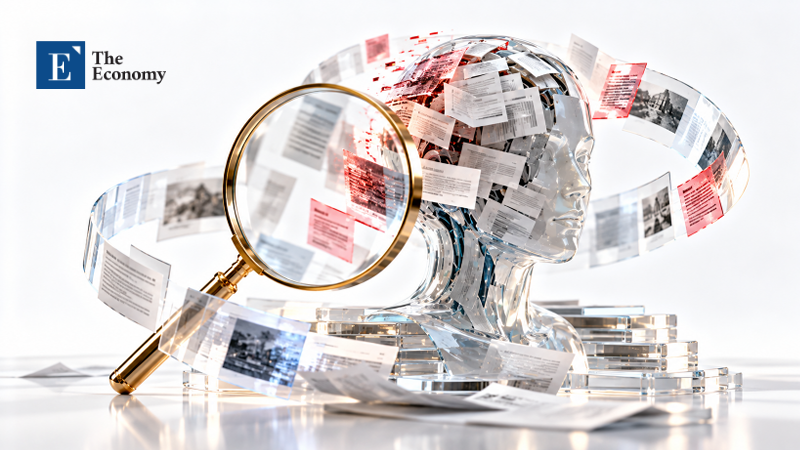
Anxiety about artificial intelligence (AI) is rapidly growing in markets and society. With a succession of AI-powered cyberattacks and other incidents already eroding trust in digital infrastructure, a recent series of technology outages in the United States has fueled conspiracy theories, including claims that AI is out of control. Experts say transparent information disclosure systems are needed to distinguish genuine technological risks from exaggerated threats and prevent the spread of unfounded information.
The “Doomsday Economy” Spreads Across the United States
On the 21st (all dates hereafter are local time), business broadcaster CNBC reported that the so-called “Doomsday Economy,” in which consumers stockpile necessities, cash and gold in preparation for worst-case disasters, was spreading, particularly in the United States. Credit card transaction data from consumer data analytics firm Consumer Edge showed that U.S. consumer spending on specialist emergency-supply brands surged approximately 400% year over year between the 12th and 17th. Ready America, a California-based company that sells emergency survival kits, packaged drinking water and high-calorie energy bars, has reportedly seen online sales rise to approximately five times their usual level and is also fulfilling additional orders from corporate customers seeking emergency supplies for their offices.
Similar spending patterns have also been observed at major retailers. Japanese investment bank Mizuho forecast that Costco’s U.S. same-store sales growth this month, excluding fuel, could exceed 10% for the first time since 2022 as American consumers buy emergency food and generators in bulk. Such moves are also being seen in wealth management. Personal wealth manager Richard McWhorter said clients were even asking how to respond if the financial system became paralyzed, while precious metals dealer American Hartford Gold also reported a recent surge in inquiries about buying gold.
A Series of Technology Outages Amplifies Anxiety
A succession of major technology outages across the United States and the spread of conspiracy theories surrounding them have been cited as factors behind the panic buying of emergency supplies. During the six days from the 12th to the 17th, the United States experienced a series of major technology disruptions, including suspended flights, email outages and delayed banking transactions. On the 12th, Microsoft’s business services, including Outlook and Teams, suffered disruptions for approximately 24 hours. On the 13th, a problem with the U.S. Federal Aviation Administration’s (FAA) air traffic control communications network halted flight departures nationwide for more than four hours. On the 16th, a United Airlines system outage delayed flight departures, while a computer error at JPMorgan Chase disrupted customers’ financial transactions. On the 17th, Apple’s major services and the U.S. National Security Agency’s (NSA) internal communications network experienced problems.
The succession of outages fueled claims on social media of a large-scale cyberattack and AI running out of control. According to an Axios report on the 19th citing research by social media analytics firm PeakMetrics, claims that these technology outages were linked to a single coordinated attack had spread widely on social media. Automated accounts, or bots, were found to have played a significant role in spreading these conspiracy theories. In particular, the analysis found that bot accounts generated 31% of conspiracy theory posts about Bank of America’s system outage and 28% of posts linking JPMorgan Chase’s outage to other incidents. However, the U.S. government and the companies concerned said no evidence had yet been found linking the series of outages to a coordinated AI-powered cyberattack, explaining that most resulted from technical problems.
Table 1. Series of U.S. Technology Outages
| Date | Affected System or Organization | Main Impact |
|---|---|---|
| November 12 | Microsoft Outlook and Teams | Business services disrupted for approximately 24 hours |
| November 13 | FAA air traffic control communications network | Flight departures halted across the United States for more than 4 hours |
| November 16 | United Airlines | Flight departures delayed by system outage |
| JPMorgan Chase | Customer financial transactions disrupted by computer error | |
| November 17 | Apple | Major service outages |
| U.S. National Security Agency (NSA) | Internal communications network outage |
AI Cyberattack Capabilities Become More Sophisticated
These conspiracy theories spread rapidly because increasingly sophisticated AI-powered cyberattacks had already weakened consumer trust in existing software and digital infrastructure. For example, U.S. security company Calif recently used an AI coding tool to discover a critical security vulnerability in Java, a programming language widely used in corporate and public-sector information systems. Working with AI, a researcher identified the vulnerability in approximately three hours and even succeeded in writing exploit code. Calif warned that attackers exploiting the vulnerability could take control of systems without authentication in certain server environments.
Research has also suggested that AI’s cyberattack capabilities could threaten critical infrastructure. Last month, researchers at U.S. cybersecurity company Frenos asked 10 AI models to analyze ways to penetrate industrial control systems at facilities such as power grids, water utilities and factories. The three best-performing models identified specific attack methods in approximately 90% of all attempts. Concerns that inaccurate AI judgments could lead to actual security crises have also materialized. In September, CNN reported that the U.S. military had prepared an interdiction operation involving armed troops and military aircraft based on an intelligence report in which AI had incorrectly identified cargo on a Chinese vessel as material related to a nuclear weapons program. The operation was called off after the error was discovered just before it was carried out.
Crimes Impersonating AI Services Also Proliferate
Cybercrimes exploiting the widespread popularity of AI services have also emerged. Global security company Kaspersky detected more than 92,000 attacks worldwide involving malware and unwanted programs disguised as well-known AI services or AI agents between January and early May this year. Attacks impersonating ChatGPT accounted for the largest share at 49%, followed by Claude and Gemini at 18% each. Attackers created fake download sites resembling official websites or used search ads and the software development platform GitHub to induce users to install malicious programs. Some of this malware was designed to steal users’ browser passwords, login credentials and cryptocurrency wallets.
As AI’s technological risks and actual cases of misuse become more visible, anxiety about AI is rising markedly in American society. According to Chapman University’s “2026 Survey of American Fears,” released on the 20th of last month, 51.9% of 1,221 adult respondents said they were concerned about AI’s negative political effects. This was the third-highest figure, following corrupt public officials at 61.1% and U.S. involvement in a world war at 58%. The share of respondents who said AI would negatively affect the economy in the future also reached 49.7%.
Growing Need to Strengthen Response Systems
Some critics, however, argue that fears about AI are being amplified not only by technological risks but also by the marketing strategies of the companies involved. In April, the BBC reported that major AI companies, including OpenAI and Anthropic, were employing so-called “fear-based marketing,” simultaneously emphasizing their models’ powerful capabilities and potential dangers. For example, Anthropic claimed that its AI model Claude Mythos could detect security vulnerabilities better than human experts, while warning that misuse could cause serious harm to the economy, public safety and national security. Some experts criticized AI companies for exaggerating technological risks to highlight their own competitiveness while promoting the perception that they are also the ones capable of controlling those risks. In this view, the companies are seeking to ease regulatory pressure and strengthen their market dominance by focusing attention on future catastrophic possibilities rather than AI’s actual adverse effects.
There are also calls to strengthen response systems to distinguish AI’s genuine technological risks from exaggerated threats and curb the spread of misinformation. This means bolstering technical defenses against real risks such as AI-powered cyberattacks, while swiftly verifying facts and transparently disclosing information to address unfounded claims linking individual system outages to coordinated attacks. “Addressing the social distrust and resistance that arise as new technologies spread is just as important as developing the technology,” one market expert said. “AI companies also need to go beyond using the risks of their technology as a promotional tool, objectively verify its capabilities and limitations, and strengthen their responsibility to protect users.”
Aoife Brennan is a contributing writer for The Economy, with a focus on education, youth, and societal change. Based in Limerick, she holds a degree in political communication from Queen’s University Belfast. Aoife’s work draws connections between cultural narratives and public discourse in Europe and Asia.
Similar Post