Trading partners form united front against Chinese export onslaught, while export-dependent China prepares to hold out using supply-chain leverage
Trading partners form united front against Chinese export onslaught, while export-dependent China prepares to hold out using supply-chain leverage

Matthew Reuter is a senior economic correspondent at The Economy, where he covers global financial markets, emerging technologies, and cross-border trade dynamics. With over a decade of experience reporting from major financial hubs—including London, New York, and Hong Kong—Matthew has developed a reputation for breaking complex economic stories into sharp, accessible narratives. Before joining The Economy, he worked at a leading European financial daily, where his investigative reporting on post-crisis banking reforms earned him recognition from the European Press Association. A graduate of the London School of Economics, Matthew holds dual degrees in economics and international relations. He is particularly interested in how data science and AI are reshaping market analysis and policymaking, often blending quantitative insights into his articles. Outside journalism, Matthew frequently moderates panels at global finance summits and guest lectures on financial journalism at top universities.
Authored On
Modified
Influx of Chinese products threatens industries and jobs abroad
Coordinated response to overproduction followed by talk of a “second Plaza Accord”
Simultaneous barriers in major markets could undermine export-dependent strategy
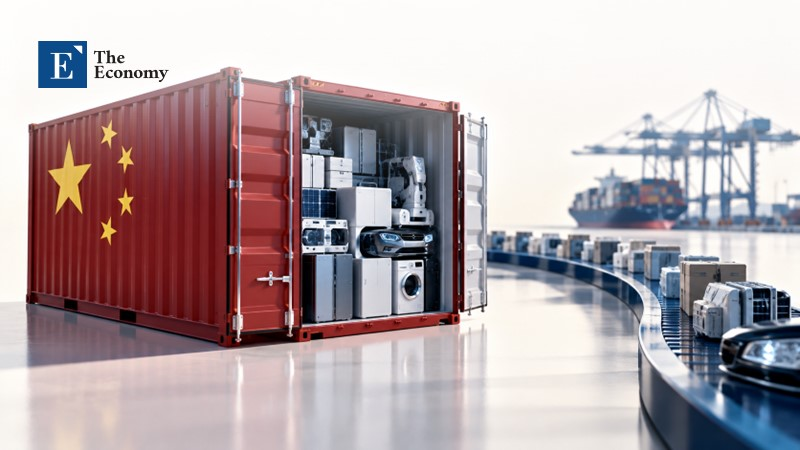
Trade tensions between China and its major trading partners are intensifying as Beijing uses exports to offset weak domestic demand. With inflows of Chinese products threatening domestic industries and jobs, countries have begun coordinating responses to overproduction and have even floated a “second Plaza Accord” to pressure China into allowing the yuan to appreciate. China is preparing to push back using its control over critical-material supply chains, but simultaneous increases in import barriers across major markets would inevitably narrow its scope to sustain growth through exports. There are concerns that if exports also weaken while domestic demand remains sluggish, China could again turn to debt-financed investment stimulus, increasing the risk of Japanese-style prolonged stagnation.
China lowers growth expectations and leans on exports
According to Bloomberg on the 21st, local time, the Chinese government recently lowered its economic growth target for this year to 4.5–5%, the lowest since 1991, formally acknowledging a slowdown. The reduction from the “around 5%” target maintained over the past three years is seen as a response to the prolonged property downturn and weak consumption. Exports are currently the main engine supporting China's growth. Third-quarter gross domestic product (GDP) rose 4.5% year on year, according to China's National Bureau of Statistics, with overseas sales of advanced manufactured products such as semiconductors and electric vehicles supporting economic expansion. The trade surplus reached USD 938 billion (approximately USD 967 billion) in January–September this year, putting it on course to surpass last year's annual record of USD 1.2 trillion (approximately USD 1.24e+3 billion).
Meanwhile, the property slump weighing on the recovery in domestic demand is eroding households' and businesses' spending capacity. According to an analysis by market research firm Macquarie, new housing starts in China have fallen 78% from their peak, while declining home prices and job insecurity have depressed consumer confidence. Retail sales growth, which reflects spending on goods and dining out, was just 1.1% last month, following 0.6% in July and 0.4% in August. Household restraint was also evident in leisure spending during the National Day holiday earlier this month, when average spending per trip fell to its lowest level in four years. As consumers tighten their purse strings, companies are cutting selling prices to attract customers while also reducing costs, including labor expenses. It is a vicious cycle in which weak consumption squeezes corporate spending on employment and wages, further weakening household purchasing power.
All-out export push to offset weak domestic demand
Chinese companies, finding it increasingly difficult to protect profitability through domestic price competition and cost-cutting alone, are accelerating efforts to expand overseas sales channels. Weak consumption has intensified price competition, eroding the profitability of their domestic operations. According to the China Association of Automobile Manufacturers, passenger car sales in China fell 27% year on year last month, extending the contraction in the domestic market. As automakers expanded sales channels in Europe, Latin America and Southeast Asia, passenger car exports rose 64% to approximately 919,000 vehicles in the same month. International credit rating agency S&P Global Ratings said China's auto industry is becoming increasingly reliant on overseas revenue and profits to offset weak domestic demand.
China needs exports to sustain production and corporate earnings until domestic demand recovers. According to an International Monetary Fund (IMF) analysis, exports have filled the gap in domestic demand as a prolonged property correction and a weak social safety net have prompted households to curb spending. If overseas orders also decline, the impact could spread to factory operations and employment. Companies facing lower sales may first cut capital investment and labor costs, weakening household purchasing power. The World Bank has also noted that declining corporate profits could further weigh on consumption by delaying investment and worsening labor-market conditions. China's reliance on exports appears to reflect not only the immediate need to defend growth but also concerns that shrinking production and employment could entrench the domestic-demand slump.
Chinese authorities also recognize the limits of export dependence
Chinese authorities also recognize that relying on exports to sustain growth and employment has limits and that restoring domestic demand is urgent. At last month's meeting of Group of 20 (G20) finance ministers and central bank governors, People's Bank of China Governor Pan Gongsheng outlined plans to expand domestic demand, citing the need for trade-surplus countries to increase consumption and investment. Since late last month, the government has also announced additional stimulus measures, including mortgage subsidies, funding support for local governments, and low-interest loans for infrastructure and technology. Critics, however, argue that support tilted toward production and investment will struggle to raise household purchasing power. Michelle Lam, an economist at French bank Société Générale, warned that low inflation and low growth could persist if the shift toward policies supporting household income and consumption is delayed. The assessment is that it will take considerable time before domestic demand can replace exports as the driver of growth.
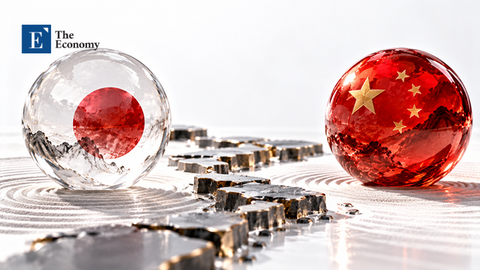
This also helps explain why China would find it difficult to readily accept a reduction in exports. There are concerns that if overseas sales channels narrow before domestic demand recovers, China could fall into prolonged stagnation of the kind Japan experienced. Richard Koo, chief economist at Japan's private-sector Nomura Research Institute, said China is undergoing a “balance sheet recession,” in which households and businesses focus on repaying debt after a sharp decline in asset prices. His explanation is that debts remain unchanged even when asset values fall, making it difficult for the private sector to borrow more to increase consumption and investment even if interest rates are lowered. In Japan, too, continued private-sector deleveraging after the asset bubble burst weakened the stimulative effects of monetary easing.
Major trading partners join forces against Chinese overproduction
The problem is that the more China relies on exports, the more strongly its trading partners move to protect their own industries. At the G20 finance ministers and central bank governors meeting held in the United States on the 1st of last month, participants other than China agreed on the need to address nonmarket policies that deepen export dependence and trade imbalances. The chair's statement said countries with persistently large external surpluses should remove distortions that suppress domestic consumption and make growth dependent on exports. The growing consensus on trade pressure against China is seen as a response to Chinese products flowing into other markets after being blocked by U.S. tariff barriers. U.S. Treasury Secretary Scott Bessent also said his warning that higher U.S. tariffs would divert Chinese products into trading partners' markets was becoming a reality.
The coordinated response is taking concrete shape through the formation of industry-specific consultative groups. According to a joint ministerial statement released by the Office of the U.S. Trade Representative (USTR) on the 7th of this month, 15 economies, including South Korea, the United States, Japan and the European Union (EU), agreed to address structural overproduction. Initial consultations will cover sectors where China's production capacity has expanded markedly, including automobiles and electric vehicles, batteries, chemicals, mature-node semiconductors and solar panels. Participants said government-supported overproduction threatens local production and jobs and increases dependence on particular supplier countries, leaving them vulnerable to export controls. They agreed to hold a working-level meeting before December to share information on production capacity and harm suffered, and to examine ways for their respective responses to reinforce one another. Although the statement did not name a particular country, it is viewed as coordinated action targeting China's industrial support and export expansion.
Table 1. International responses to China's export expansion
| Category | Participants and timing | Key points |
|---|---|---|
| Correcting trade imbalances | G20 meeting participants other than China The 1st of last month | Consensus on addressing nonmarket policies that deepen export dependence and trade imbalances Call to remove distortions that suppress domestic consumption and drive export dependence in countries with large external surpluses |
| Coordinated response to overproduction | South Korea, the United States, Japan, the EU and others 15 economies Joint ministerial statement on the 7th of this month | Pursuing a response to structural overproduction resulting from government support Highlighting threats to local production and jobs, dependence on particular supplier countries, and vulnerability to export controls |
| Priority sectors for consultation | Automobiles and electric vehicles, batteries, chemicals, mature-node semiconductors, solar panels | |
| Before December Working-level meeting planned | Sharing information on production capacity and harm suffered Examining ways for countries' responses to reinforce one another No specific country named in the statement | |
| Proposal for yuan appreciation | Friedrich Merz German chancellor June | Argued that an undervalued yuan boosts the price competitiveness of Chinese products Proposed international consultations modeled on the Plaza Accord |
| Greg Ip WSJ chief economics commentator Last month | Proposed using tariffs as a coordinated pressure tool to induce yuan appreciation |
From calls to curb Chinese exports to proposals for yuan appreciation
A proposal for a “second Plaza Accord” to induce yuan appreciation through trade pressure is also being discussed. The 1985 Plaza Accord was an agreement under which the United States, Japan, West Germany, France and the United Kingdom would jointly intervene in foreign-exchange markets to lower the value of the U.S. dollar. German Chancellor Friedrich Merz proposed international consultations modeled on the Plaza Accord in June, arguing that an undervalued yuan was boosting the price competitiveness of Chinese products. Last month, The Wall Street Journal's chief economics commentator Greg Ip also argued that countries should use tariffs as a coordinated pressure tool to secure yuan appreciation. In China, however, the prevailing view is that this is an attempt to weaken the competitiveness of its manufacturing sector. In an editorial following Merz's proposal, China's state-run Global Times argued that pressure under the pretext of exchange rates was unacceptable, emphasizing China's economic size, industrial base and policy autonomy.
China is also pushing back against coordinated action targeting overproduction, while leaving room to use its supply-chain influence as a bargaining tool. On the 15th, China's Ministry of Commerce said it would respond firmly if measures harming its interests were implemented under the pretext of overproduction. China's ability to respond was already demonstrated during last year's rare-earth export controls. When China imposed licensing requirements on exports of rare earths and permanent magnets, supplies were delayed, forcing some auto-parts factories in Europe to halt production. Diplomats and auto-industry officials from India, Japan and Europe also asked China to expedite export approvals out of concern that component shortages could disrupt vehicle production. Because major manufacturing countries would struggle to replace critical Chinese materials in the short term, China may try to ease the pressure against it by emphasizing the costs supply restrictions would impose on its counterparts.
Analysts caution, however, that China's strategy of holding out through supply-chain leverage would inevitably become more costly if its major trading partners raised import barriers together. Michael Pettis, a senior fellow at the U.S. think tank Carnegie Endowment for International Peace, said that if trade tensions reduced China's trade surplus, domestic consumption or investment would need to rise by a corresponding amount; otherwise, production and employment could shrink. Because increasing consumption by raising household incomes takes time, Chinese authorities may again turn to an expansion of government-led investment to prevent an immediate economic slowdown. Moreover, increasing investment before addressing insufficient demand could lock funds into low-return projects and add to debt burdens. Pettis noted that Japan, too, expanded credit and investment through excessive monetary stimulus to prevent a slowdown after the Plaza Accord, worsening economic imbalances in the process. The warning is that if China also relies on debt-financed investment without replacing lost exports with domestic demand, the debt accumulated through stimulus could increase the risk of Japanese-style prolonged stagnation.
Matthew Reuter is a senior economic correspondent at The Economy, where he covers global financial markets, emerging technologies, and cross-border trade dynamics. With over a decade of experience reporting from major financial hubs—including London, New York, and Hong Kong—Matthew has developed a reputation for breaking complex economic stories into sharp, accessible narratives. Before joining The Economy, he worked at a leading European financial daily, where his investigative reporting on post-crisis banking reforms earned him recognition from the European Press Association. A graduate of the London School of Economics, Matthew holds dual degrees in economics and international relations. He is particularly interested in how data science and AI are reshaping market analysis and policymaking, often blending quantitative insights into his articles. Outside journalism, Matthew frequently moderates panels at global finance summits and guest lectures on financial journalism at top universities.
Similar Post