

U.S. interest in Ukraine is about protecting system stability, not just territory Support for Ukraine strengthens deterrence, alliances, and the U.S.
Read More
Nuclear escalation risks now stem from fragile systems, not just intent Drones and misinformation shrink decision time and raise miscalculation Education can reduce nuclear escalation risks through civic resilience At the start of
Read More
Ukraine lessons for US military planning show that cheap drones and mass artillery now shape modern war Deterrence today depends on industrial scale, resilient logistics, and decentralized command Future conflicts will reward forces that combine high-end power with attrition resilience
Read More
Ukraine EU membership hinges less on speed and more on credible sequencing Reconstruction costs, public opinion, and veto politics demand phased and enforceable integration A structured, conditional pathway can secure Ukraine’s future while protecting EU cohesion
Read More
Europe must take greater responsibility for its own defence Higher spending alone will not guarantee security Real safety requires deeper European coordination European defense spending has seen a rapid increase, with
Read More




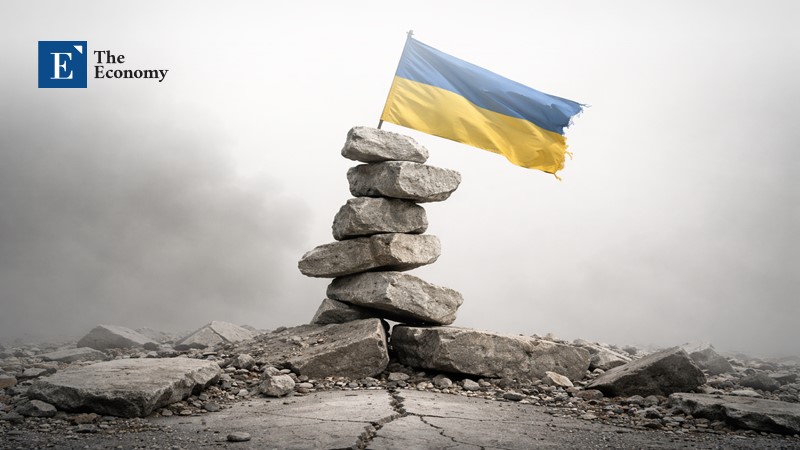
A US security guarantee for Ukraine must be credible and long term Twenty years is a recovery window, not a privilege Without enforceable guarantees, peace will remain fragile When Ukraine requests a 20-year security
Read More
Ukraine political stability will decide whether peace holds Support for a ceasefire depends on sovereignty and security guarantees Without trust and accountability, any deal will fail A key survey finding should inform any disc
Read More
A summer deal may meet deadlines but risk a fragile peace Costs, casualties, and public opinion demand sequencing, not spectacle Durable peace needs verification and guarantees—not a rushed signature The staggering cost of r
Read More
Russia’s economy is under strain, not collapse High rates and fading growth reveal deep structural limits behind wartime output Only calibrated economic pressure paired with credible exit paths can alter the Kremlin’s incentives
Read More
EU autonomy, U.S. guarantees, NATO credibility If Ukraine is the battlefield and Washington the guarantor, Europe is the arena in which the long-term consequences will be absorbed.
Read More
Small state vs empire logic At its core, the war in Ukraine is not only a military confrontation. It is a collision between two conceptions of political order: the sovereignty of small states and the strategic logic of empires.
Read More
NATO Expansion, Russian Resentment, European Complacency The war in Ukraine did not begin in 2022. It began in the failure of an assumption.
Read More
Deterrence, Diplomacy, and the Limits of American Commitment If the war in Ukraine is a test of European order, it is equally a test of American strategy.
Read More
In February 2022, Russia’s full-scale invasion of Ukraine shattered more than a border. It disrupted a strategic assumption that had underwritten European politics for three decades: that order on the continent was durable, that interdependence reduced the probability of war, and that large-scale territorial revisionism had become prohibitively expensive in the modern international system.
Read More
Unemployed Growth
Read More

The Cost of Order: Taiwan and the Remaking of West Pacific
Read More
Democracy has been regarded as the golden rule to be the most stable and productive ruling system to human kind.
Read More