U.S.-Iran War-End MOU Nears Signing as Trump Secures Gains After Prolonged War of Attrition

Authored On
Modified
Military Clash Fears Give Way to Expectations of Diplomatic Compromise
Strait of Hormuz to Reopen Upon MOU Signing
War-End Clock Accelerates as Hard-Line Variables Recede
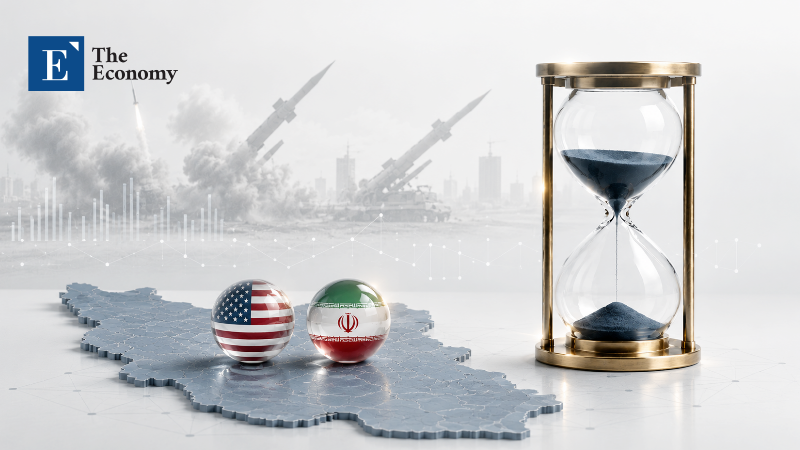
The United States and Iran have moved close to a dramatic war-ending agreement after a brinkmanship standoff. President Trump formalized the imminence of a deal as he canceled planned strikes, while signals from Tehran have stopped short of denying the possibility of approval. As the core conditions long demanded by U.S. President Donald Trump enter the implementation stage after a prolonged war of attrition, the war-end timetable is accelerating rapidly.
Trump Says Iran Talks Have Supreme-Leader-Level Approval
On the 11th (local time), Trump announced on his social media platform Truth Social that he had canceled strikes on Iran, signaling that war-end negotiations were nearing completion. Speaking to reporters in the White House Oval Office, he said, “We have just reached a great settlement on the war with Iran,” adding that “the documents are almost in final form.” According to the White House, all relevant parties—including the United States, Israel, Saudi Arabia, the United Arab Emirates (UAE), Qatar, Türkiye, Pakistan, Bahrain, Kuwait, Jordan and Egypt—have approved the substance of the discussions and the details of the final points at issue.
Trump said, “A signing ceremony could possibly be held in Europe this weekend,” adding, “I will not be able to attend, but Vice President JD Vance, Middle East envoy Steve Witkoff and my son-in-law Jared Kushner will be there.” He also pledged that once the agreement is signed, the Strait of Hormuz, a vital artery of global logistics, would be reopened immediately. “The Strait of Hormuz will officially open as soon as the signing takes place,” he said, adding that “Iran will never possess nuclear weapons.” Asked whether Iran’s supreme leader had approved the deal, Trump replied, “As I understand it, yes,” and claimed, “This will be a great agreement for Iran as well, and Iran will be able to rebuild its country.”
Earlier that morning, Trump had threatened to seize and heavily bombard Kharg Island, which handles 90% of Iran’s oil exports, in retaliation for the downing of a U.S. military helicopter. Yet within hours, he pulled back the attack on the grounds that a deal was imminent, once again deploying his signature pressure-and-settlement tactic. Positive signals also emerged from Iran. Fars News Agency, which is close to Iran’s Islamic Revolutionary Guard Corps (IRGC), denied that “any wording of the MOU draft has been approved,” while adding that “approval is highly likely.” The semi-official Tasnim News Agency also said, “Until Iran officially announces any potential understanding or agreement, all of Trump’s remarks on this matter should be viewed in the same context as his previous claims or messages,” without denying that a deal was imminent.
Variables Blocking the War-End Deal Cleared Away
Iran’s response appears to reflect internal military coordination rather than a delay in negotiations. The strikes and retaliatory attacks over recent days can be interpreted in the same context. Although they appeared on the surface to signal an escalation of tensions, the prevailing assessment is that they were part of a process to neutralize remaining opposition forces outside the negotiating table. After Iran shot down a U.S. military helicopter over the Strait of Hormuz, the United States concentrated strikes on coastal air defenses and military facilities, while Trump raised the pressure to its highest level by mentioning the possibility of seizing Kharg Island and launching additional strikes. The move carried the character of a warning designed to make clear the cost of delaying negotiations rather than a step toward expanding the war.
Hard-line elements within Iran’s military have long been regarded as the biggest source of uncertainty in the war-end negotiations. Although military losses and economic burdens accumulated as the war dragged on, some factions continued to advocate a hard-line response. Washington’s response was unequivocal. It focused on demonstrating the scale of the costs Iran would bear if the war continued. The threat to attack Kharg Island targeted the core artery of Iranian crude exports, while warnings of additional strikes were used as a tool to pressure the broader military command structure.
This is also the backdrop to Trump’s repeated remarks in recent days about the possibility of a settlement. From Washington’s perspective, most of the objectives it could extract have already been secured. The war lasted far longer than expected, but the war aims themselves have entered a stage of substantial realization. In particular, the agreement centers on bringing Iran’s nuclear program back within an international control framework. The core rationale presented since the start of the war has effectively been incorporated into the final deal.

Core Objectives Secured Despite Rising War Costs
Another shift that emerged during the war concerns the relationship between the United States and Israel. On the 7th, immediately after Iran’s missile attack, Trump called Israeli Prime Minister Benjamin Netanyahu and conveyed his intention to dissuade Israel from further retaliation. At the time, he said in effect, “Each side has had one turn. No more is necessary,” revealing concern that Israeli retaliation could disrupt Washington’s negotiating framework with Tehran. He also publicly pressured Netanyahu to accept the U.S.-led agreement, saying that he would “have no choice.” In the early stages of the war, many assessments held that Washington remained in a position of backing Israel’s military actions. Now that war-end negotiations have become visible, however, the United States appears to be setting the timing of the war’s end and the direction of negotiations, with Israel falling into step.
The Middle Eastern balance of power has also changed. During the war, Iran sustained considerable damage to both its military capabilities and deterrence posture. As the conflict dragged on, military facilities and energy infrastructure repeatedly came under pressure, while the Strait of Hormuz card was absorbed into the negotiating terms under U.S. military and diplomatic responses. By contrast, Washington succeeded in bringing key regional states into a single negotiating framework. With Middle Eastern countries participating in the process, the agreement has expanded into an issue affecting the broader regional security order.
These changes will also remain a significant political asset for Trump. The war lasted far longer than initially expected, and the United States also had to bear substantial costs. International oil prices swung sharply, while uncertainty surrounding the Strait of Hormuz spread across global supply chains. U.S. military assets also had to remain tied down in the Middle East for months. Even so, judged by the final outcome, Trump is drawing assessments that he secured gains exceeding the costs he absorbed.
If the settlement proceeds to final signing, this war is likely to be recorded as a case in which the United States secured a substantial portion of the conditions it sought after a prolonged war of attrition. Above all, Iran has placed both its regional influence and military standing on the line through this war. Restoring the same level of deterrence it possessed before the conflict will prove difficult in the near term. If the war-end negotiations conclude as planned, Middle Eastern affairs are also expected to shift for the time being toward stability management rather than large-scale confrontation.
Similar Post