“Blocking Chinese Steel Origin Laundering” Korea Unveils Molten Steel Origin Verification, but Overlapping Southeast Asian Production Networks Pose Challenge

Siobhán Delaney is a Dublin-based writer for The Economy, focusing on culture, education, and international affairs. With a background in media and communication from University College Dublin, she contributes to cross-regional coverage and translation-based commentary. Her work emphasizes clarity and balance, especially in contexts shaped by cultural difference and policy translation.
Authored On
Modified
Introduction of a molten steel origin verification system to block circumvention imports of Chinese steel
Tighter steel trade controls amid China's overcapacity and expanding low-cost exports
Difficulty distinguishing locally produced steel from transshipped cargo complicates anti-circumvention enforcement
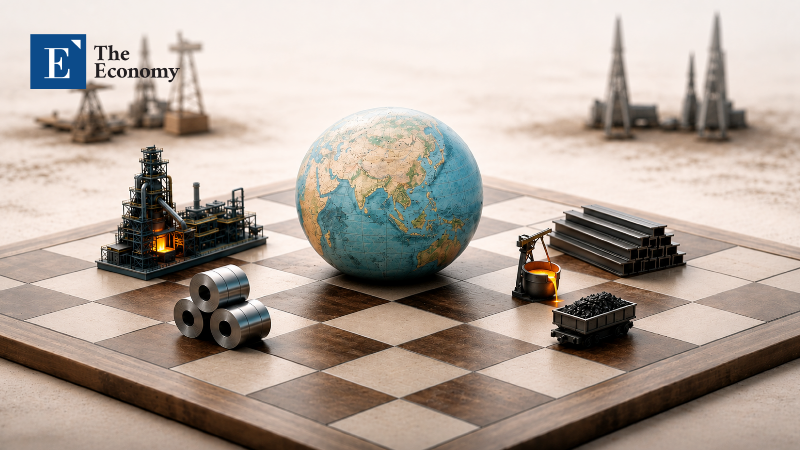
The South Korean government is introducing a molten steel origin verification system to prevent the circumvention of imports of Chinese steel products. Authorities concluded that relying solely on declarations of a product's country of origin makes it difficult to identify Chinese steel entering Korea through third countries. However, with Chinese steelmakers having significantly expanded production bases across Southeast Asia and Korean companies also operating manufacturing networks in the region, distinguishing locally manufactured products from transshipped cargo is expected to remain a formidable challenge.
Verifying Molten Steel Origin, Country of Origin, and Manufacturing History Through MTCs
According to government officials and industry sources on June 29, the Ministry of Trade, Industry and Energy (MOTIE) recently issued for public comment a partial revision to its Public Notice on Exports and Imports that would require importers of major commodity steel products—including hot-rolled steel, cold-rolled steel, and galvanized steel sheets—to submit documentation identifying the country where the molten steel was produced. Until now, importers had only been required to declare the product's country of origin immediately before entry into Korea. As a result, there was no legal basis to prevent circumvention schemes in which Chinese slabs were rolled in Vietnam before being shipped to Korea, allowing products actually produced in China to be declared as Vietnamese in origin.
Under the revised rules, importers seeking approval to bring steel products into Korea must submit a Mill Test Certificate (MTC) specifying the country where the molten steel was produced and obtain approval from the Korea Iron & Steel Association before receiving import authorization. If the MTC does not contain molten steel origin information, additional supporting documents must be provided. By establishing a system that verifies not only the declared country of origin but also the origin of the molten steel itself, the government will be able to scrutinize the supply routes of low-priced imported steel more thoroughly.
The measure is widely viewed as an effort to block routes through which steel originating in China is re-exported via Korea. One steel industry official said, "After Korea imposed anti-dumping measures on Chinese stainless steel plates last year, imports of Malaysian stainless steel plates increased. But without any way to identify the country where the molten steel originated, we could only speculate that those products had actually come from China." The new framework now provides authorities with a basis for identifying the true origin of the molten steel and restricting imports accordingly.
The products covered are understood to include most of the steel industry's key commodity products. The list focuses primarily on products already subject to anti-dumping rulings or those with high import penetration. Specifically, it includes hot-rolled steel sheets and cold-rolled steel sheets used in shipbuilding, construction, steel pipes, and automotive components; galvanized steel sheets used for automotive exterior panels; reinforcing bars; structural steel; wire rods; stainless steel; specialty steel; and alloy steel. Products covered by the measure account for roughly 70% of Korea's steel imports. Based on export value, the share is estimated to exceed 70%.
Export Offensive Fueled by Domestic Slump, Vicious Cycle of Steel Oversupply
China's steel industry has maintained large-scale production despite a sharp deterioration in domestic demand caused by the country's prolonged real estate downturn and weakening construction activity. Although major steelmakers such as Angang Steel have suffered massive losses, meaningful production cuts have been constrained by the industry's high fixed-cost structure.
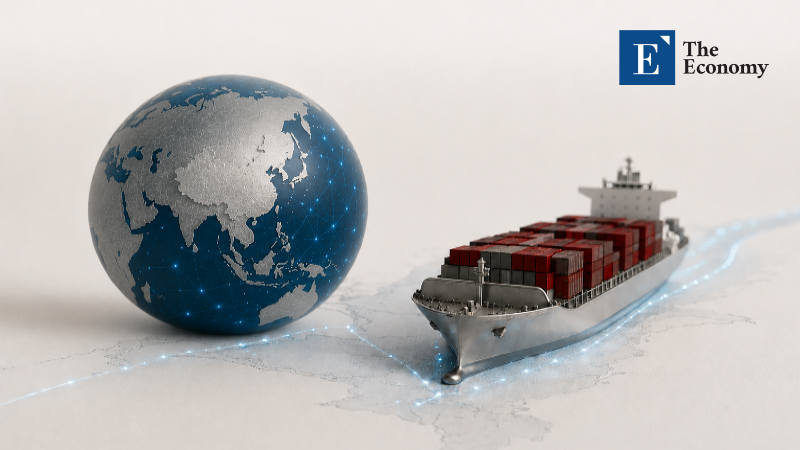
Steel that could not be absorbed by China's domestic market increasingly flowed into overseas markets, including South Korea and Japan. China's finished steel exports reached 110.716 million metric tons last year, up 22.7% from a year earlier and the highest level since 2015. The surge in exports disrupted global pricing dynamics, placing significant downward pressure on international steel prices. As Chinese steel flooded overseas markets, major producers in countries including South Korea faced the dual burden of deteriorating profitability and declining market share.
As low-priced Chinese steel increasingly threatened domestic producers, governments around the world responded with successive anti-dumping investigations, safeguard measures, and countervailing duties. According to the Organisation for Economic Co-operation and Development (OECD), governments in 19 countries launched a total of 81 new anti-dumping investigations targeting Chinese steel products in 2024 alone, five times more than the previous year. Meanwhile, the United States has maintained tariffs on steel and aluminum under Section 232 of the Trade Expansion Act while intensifying efforts to block circumvention exports from China. The European Union (EU) has simultaneously extended safeguard measures, reduced import quotas, and strengthened origin verification. Canada, Mexico, and India are also expanding anti-dumping investigations and tariff measures targeting Chinese steel, while Malaysia and Thailand have likewise stepped up investigations and actions aimed at blocking circumvention imports.
Structural Limits in Distinguishing Transshipment Cargo
The challenge is that as restrictions on direct exports become more stringent, circumvention routes are becoming increasingly sophisticated. When Chinese steel products undergo only minor processing or limited manufacturing in third countries before being declared as locally produced, the effectiveness of existing trade measures inevitably declines. Products such as slabs, hot-rolled steel sheets, and cold-rolled steel sheets—which can move between countries during different stages of production—are particularly difficult to trace, making origin determinations even more complicated.
The continued overseas expansion of Chinese steelmakers is making the situation even more complex. Chinese companies have steadily expanded investments in steelmaking and rolling facilities throughout Southeast Asia. In the Philippines, Panhua Group is investing approximately $3.5 billion to develop a steel complex with annual production capacity of 10 million metric tons in phases, while HBIS Group has also committed approximately $4.4 billion to local investments. Major steelmakers including Baowu Steel, Delong Steel, Yonglong, and Angang have also established production bases across Southeast Asia, expanding regional manufacturing capacity.
Malaysia and Indonesia have likewise emerged as major production hubs for China's steel industry. In Malaysia, Hebei Xinwu'an Steel invested approximately $2.7 billion to build production facilities with annual capacity of 5 million metric tons, while Jianlong Group and Shenglong Group have expanded production of long steel products and steel plates through joint ventures with local companies. In Indonesia, Delong Group is pursuing a project to establish total annual production capacity of 20 million metric tons, while Nanjing Iron & Steel Group and Sinosteel Group have successively expanded blast furnaces as well as wire rod and bar production facilities. Elsewhere, Kunming Iron & Steel Group operates production bases for long steel products and steel plates in Myanmar, while Yongjin operates stainless cold-rolling facilities in Vietnam and Thailand.
These investments are interpreted not only as part of China's strategy to diversify production bases in response to weak domestic demand, but also as a supply chain restructuring strategy designed to circumvent trade barriers imposed by the United States and Europe. Southeast Asia has effectively become both a transit point for Chinese steel and a genuine manufacturing base. As a result, it is difficult to categorically classify all Southeast Asian steel products as circumvention shipments from China. While some products are exported after undergoing only limited processing using Chinese raw materials, others are genuinely manufactured using local facilities, labor, electricity, and value-added production.
Moreover, Korean companies have also significantly expanded their production bases across Southeast Asia. Rising costs in China, prolonged U.S.-China tensions, and the need to serve local markets have prompted Korean steel and materials companies to establish manufacturing networks in countries such as Vietnam. With Korean and Chinese production networks now overlapping across Southeast Asia, it is far from straightforward to classify only Chinese companies' locally manufactured products uniformly as Chinese steel. One trade policy expert said, "As production bases across Southeast Asia expand rapidly, there are increasing cases where genuinely local production and transshipped cargo coexist within the same supply chain. For anti-circumvention determinations and enforcement to be effective, authorities will need stronger capabilities to detect false declarations, along with robust verification systems for products that undergo processing in third countries."
Siobhán Delaney is a Dublin-based writer for The Economy, focusing on culture, education, and international affairs. With a background in media and communication from University College Dublin, she contributes to cross-regional coverage and translation-based commentary. Her work emphasizes clarity and balance, especially in contexts shaped by cultural difference and policy translation.
Similar Post