“Even End-of-Life Batteries Under State Oversight” China Tightens Enforcement to Bring the Entire Battery Lifecycle Under Government Control and Cement Dominance in Recycling

Matthew Reuter is a senior economic correspondent at The Economy, where he covers global financial markets, emerging technologies, and cross-border trade dynamics. With over a decade of experience reporting from major financial hubs—including London, New York, and Hong Kong—Matthew has developed a reputation for breaking complex economic stories into sharp, accessible narratives. Before joining The Economy, he worked at a leading European financial daily, where his investigative reporting on post-crisis banking reforms earned him recognition from the European Press Association. A graduate of the London School of Economics, Matthew holds dual degrees in economics and international relations. He is particularly interested in how data science and AI are reshaping market analysis and policymaking, often blending quantitative insights into his articles. Outside journalism, Matthew frequently moderates panels at global finance summits and guest lectures on financial journalism at top universities.
Authored On
Modified
Beijing accelerates nationwide system for managing and policing end-of-life batteries
Surging volumes of retired batteries drive push to strengthen resource security and regulatory compliance
Battery recycling technologies advance rapidly, from raw material recovery to direct regeneration
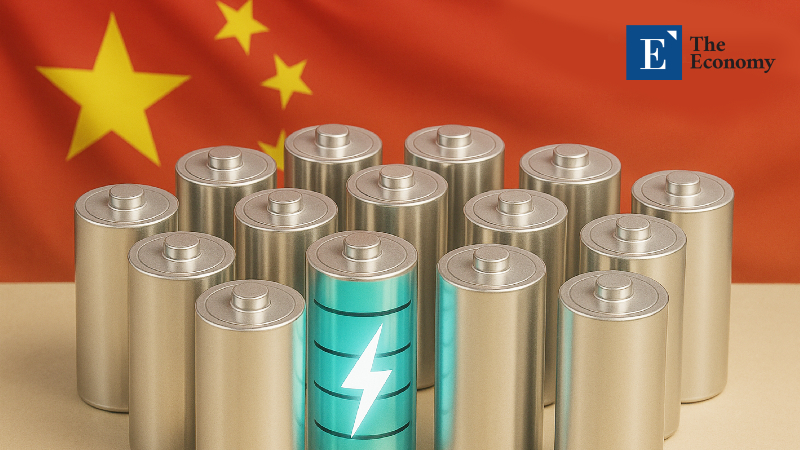
The Chinese government has launched a nationwide enforcement campaign targeting end-of-life batteries. After spending years focused on expanding the electric vehicle (EV) market, Beijing is now extending state oversight to the downstream end of the battery lifecycle. The move is widely seen as an effort to tighten control over rapidly growing volumes of retired batteries, strengthen resource security and compliance with global regulations, and foster the country's battery recycling industry.
China's End-of-Life Battery Management Strategy
According to Nikkei Asia on June 29, China's Ministry of Industry and Information Technology (MIIT) has been conducting a joint enforcement campaign on battery collection and recycling since April in cooperation with the Ministry of Ecology and Environment, the Ministry of Transport, the Ministry of Commerce, and the State Administration for Market Regulation. The campaign is scheduled to continue through the end of this month. Authorities are focusing on illegal dismantling operations, unlicensed businesses, unofficial sales of retired batteries, failure to submit tracking information, and falsified reporting. The unauthorized reuse of retired batteries in electric bicycles, electric scooters, self-balancing scooters, and similar mobility devices has also become a primary enforcement target. Officials believe that repurposing batteries originally designed for automobiles into low-cost mobility devices without proper safety verification could significantly increase the risks of fires and explosions.
Rather than representing a sudden regulatory crackdown, the campaign is effectively the implementation phase of a policy transition that had already been announced. In January, the Chinese government unveiled the Interim Measures for the Administration of the Recycling and Comprehensive Utilization of End-of-Life Batteries from New Energy Vehicles, which officially took effect in early April. Under the new rules, new energy vehicle manufacturers and battery producers are assigned formal recycling responsibilities, while battery movement data generated during vehicle scrappage, maintenance, battery replacement, dismantling, and recycling must be uploaded to a national platform. In effect, China's previous guideline-based management framework has been elevated into a legally binding administrative regulatory system.
Around the same time, China officially launched its National New Energy Vehicle Power Battery Traceability Information Platform. Built around each battery's unique identification information, the platform links data spanning the battery's entire lifecycle. It enables authorities to track where a battery was manufactured, which vehicle it was installed in, and when it was retired and collected, all at the national level. Industry observers increasingly believe the system could ultimately evolve into a powerful supply chain control mechanism.
The Aftermath of China's EV Boom Comes Into Focus
The growing priority placed on end-of-life battery management reflects the enormous volume of retired batteries now entering the market. China dramatically expanded EV adoption during the early 2020s, and batteries installed in those early-generation vehicles are now beginning to reach retirement. EV batteries generally require replacement after five to eight years as their performance deteriorates. According to the MIIT, China's total volume of retired batteries processed through comprehensive utilization exceeded 400,000 metric tons last year, representing an increase of more than 30% from the previous year. Chinese authorities expect annual end-of-life battery volumes to surpass 1 million metric tons by 2030.
The challenge is that this massive market remains highly fragmented. China's end-of-life battery collection sector includes small-scale dismantlers, intermediaries, and unofficial resellers operating alongside licensed recyclers. Many of these operators outbid authorized recycling companies to secure retired batteries or dismantle batteries without complying with safety and environmental standards in order to recover valuable metals for profit. This raises raw material procurement costs for licensed recyclers while making it increasingly difficult for regulators to trace battery flows. As a result, stronger government oversight is viewed as essential to establishing a healthy industry ecosystem.
The evolving global regulatory landscape is also accelerating China's efforts. Beginning in 2027, the European Union will require digital battery passports for EV batteries and industrial batteries above a specified capacity threshold. The system will track battery raw materials, carbon footprints, recycled content, and supply chain due diligence information, making it broadly comparable to China's National New Energy Vehicle Power Battery Traceability Information Platform. Regarding this development, one market expert said, "China's rapid construction of its own digital battery identity system and national traceability platform is intended not only to comply with forthcoming European regulations but also to proactively establish Chinese standards in the global marketplace."
Battery Recycling Becomes a New Competitive Front
Advances in recycling technologies and the expansion of the market are further increasing the need for end-of-life battery management. Leading Chinese battery companies have recently been incorporating recycling into their core business portfolios, recognizing that greater control over the entire battery lifecycle provides a competitive advantage in both raw material procurement and regulatory compliance. CATL, through its subsidiary Brunp, is building a closed-loop system that integrates end-of-life battery collection, cascade utilization, metal recovery, and precursor production, while automakers including BYD are likewise working to establish comprehensive battery recycling systems. Meanwhile, downstream industries specializing in dismantling, sorting, shredding, and recycling equipment are also becoming increasingly influential.
The Chinese government is likewise strengthening institutional support for the industry. Since August last year, China has permitted imports of recycled lithium-ion battery black mass that meets specified standards by classifying it as recycled feedstock rather than solid waste. Black mass is an intermediate material in the form of a black powder that remains after spent batteries are discharged, dismantled, crushed, and partially refined. Because it contains high concentrations of critical battery minerals such as lithium, nickel, cobalt, and manganese, it is regarded as one of the recycling industry's most important feedstocks. In addition, China lowered import tariffs on black mass from 6.5% to 3% beginning in January, allowing domestic recyclers to procure overseas battery recycling feedstocks at lower cost and thereby strengthening the industry's competitiveness.
The expansion of end-of-life battery recycling is expected to accelerate further in the years ahead. The industry is increasingly moving beyond simple raw material recovery toward technologies capable of directly restoring the performance of depleted lithium-ion batteries. According to a recent report by science publication New Atlas, researchers at Cornell University have developed an electrochemical process that regenerates battery electrodes without breaking them down into raw materials. During repeated charging and discharging cycles, lithium-ion batteries naturally develop a layer known as the solid electrolyte interphase (SEI) on the surface of their electrodes. While a thin SEI layer is essential for normal battery operation during the early stages of use, repeated cycling gradually thickens the layer, increasing electrical resistance and reducing battery capacity. To address this problem, the researchers proposed a new process called Direct Electrode-to-Electro-Regeneration (DEER). The core of the process is to separate intact electrodes from retired batteries without shredding them and then dissolve the thickened SEI layer responsible for performance degradation, restoring the electrodes to a near-new condition. Batteries regenerated through the DEER process demonstrated cycle stability that significantly exceeded the researchers' expectations, achieving a recovery rate of 95%.
Matthew Reuter is a senior economic correspondent at The Economy, where he covers global financial markets, emerging technologies, and cross-border trade dynamics. With over a decade of experience reporting from major financial hubs—including London, New York, and Hong Kong—Matthew has developed a reputation for breaking complex economic stories into sharp, accessible narratives. Before joining The Economy, he worked at a leading European financial daily, where his investigative reporting on post-crisis banking reforms earned him recognition from the European Press Association. A graduate of the London School of Economics, Matthew holds dual degrees in economics and international relations. He is particularly interested in how data science and AI are reshaping market analysis and policymaking, often blending quantitative insights into his articles. Outside journalism, Matthew frequently moderates panels at global finance summits and guest lectures on financial journalism at top universities.
Similar Post