Trump Eases AI Regulations to Counter China's Rise, but Pressure on Anthropic Likely to Continue

Siobhán Delaney is a Dublin-based writer for The Economy, focusing on culture, education, and international affairs. With a background in media and communication from University College Dublin, she contributes to cross-regional coverage and translation-based commentary. Her work emphasizes clarity and balance, especially in contexts shaped by cultural difference and policy translation.
Authored On
Modified
No U.S. AI Licensing Regime, Innovation-First Policy Maintained
Export Controls on Anthropic Relaxed, but Tensions Persist
Growing State-Level Legislation Keeps Policy Uncertainty Alive
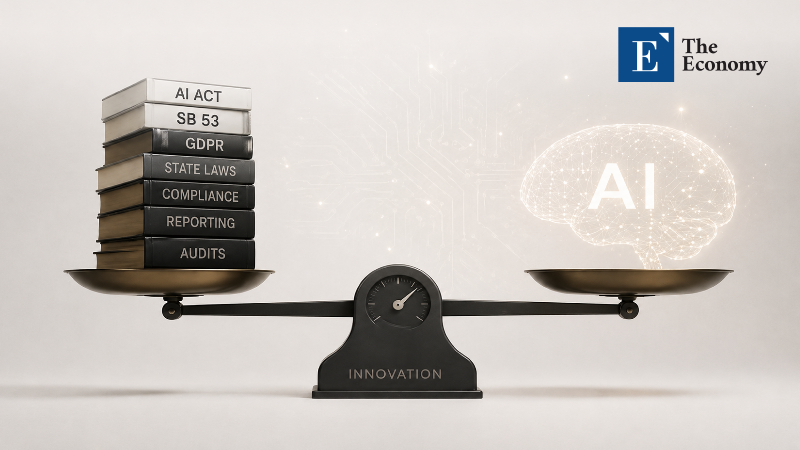
The Donald Trump administration's policy direction for the U.S. artificial intelligence (AI) industry is coming into sharper focus. While maintaining its principle of minimizing regulations that could hinder innovation across the sector, the administration has also made clear that it is prepared to intervene directly when advanced AI models are deemed to pose national security risks. Market observers increasingly view the administration's recent actions involving Anthropic as an early indication of how it intends to govern AI going forward.
Trump "AI Regulation Is Necessary, but It Should Be Minimal"
On July 5 (local time), Sriram Krishnan, former White House AI policy adviser, said in an interview with the Financial Times (FT) that "there will not be an AI equivalent of the U.S. Food and Drug Administration (FDA)," adding that "the Trump administration has opposed excessive bureaucracy and regulation from day one and does not believe the government should decide winners and losers." Krishnan emphasized that requiring legal reviews and administrative approval every time an AI model is released through a centralized regulatory body would undermine America's competitiveness in AI.
His remarks are widely seen as addressing Silicon Valley's biggest concern. AI companies including OpenAI, Anthropic, Google, and Meta Platforms have long argued that introducing a government licensing regime for advanced AI models would slow product launches and weaken their ability to compete against Chinese firms. In particular, the industry has warned that any system requiring prior government approval for frontier AI models would effectively allow Washington to determine which companies succeed.
Krishnan dismissed such concerns, stating that the Trump administration has no intention of selecting corporate winners through regulation. His position aligns with the deregulatory philosophy championed by prominent Silicon Valley figures close to Trump, including David Sacks, the White House AI and cryptocurrency czar. Krishnan has also opposed aggressive AI regulations at the state level, arguing that stricter AI safety rules in states such as California would slow U.S. innovation and weaken America's technological competition with China.
President Trump has likewise made clear that he opposes excessive regulations that could erode the competitiveness of American companies against China. Speaking during a CNBC interview at the White House on July 3, Trump said, "We need guardrails for AI, but they should be kept to an absolute minimum," adding, "We cannot handicap American companies competing against China."

Anthropic May Be an Exception
The Trump administration's AI strategy initially emerged as a growth-oriented agenda prioritizing industrial development. The White House's "America AI Action Plan," unveiled last year, identified accelerated AI innovation, infrastructure expansion, and global technological leadership as its core pillars, formally establishing U.S. AI supremacy as a national policy objective. The initiative marked a significant departure from the Biden administration's safety-focused regulatory approach by placing greater emphasis on private-sector development speed and investment capacity. The strategy was fundamentally driven by technological competition with China. Policymakers increasingly concluded that if American AI companies failed to accelerate model development and expand computing infrastructure, Chinese firms could strengthen their market position through lower inference costs and the broader adoption of open-source models. The Trump administration has actively incorporated this narrative into its political messaging, positioning deregulation as common ground between industrial policy and national security policy.
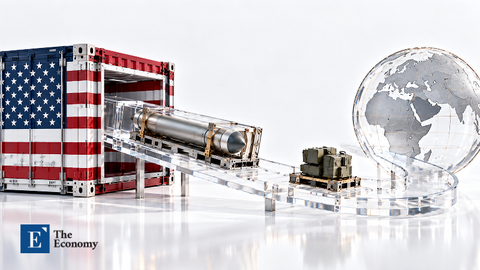
However, the administration's deregulatory approach does not equate to unrestricted laissez-faire. Its recent actions demonstrate that it is far from pursuing a policy of "no AI regulation." On June 12, the U.S. government restricted exports of Anthropic's high-performance models, Mythos 5 and Fable 5, citing national security concerns. Officials concluded that cutting-edge AI models could potentially be exploited to enhance cyberattack capabilities or threaten critical infrastructure. The decision was reportedly influenced heavily by demands from figures within the MAGA (Make America Great Again) movement, President Trump's core political base. In May, more than 60 prominent MAGA figures, including former White House chief strategist Steve Bannon, sent a letter to the White House urging that "powerful AI models should undergo government review and approval before being released."
The group argued that "mandatory testing, evaluation, validation, and government approval are necessary before potentially dangerous frontier AI systems are made public." They further stated that "powerful AI systems capable of facilitating biological weapon design, infiltrating critical infrastructure, or manipulating financial markets should be treated with a level of seriousness commensurate with those risks." The letter also criticized AI chief executives, saying, "America did not become the world's greatest nation by allowing unelected elites to experiment on the public without safeguards or accountability."
Less than a month after the letter was delivered, the Trump administration moved to restrict exports of Anthropic's AI models. The measures were sweeping, targeting not only users outside the United States but also foreign employees working within Anthropic itself. In response, Anthropic took the unprecedented step of shutting down access to its services for users worldwide. Although the restrictions were fully lifted on June 30, just 18 days after they were imposed, industry observers generally view the current situation as little more than an uneasy truce.
One AI industry expert said, "The Trump administration's fundamental approach is to support innovation across the AI industry, but companies that remain in persistent conflict with the government could face a different type of response," adding, "The increasingly harsh criticism of Anthropic from conservative circles appears to be building the political justification for future government intervention. Going forward, the administration is likely to maintain broad deregulation across the industry while simultaneously applying administrative pressure on specific companies."
State Governments Could Determine the Policy's Success
The Trump administration's AI policy illustrates the dual nature of its regulatory philosophy. While it has no intention of establishing a formal licensing regime or permanent regulatory agency, it is also making clear that the government will use executive authority and export controls to delay the release of individual AI models if they are deemed to pose national security risks. President Trump reinforced that position on July 3, saying, "If we see a bad actor and believe the situation is becoming even slightly dangerous, we will move quickly and effectively to stop that actor." Although Trump did not specify whom he was referring to, industry observers widely interpreted the remarks as referencing Anthropic, which recently faced restrictions on access to its AI models.
The administration's AI policy is therefore expected to continue evolving along two parallel tracks. One is preventing state-level regulations and federal licensing requirements in order to maximize the speed of AI model development by U.S. companies. The other is allowing the federal government to intervene selectively when AI models are judged to present significant national security or cybersecurity risks. While this approach may signal regulatory relief to Silicon Valley, it also leaves considerable uncertainty. Even without a formal licensing system, companies remain exposed to political and national security judgments if the government retains the ability to delay model releases at any time.
The greatest variable is the potential for conflict with state governments. Disputes between the Trump administration and state authorities over AI regulation have intensified since the beginning of the year. State legislatures have introduced dozens of bills aimed at establishing AI safety safeguards and asserting their own regulatory authority. More than 100 state laws already prohibit the use of chatbots by minors, require system testing for cybersecurity risks, and broadly restrict the unauthorized collection of copyrighted materials for AI training.
The most common area of state-level regulation is deepfakes—AI-generated fake images and videos. Arkansas, for example, has criminalized the creation and distribution of obscene deepfakes. Six states regulate AI-powered conversational chatbots, with California requiring service providers to take appropriate action when users express suicidal intent. In addition, 10 states have enacted regulations governing AI in healthcare, while 13 states have introduced rules governing the use of AI by public institutions.
As a result, even if the federal government continues pursuing deregulation, companies may see little reduction in their overall compliance burden if individual states continue expanding their own AI regulations. Conversely, if Washington seeks to counter state governments by leveraging federal funding and procurement authority, disputes over AI regulation could escalate into broader constitutional conflicts over federal and state powers. One AI policy expert said, "Even if the Trump administration substantially relaxes federal AI regulations, the regulatory environment companies ultimately face will likely be shaped by state governments," adding, "Many states view AI safety and consumer protection as major political priorities and therefore have strong incentives to continue advancing regulations that diverge from federal policy. As a result, coordinating the independent regulatory agendas of individual states may become just as important for the White House as supporting the AI industry itself."
Siobhán Delaney is a Dublin-based writer for The Economy, focusing on culture, education, and international affairs. With a background in media and communication from University College Dublin, she contributes to cross-regional coverage and translation-based commentary. Her work emphasizes clarity and balance, especially in contexts shaped by cultural difference and policy translation.
Similar Post