"Germany Joins Opposition" EU Methane Rules Hit a Snag as Restrictions Threaten Domestic Gas Development, Undermining Bloc's Standing as a Climate Leader

Aoife Brennan is a contributing writer for The Economy, with a focus on education, youth, and societal change. Based in Limerick, she holds a degree in political communication from Queen’s University Belfast. Aoife’s work draws connections between cultural narratives and public discourse in Europe and Asia.
Authored On
Modified
Growing Internal and External Backlash Against EU Methane Regulation, With Germany Joining the Opposition
EU Push for Greater Domestic Gas Production at Odds With Stringent Methane Rules
Softening Climate Stance Puts EU's Position as Global Regulatory Standard-Setter at Risk
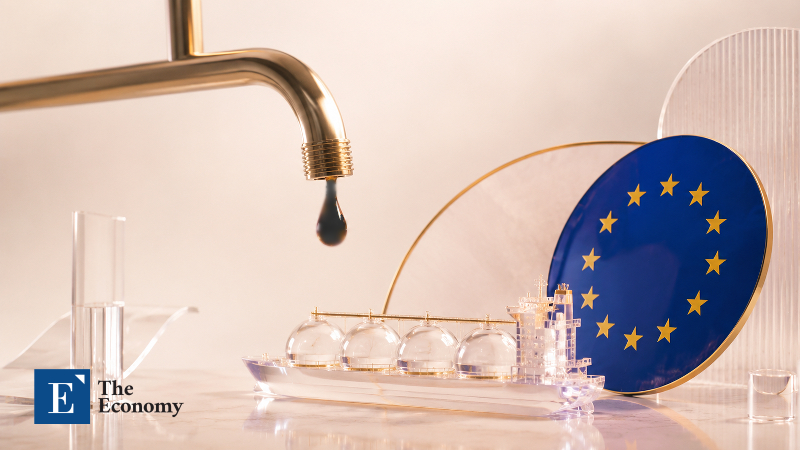
Opposition to the European Union's methane emissions regulations is spreading rapidly. Not only major energy-exporting nations, including the United States, but also EU member states themselves are increasingly calling for a delay to the implementation timetable and revisions to the rules. Analysts say that if the EU ultimately lowers the regulatory barriers in response to these demands and its own plans to expand domestic energy production, the bloc could weaken its longstanding role as the world's benchmark for environmental regulation.
Mounting Controversy Over EU Methane Rules
According to Reuters on June 28 (local time), German Minister for Economic Affairs and Energy Katherina Reiche warned ahead of an EU energy ministers' meeting in Luxembourg on June 26 that, "Under the current methane regulation, gas imports into Germany—including liquefied natural gas (LNG)—as well as imports of petroleum products such as kerosene (aviation fuel), could be blocked from 2027 onward." She argued that the methane regulation should at least be postponed or suspended if Germany is to maintain secure energy supplies.
The regulation in question, Regulation (EU) 2024/1787, entered into force in August 2024 and requires mandatory monitoring, reporting and verification (MRV) of methane emissions for gas, oil and coal imported into the EU beginning in January 2027. Concerns over the regulation's far-reaching scope have been raised for some time. Major energy exporters—including the United States, Qatar, Nigeria and Algeria—submitted a joint letter arguing that many exporting countries would struggle to comply with the MRV requirements before the 2027 deadline and called for the introduction of a "stop-the-clock" mechanism. In a report released in March, energy consultancy Wood Mackenzie estimated that if the methane regulation is implemented as planned, as much as 43% of the EU's gas imports and up to 87% of its crude oil imports could face the risk of being deemed non-compliant.
Resistance has also intensified within the EU itself. FuelsEurope and the International Association of Oil & Gas Producers (IOGP) recently issued a joint statement calling for the temporary suspension of the methane regulation until discussions on amendments are completed. They warned that, under the current framework, as much as 43% of EU gas imports and 87% of crude oil imports between 2027 and 2029 could fail to meet the requirements. Seventeen EU member states—including the Czech Republic, Slovakia, Italy and the Netherlands—have likewise urged the bloc to postpone implementation by three years, citing oil and gas supply constraints stemming from the Middle East conflict. Those countries are seeking not merely interpretive guidance but formal revisions to the regulation itself. Dan Jørgensen, the European Commissioner for Energy, however, stated on June 26 that while "Brussels is willing to make compliance easier, we will not rewrite legislation that is already sufficiently flexible."
EU's Domestic Gas Production Strategy
The United States has gone beyond formal diplomatic correspondence by publicly warning the EU through the media. Speaking to Bloomberg during the Reuters Events Global Energy Transition Forum in New York on June 24, U.S. Energy Secretary Chris Wright said, "If the EU does not reform its methane regulations, Europe will impose an unnecessarily heavy burden on itself," adding that "U.S. energy will simply flow elsewhere." Following Russia's invasion of Ukraine in 2022, the EU sharply increased imports of U.S. LNG as it reduced dependence on Russian gas. Given that roughly 80% of the EU's gas demand is met through imports, any disruption to U.S. LNG supplies would pose a severe threat to the bloc's energy security.
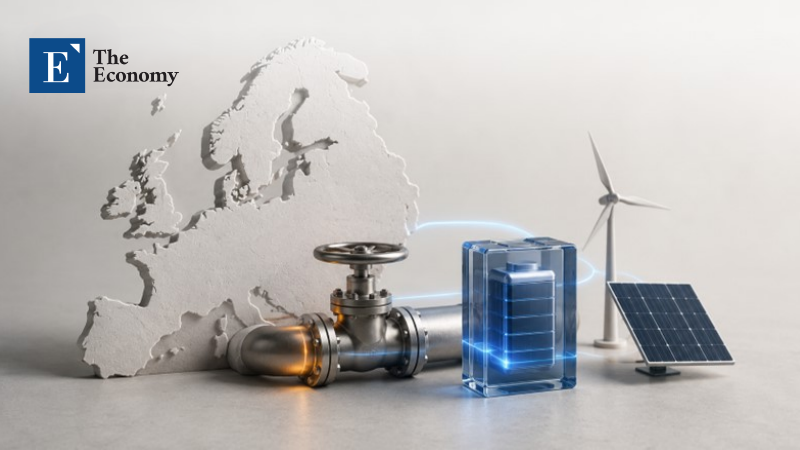
Yet the EU's own energy supply base remains too weak to offset such risks. Domestic gas production has fallen by roughly half over the past decade. Investment in new exploration has declined sharply, while the Netherlands shut down the Groningen gas field—once one of Europe's largest—following years of controversy over earthquake-related damage. Against this backdrop, Cyprus, which currently holds the rotating presidency of the Council of the European Union, presented several examples of the bloc's untapped gas potential ahead of last month's informal meeting of EU energy ministers, including Romania's Black Sea Neptun Deep project, offshore exploration in Greece's Ionian Sea, development in Poland's Baltic Sea, the possible resumption of Mediterranean exploration in Italy, and enhanced North Sea cooperation. The discussions focused on whether these resources could serve as a collective buffer to stabilize energy prices across the EU while expanding domestic gas production, reducing import dependence and strengthening energy security.
The challenge is that, if these plans move forward, the EU's own extensive environmental and energy regulations could become a significant obstacle to domestic gas development. The methane regulation applies not only to imported LNG but also to oil and gas operators within the EU, requiring methane emissions monitoring, reporting and verification, leak detection and repair, and restrictions on venting and flaring. Gas field developers must submit leak detection programs, conduct regular inspections, and either repair leaks immediately when they exceed regulatory thresholds or provide valid justification for delays. Offshore gas projects identified under the Cypriot presidency also face additional environmental and safety obligations. Under the EU Offshore Safety Directive, project developers must obtain approval from independent authorities before exploration and production, submit major accident risk reports, and establish comprehensive marine environmental protection and emergency response systems. Rather than providing a quick solution for boosting gas supply, new gas field development therefore remains a long-term, capital-intensive undertaking requiring complex permitting procedures and strict regulatory compliance.
Is the Center of Global Climate Policy Beginning to Shift?
If the EU ultimately lowers the threshold for its methane regulations to overcome these constraints, the consequences could extend far beyond energy policy. For years, the bloc has served as the world's principal standard-setter for environmental and industrial regulation, shaping both corporate practices and national policymaking worldwide. Multinational companies have routinely adjusted products and supply chains to comply with EU rules, while governments have incorporated those standards into their own regulatory frameworks. The impact of the Carbon Border Adjustment Mechanism (CBAM) illustrates this so-called "Brussels Effect." Fully implemented this year, CBAM imposes carbon costs on imports of carbon-intensive products—including steel, aluminum, cement, fertilizers, electricity and hydrogen—based on their embedded emissions, effectively extending the carbon costs borne by EU producers under the Emissions Trading System (ETS) to imported goods. The mechanism has compelled companies both inside and outside the EU to establish emissions measurement and reporting systems, effectively extending the reach of EU domestic regulation into the production practices of its trading partners.
Recently, however, cracks have begun to emerge in the bloc's previously uncompromising approach. The automotive sector provides one of the clearest examples. Last year, the EU introduced greater flexibility by allowing automakers to meet passenger car and van carbon dioxide (CO₂) emissions targets based on a three-year average rather than annual benchmarks. The roadmap for phasing out internal combustion engine vehicles has also begun to soften. The European Commission has proposed lowering the existing target from requiring 100% zero-emission new vehicle sales by 2035 to a 90% emissions reduction target, while leaving the door open to the limited sale of internal combustion engine vehicles and plug-in hybrid electric vehicles. The proposal is widely viewed as a response to pressure from member states with large automotive industries, including Germany and Italy, as well as from automakers themselves, and must still proceed through the legislative process.
A similar trend is evident in energy-intensive industries such as steel and chemicals. While the EU had planned to gradually phase out free ETS allowances alongside the introduction of CBAM, the European Commission's recently proposed ETS benchmark revisions for 2026-2030 would allow industry to continue receiving free allocations covering roughly 75% of emissions on average. The proposal also maintains the inclusion of indirect emissions from electricity consumption across 14 product benchmarks and includes measures expected to provide approximately $4.7 billion in financial support between 2026 and 2030. The continued tension between climate objectives and industrial competitiveness remains evident. Against this backdrop, any decision by the EU to relax the implementation timeline, verification standards or leak management obligations under its methane regulation could fundamentally undermine the symbolic authority of the EU's environmental regulatory framework.
Aoife Brennan is a contributing writer for The Economy, with a focus on education, youth, and societal change. Based in Limerick, she holds a degree in political communication from Queen’s University Belfast. Aoife’s work draws connections between cultural narratives and public discourse in Europe and Asia.
Similar Post