The Global Battery Market Is Becoming China's Domain, but Profitability Challenges Are Mounting

Anne-Marie Nicholson is a fearless reporter covering international markets and global economic shifts. With a background in international relations, she provides a nuanced perspective on trade policies, foreign investments, and macroeconomic developments. Quick-witted and always on the move, she delivers hard-hitting stories that connect the dots in an ever-changing global economy.
Authored On
Modified
CATL Surpasses 40% Market Share, Seven Chinese Companies Rank Among Global Top 10
Growing Influence Across Global Supply Chains Driven by EV and ESS Expansion
Expanding Supply Deepens Low-Margin Structure, Raising Prospects of Industry Consolidation
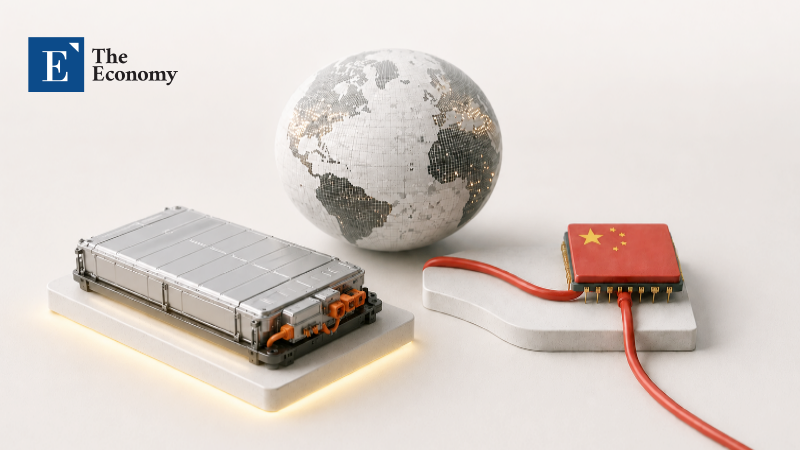
Chinese battery manufacturers have cemented their overwhelming dominance of the global market, capturing a combined 72.6% market share. The achievement reflects years of aggressive capacity expansion backed by comprehensive state industrial policies, enabling the companies to build economies of scale across both electric vehicles (EVs) and energy storage systems (ESS). However, relentless capacity additions and intensifying price competition are also creating a market increasingly characterized by simultaneous gains in market share and deteriorating profitability.
China Claims 72.6% of the Global Market
According to market research firm SNE Research on July 6, global battery installations for battery electric vehicles (BEVs), plug-in hybrid electric vehicles (PHEVs), and hybrid electric vehicles (HEVs) totaled 469.2 gigawatt-hours (GWh) during the first five months of this year, up 16.3% from a year earlier. Chinese manufacturers accounted for the bulk of that growth. Industry leader CATL recorded 188.4GWh of battery installations, a 22.9% increase from a year earlier, maintaining its position as the world's largest battery supplier. CATL's standalone global market share consequently climbed from 38.0% last year to 40.2%, surpassing the 40% threshold for the first time.
Second-ranked BYD, which has pursued vertical integration across both vehicle manufacturing and battery production, was weighed down by weakening domestic consumption in China. Its battery installations totaled 67.6GWh during the January-May period, representing growth of just 0.4% from a year earlier. As a result, BYD's market share declined from 16.7% to 14.4%, widening the gap with CATL. Even so, the two companies together commanded 54.6% of the global market, underscoring the extent to which China's two battery giants now control more than half of the world's battery industry. Other Chinese manufacturers, including CALB (5.1%, fourth), Gotion High-Tech (4.6%, fifth), and EVE Energy (3.3%, seventh), also posted growth rates exceeding 35%, supported by years of manufacturing optimization and yield improvements.
South Korean manufacturers, by contrast, experienced either slowing growth or outright contraction. LG Energy Solution ranked third with battery installations of 41.0GWh, up 7.3% from a year earlier. Although shipment volumes increased, the company failed to match the pace of overall market expansion, causing its market share to slip from 9.5% during the same period last year to 8.7% this year. Higher EV sales by certain customers supported shipment growth, but rapid expansion by Chinese rivals and fluctuating demand among automakers limited the company's market share gains.
SK On, ranked sixth globally, posted battery installations of 15.8GWh, down 5.8% from a year earlier, with its market share falling from 4.2% to 3.4%. The decline marked the steepest contraction among the world's top 10 battery manufacturers and was largely attributed to slowing EV sales among key customers in North America and Europe, along with production adjustments for certain vehicle models. Japan's Panasonic, which had established a strong position within the U.S. supply chain early on, ranked eighth after recording battery installations of 15.1GWh, down 8.5% from a year earlier, reflecting changing sales trends across Tesla's vehicle lineup. Overall, Chinese manufacturers accounted for seven of the global top 10 battery suppliers, with their combined market share rising 2.1 percentage points year over year to 72.6%.
New National Standards Expected to Strengthen Industry Growth
Market participants expect China's battery industry fundamentals to improve further as implementation of the country's new national standards accelerates technological advancement across the sector, supporting stronger battery demand. According to the China Passenger Car Association (CPCA), the penetration rate of new energy passenger vehicles reached a record 62.9% in May. Retail EV sales totaled 950,000 units during the month, increasing 7% year over year and 12% from April. While domestic vehicle sales remain under short-term pressure, battery capacity per vehicle continues to increase.
EV exports are also outperforming expectations. China exported 446,000 electric vehicles in May, up 110% from a year earlier and 4% from the previous month, raising the possibility that annual export volumes could double. Combined May sales across nine European countries reached 305,000 units, representing growth of 33% year over year and 6% month over month, with full-year growth expected to exceed 35%. Demand for EV batteries remains particularly robust, with annual growth projected at 20% to 25%. Demand for energy storage is also strengthening rapidly. First-quarter ESS shipments reached 216GWh, more than doubling from a year earlier. Global ESS demand forecasts have been revised upward to approximately 1,150GWh, representing annual growth of 70% to 80%. Growth of 5% to 10% is expected in July, while full-year expansion is projected at 35% to 40%.
CATL is already extending its leadership beyond EV batteries into the ESS market. Global new ESS installations reached 35.89GWh during the first quarter, surging 176% from a year earlier. In the United States, delays in gas-fired power plant construction are driving more solar-plus-storage projects, while Europe is accelerating investments in energy storage infrastructure to reduce dependence on Russian natural gas. Middle Eastern countries are also increasing ESS procurement as they prepare for a post-oil economy. CATL plans to raise the contribution of its ESS business from 25% today to 50% by 2030 and has already established a dedicated ESS testing center with an investment of approximately $414 million, converted from 3 billion yuan.
China's rapid rise to global leadership in the battery industry has been driven largely by sustained government support. Since 2009, Beijing has implemented a comprehensive industrial strategy combining direct subsidies for battery manufacturers, research and development support, tax incentives, policy financing, factory site assistance, and aggressive EV adoption policies. Local governments further intensified competition by providing incentives for manufacturing investments and factory construction, enabling leading companies including CATL and BYD to rapidly build large-scale production capacity. EV purchase subsidies also played a critical role in strengthening the domestic battery industry, with subsidy eligibility linked to domestic battery supply chains during key periods, ensuring a stable home market for Chinese manufacturers. As production volumes expanded, manufacturing costs declined sharply, allowing economies of scale and accumulated manufacturing expertise to translate into global price competitiveness.
Profitability Under Pressure Despite Rapid Growth
Rapid supply expansion, however, is fueling market growth while simultaneously placing mounting pressure on profitability. EVE Energy illustrates the challenge. The company's revenue rose 26.4% year over year to approximately $8.48 billion, converted from 61.47 billion yuan, last year, but net profit increased only 1.4% to roughly $570 million, converted from 4.13 billion yuan. Shipment volumes expanded, but intensifying price competition sharply limited earnings growth. Profitability divergence within the industry is also becoming increasingly pronounced. CATL has maintained relatively strong profitability despite fierce price competition by leveraging its scale advantages and expanding its ESS business. The company reported net profit of approximately $9.96 billion, converted from 72.2 billion yuan, last year, up 42.3% from the previous year. Gross margin in its ESS business reached 26.7%, exceeding that of its EV battery operations, while overseas gross margins stood at 31.4%, higher than those generated in the domestic Chinese market.
BYD, meanwhile, has struggled despite operating a fully integrated business spanning both vehicle manufacturing and battery production. Prolonged price wars in China's EV market caused the company's net profit to decline for the first time since 2021. BYD reported net profit of approximately $4.50 billion, converted from 32.6 billion yuan, last year, down about 20% from the previous year. Although vehicle sales continued to increase, shrinking subsidies, weakening domestic demand, and aggressive discounting by competitors significantly eroded profitability. The current state of China's battery industry can therefore be summarized as one defined by overwhelming market dominance alongside mounting profitability pressures. Industry leaders such as CATL, supported by superior cost efficiency, diversified international customer bases, and expanding ESS portfolios, remain capable of defending earnings despite price competition. Mid-tier and smaller manufacturers, however, face declining unit prices as shipment volumes continue to increase.
These pressures are also increasing the likelihood of industry consolidation. Chinese battery manufacturers are expanding production and sales operations into Europe, Southeast Asia, and the Middle East to reduce dependence on the fiercely competitive domestic market. However, overseas expansion is unlikely to deliver rapid improvements in profitability as countries increasingly introduce trade barriers and localization requirements. CATL is expanding its European supply chain through factories in Hungary and Germany while pursuing a new facility in Spain. BYD is simultaneously building overseas vehicle assembly plants and battery supply networks. Yet the substantial upfront costs associated with these investments could impose even greater financial strain on smaller battery manufacturers.
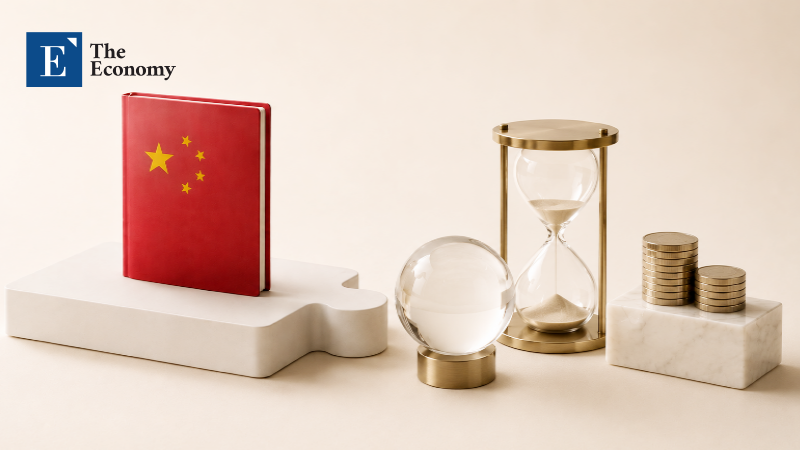
Whether China's battery industry ultimately evolves into a memory semiconductor-style winner-takes-all market or settles into a smartphone-like structure characterized by intense low-margin competition remains uncertain. In the memory semiconductor industry, a small number of companies with the financial capacity to sustain massive capital expenditures and maintain cost competitiveness eliminated rivals and secured excess profits. The smartphone industry, by contrast, has demonstrated that Chinese manufacturers can dramatically increase shipment volumes while continuing to struggle with profitability because of relentless price competition. The battery industry now appears to stand at a similar crossroads. China's decision earlier this year to summon major battery manufacturers, including BYD and Gotion High-Tech, urging them to restrain excessive capacity expansion and disorderly price competition, suggests that the profitability risks underlying the industry's overwhelming market share have already become a matter of policy concern.
Anne-Marie Nicholson is a fearless reporter covering international markets and global economic shifts. With a background in international relations, she provides a nuanced perspective on trade policies, foreign investments, and macroeconomic developments. Quick-witted and always on the move, she delivers hard-hitting stories that connect the dots in an ever-changing global economy.
Similar Post