Japan Seeks Korean Assistance to Revive LNG Shipbuilding, Accelerating Technological Self-Reliance in the Push Away From China

Matthew Reuter is a senior economic correspondent at The Economy, where he covers global financial markets, emerging technologies, and cross-border trade dynamics. With over a decade of experience reporting from major financial hubs—including London, New York, and Hong Kong—Matthew has developed a reputation for breaking complex economic stories into sharp, accessible narratives. Before joining The Economy, he worked at a leading European financial daily, where his investigative reporting on post-crisis banking reforms earned him recognition from the European Press Association. A graduate of the London School of Economics, Matthew holds dual degrees in economics and international relations. He is particularly interested in how data science and AI are reshaping market analysis and policymaking, often blending quantitative insights into his articles. Outside journalism, Matthew frequently moderates panels at global finance summits and guest lectures on financial journalism at top universities.
Authored On
Modified
Japan Turns to Korea to Rebuild LNG Carrier Industry
Rare Earth Supply Race With the U.S. Intensifies in Greenland
China Diversification Strategy Expands Across Industries
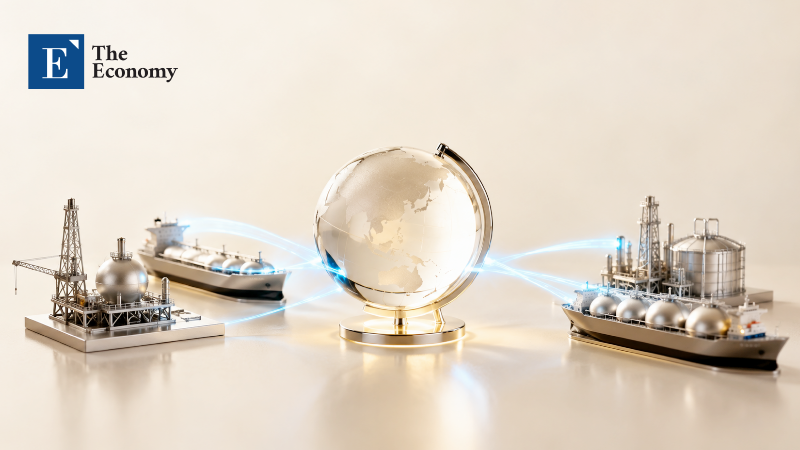
The Japanese government is pursuing technological cooperation with South Korea’s shipbuilding industry as it seeks to revive its domestic liquefied natural gas (LNG) carrier sector. The move underscores the extent of Japan’s determination to rebuild an industry it once dominated, with Tokyo now turning to Korean shipbuilders for assistance. The effort reflects a broader economic security strategy aimed at reducing dependence on China-centered supply chains, a campaign that has expanded from rare earths, batteries, and semiconductors into a wide range of industrial sectors.
Japan’s Urgent Appeal Despite National Pride
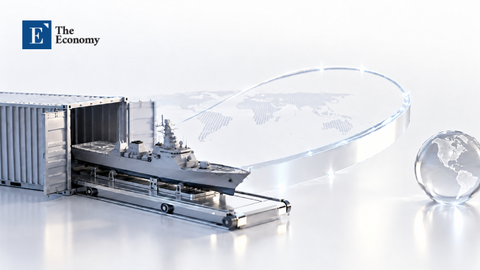
According to Nikkei on June 16, the Japanese government plans to include a roadmap for restarting domestic LNG carrier construction in its public-private investment blueprint scheduled for release later this month. As part of the initiative, Tokyo is expected to seek technological cooperation from South Korean shipbuilders. Japan has set a goal of establishing a production system capable of building three to five LNG carriers annually from 2035, centered on major shipbuilders including Imabari Shipbuilding, Kawasaki Heavy Industries, and Namura Shipbuilding. Japan effectively ceased LNG carrier construction after delivering its last vessel in 2019.
Industry observers view the development as evidence of the dramatic transformation in the standing of South Korea’s shipbuilding sector, which originally grew by studying and emulating Japanese production methods and operational systems. Large shipyards such as Hyundai Heavy Industries, Samsung Heavy Industries, and Daewoo Shipbuilding & Marine Engineering—now Hanwha Ocean—emerged and gradually challenged Japan before becoming major competitors in the global market during the 1990s. Japan’s shipbuilding industry, meanwhile, suffered from a strong yen, elevated costs, and delayed industry restructuring, steadily losing competitiveness.
The contrast between the two countries is most evident in LNG carriers. These highly specialized vessels transport liquefied natural gas stored at minus 163 degrees Celsius. South Korea is estimated to account for roughly 70% of the global LNG carrier market, while China holds about 30%. Although China has rapidly narrowed the gap, South Korea continues to maintain an advantage in construction experience, quality, and delivery reliability. Japan, in particular, lacks the technology required to manufacture membrane-type containment systems, the dominant standard in the global LNG carrier industry. Membrane tanks, which integrate rectangular cargo holds into the vessel structure, offer superior storage efficiency and transportation economics but require significantly more advanced engineering. Japanese shipbuilders remained committed to the Moss-type design, which uses multiple spherical tanks, ultimately weakening their competitiveness.
Japan’s decision to rebuild its LNG carrier industry is rooted in economic security concerns. The country relies on imports for approximately 98% of the LNG used in power generation and city gas supply. As an island nation dependent on maritime transportation rather than pipelines, LNG carriers are directly tied to national energy security, yet domestic construction capability has largely disappeared. Roughly 100 vessels are currently engaged in transporting LNG imports to Japan. The government believes that maintaining the capacity to build about five LNG carriers annually would be sufficient to preserve a minimum level of energy supply chain resilience during emergencies. Recognizing that cost competitiveness alone will not allow it to catch up with South Korea or China, Tokyo is also considering government support measures.
Participation in Greenland Rare Earth Development With the United States
Japan’s willingness to consider the politically sensitive option of seeking technological cooperation from South Korea reflects a broader long-term strategy aimed at reducing reliance on China. China has expanded its scale advantage in shipbuilding while establishing overwhelming leverage in critical minerals, battery materials, rare earth refining, and semiconductor materials. In its Global Critical Minerals Outlook 2025, the International Energy Agency (IEA) reported that China is the largest refiner of 19 out of 20 strategic minerals surveyed, with an average market share of approximately 70%.
Rare earths represent the sector where Japan first experienced the risks of Chinese supply chain dominance. Following tensions over the Senkaku Islands—known in China as the Diaoyu Islands—in 2010, China’s restrictions on rare earth exports delivered a severe shock to Japanese manufacturing. Since then, Japan has pursued diversification through procurement partnerships with Australia, Southeast Asia, and the United States, while simultaneously expanding stockpiles, recycling programs, and substitute material development. According to the International Institute for Strategic Studies (IISS), Japan’s dependence on Chinese rare earth supplies has declined from roughly 90% in 2010, though reliance remains substantial in volume terms.
China strengthened its export controls once again last year. On Nov. 7, the Chinese Ministry of Commerce introduced an export licensing system covering heavy rare earth elements such as samarium, dysprosium, and terbium, along with related magnet products, citing remarks by Japanese Prime Minister Sanae Takaichi regarding a potential Taiwan contingency. These materials are critical inputs for electric vehicles, defense systems, and semiconductor manufacturing equipment, reinforcing Beijing’s influence over strategic supply chains.
In response, Japan has increasingly shifted its supply chain restructuring efforts toward cooperation with the United States. Last year, the two countries established a framework for collaboration on critical minerals and rare earth supply chains and announced plans to expand joint investments across mining, separation, refining, and processing. Japan Oil, Gas and Metals National Corporation (JOGMEC) has also broadened partnerships with U.S. rare earth companies as part of efforts to establish procurement networks that bypass China-centered supply chains.
Greenland has emerged as another important component of this strategy. The United States views Greenland’s rare earth development projects as a critical pillar of its efforts to counter China, and Japan is evaluating opportunities to participate. Because competitiveness in the rare earth industry is determined more by refining and separation technology than by access to mines themselves, Japan is focusing on technological cooperation with the United States to reduce dependence on the downstream processing segment dominated by China. Tokyo’s approach is clear: rather than attempting to compete with China through production scale, it aims to restructure supply chains through networks of allied nations.
Long-Term Strategic Bet on Supply Chain Independence
Japan’s China diversification strategy is advancing through four primary pillars. The first is direct investment in overseas mining projects. A notable example was the joint investment by Sojitz and JOGMEC in Australian rare earth producer Lynas Rare Earths in 2011, securing supply sources outside China. The second pillar is strategic stockpiling. Japan maintains inventories equivalent to six months to one year of rare earth demand to mitigate short-term supply disruptions. The third involves urban mining and recycling, with advanced technologies recovering rare elements from discarded electronics and motors to ease pressure on upstream supply chains. The fourth is the development of rare-earth-saving and substitute technologies, with Japan accelerating work on motors and magnets capable of operating without rare earth materials.
Japanese automotive suppliers have been particularly active in technological innovation. Mitsuba developed a windshield wiper motor that uses ferrite magnets, which are easier to procure domestically, instead of neodymium magnets. The technology has already been adopted by Honda, Nissan, and Volkswagen, and Mitsuba is in the process of converting half of its total motor production to rare-earth-free designs. Astemo, backed by Honda and Hitachi, has unveiled an electric vehicle drive system that combines ferrite and iron magnets. Although larger than conventional neodymium-based motors, it delivers 75% greater output and is targeted for commercialization by 2030.
The United States is moving in the same direction. With China maintaining overwhelming dominance in rare earth refining and magnet production, Washington has designated supply chain restructuring as a national security priority. The U.S. government is advancing multibillion-dollar support programs aimed at securing rare earths, battery materials, and semiconductor-critical minerals while accelerating efforts to reduce dependence on China. MP Materials provides a prominent example. As the only rare earth producer in the United States, the company is building a vertically integrated system centered on the Mountain Pass mine in California, encompassing mining, refining, and magnet manufacturing. The U.S. Department of Defense is also directly investing in rare earth magnet production facilities to reduce dependence on China within defense supply chains.
The push away from China is equally evident in the battery industry. The Department of Defense has recently strengthened supply chain restructuring policies designed to reduce reliance on Chinese minerals and materials for national security reasons. These initiatives support the development of allied-nation supply chains across North America and Australia for lithium, nickel, cobalt, and graphite used in electric vehicle batteries and military equipment. In addition, under the National Defense Authorization Act (NDAA), the United States plans to exclude batteries produced by major Chinese companies from Defense Department procurement beginning in 2027.
Matthew Reuter is a senior economic correspondent at The Economy, where he covers global financial markets, emerging technologies, and cross-border trade dynamics. With over a decade of experience reporting from major financial hubs—including London, New York, and Hong Kong—Matthew has developed a reputation for breaking complex economic stories into sharp, accessible narratives. Before joining The Economy, he worked at a leading European financial daily, where his investigative reporting on post-crisis banking reforms earned him recognition from the European Press Association. A graduate of the London School of Economics, Matthew holds dual degrees in economics and international relations. He is particularly interested in how data science and AI are reshaping market analysis and policymaking, often blending quantitative insights into his articles. Outside journalism, Matthew frequently moderates panels at global finance summits and guest lectures on financial journalism at top universities.
Similar Post