Chinese EVs Unstoppable Despite Tariffs; EU Moves to Raise Trade Barriers Further

Siobhán Delaney is a Dublin-based writer for The Economy, focusing on culture, education, and international affairs. With a background in media and communication from University College Dublin, she contributes to cross-regional coverage and translation-based commentary. Her work emphasizes clarity and balance, especially in contexts shaped by cultural difference and policy translation.
Authored On
Modified
Pressure from price competition spreads across Europe’s automotive industry
EU pushes stricter local production and supply-chain requirements, while tightening subsidy eligibility around “Made in Europe” standards
Brussels strengthens protectionist measures under the banner of economic security and industrial sovereignty
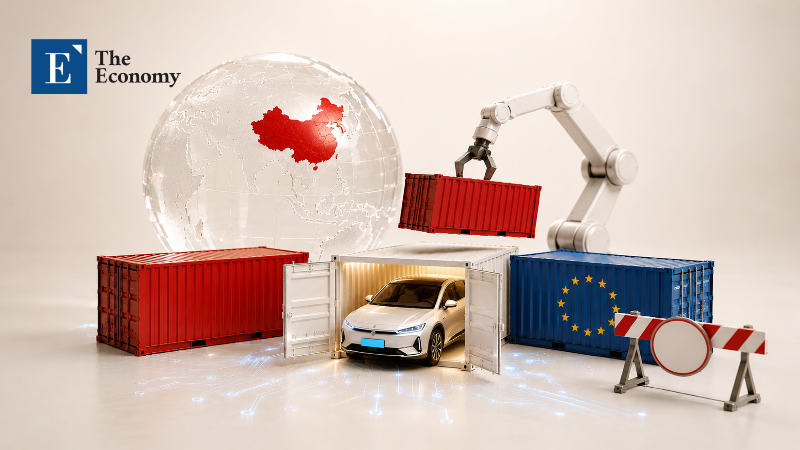
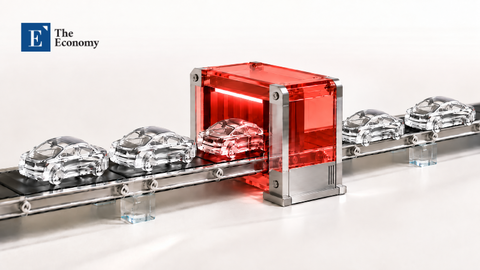
Despite deploying high tariffs and supply-chain restrictions, the European Union (EU) is finding it difficult to halt the export offensive of Chinese manufacturers. As a result, Brussels is accelerating a “Made in Europe” strategy aimed at reinforcing the competitiveness of domestic manufacturing. With the United States effectively excluding Chinese electric vehicles from its market on national security grounds, Europe is likewise raising the level of scrutiny toward China under the banners of economic security and industrial sovereignty.
European Carmakers Entering Partnerships With Rivals to Survive
According to the Mercator Institute for China Studies (MERICS) on June 17, China’s global exports of electric and hybrid vehicles surged 87% year over year during the first three months of the year, reaching $20.6 billion. Of that total, 31% was shipped to the EU. When non-EU European markets such as the United Kingdom and Norway are included, 42% of China’s total vehicle exports were concentrated in Europe. Demand among European consumers for competitively priced Chinese EVs has climbed even further as fuel prices soared following the closure of the Strait of Hormuz in the aftermath of the Iran war.
The EU has already imposed countervailing duties ranging from 7.8% to 35% on Chinese electric vehicles, yet has failed to erode their price advantage. At the same time, sentiment within Europe’s automotive industry has become increasingly complex. European auto plants are currently operating at an average utilization rate of only around 50% amid a prolonged downturn. Facing deteriorating profitability, domestic manufacturers have begun selling idle factories to Chinese companies such as BYD, Geely, Leapmotor, Dongfeng Motor, and Chery, or pursuing joint production arrangements as those firms seek to circumvent tariffs and local production requirements.
In response, EU authorities are considering even stronger protectionist measures through the Made in Europe initiative. Under the proposal, only electric vehicles that undergo final assembly within Europe and source at least 70% of their non-battery components from European suppliers would qualify for public subsidies and tax incentives. Batteries, a core component of EVs, would also need to source certain key raw materials and parts from within the EU to be classified as European-made.
Oversight in the battery sector would extend to the raw-material stage. The EU is preparing a framework to monitor supply chains not only for battery cell manufacturing but also for cathode active materials (CAM), anodes, separators, electrolytes, and other critical materials. According to Transport & Environment (T&E), Brussels is considering requirements that at least three categories of core battery components be produced within the EU beginning in 2027, with the number of qualifying categories expanding by 2030. Supply-chain data covering raw-material extraction, material processing, component manufacturing, and cell production would also likely be required as part of origin certification procedures.
The legislation would also include oversight mechanisms for production-facility investments. The European Commission has proposed separate reviews for new investments exceeding $115 million in strategic industries where a single country controls more than 40% of global production capacity. Evaluation criteria would include local job creation, technology development plans, research and development (R&D) investment, and supply-chain development effects. The broader objective is to anchor both manufacturing bases and critical supply chains for the EV and battery industries within the EU.
Chinese EV Offensive Sweeps Across Europe
The EU’s turn toward stronger protectionism reflects deepening concerns throughout Europe’s automotive industry. The expansion of China’s EV sector has long moved beyond ordinary market competition. According to the European Commission’s anti-subsidy investigation, Chinese manufacturers have benefited from tax breaks, financial support, land grants, and supply-chain assistance provided by central and local governments. Years of accumulated state support fueled the construction of the world’s largest production base, and China’s automotive industry has now begun producing volumes far beyond what its domestic market can absorb.
Roughly half of that excess output has been directed toward Europe. Chinese automakers have aggressively expanded exports to absorb rising production volumes while launching price-cutting campaigns to capture market share. As low-cost vehicles flood Europe’s automotive market, pricing power among local manufacturers has begun to erode rapidly. Volkswagen, Stellantis, Renault, and other major automakers have repeatedly warned that the influx of Chinese EVs is intensifying price competition across the European market. For European manufacturers investing billions of dollars in the transition to electric vehicles, falling vehicle prices translate directly into deteriorating profitability.
The automotive industry remains one of the central pillars of European manufacturing. According to the German Association of the Automotive Industry (VDA), Germany’s automotive sector employs approximately 780,000 workers. Production networks spanning Germany, France, Italy, and Spain have created vast industrial ecosystems linking automakers with thousands of suppliers of parts, materials, and equipment. The European Commission also regards the automotive industry as a strategic sector accounting for roughly 7% of the EU’s manufacturing value-added and supporting more than 13 million jobs. Consequently, declining profitability among automakers carries implications far beyond individual corporate earnings. Reduced investment in supplier networks, weakening competitiveness of production facilities, and shrinking employment could ultimately undermine the foundations of European manufacturing itself.
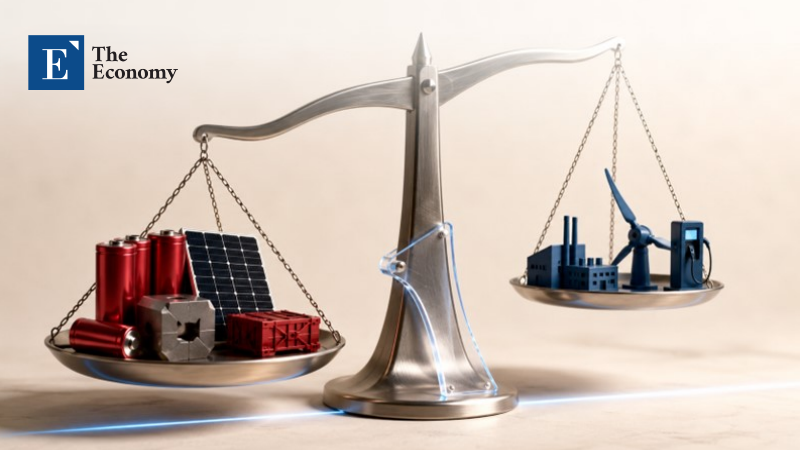
Europe’s battery industry has already experienced a similar shock. The successive bankruptcies of Norway’s Morrow Batteries and Sweden’s Northvolt, once regarded as symbols of Europe’s battery self-sufficiency ambitions, illustrate the sector’s current predicament. Morrow Batteries, which filed for bankruptcy on May 6, completed a cell manufacturing plant in 2024 and entered commercial production but ultimately failed to overcome a liquidity crisis. Despite possessing advanced lithium iron phosphate (LFP) technology that improved both battery lifespan and energy density, the company proved unable to withstand China’s overwhelming volume-driven competition.
Northvolt’s collapse proved even more painful. Having raised a cumulative $14 billion in funding, the company was pushed into an unrecoverable position as delays in establishing mass-production capabilities coincided with aggressive price competition from Chinese manufacturers. China’s battery industry, which accounted for more than 80% of global production in 2025, increased exports to Europe by 43% year over year. BYD in particular recorded explosive growth, boosting battery shipments to Europe by 201.4% from the previous year on the strength of cost-effective LFP batteries.
Europe’s Rising Barriers
The EU’s regulatory stance is likely to become even more stringent. The conflict surrounding tariffs on Chinese electric vehicles has already expanded beyond the automotive sector into steel, aluminum, agricultural products, livestock products, and critical minerals. According to the Financial Times, the EU is pursuing plans to expand the scope of its Carbon Border Adjustment Mechanism (CBAM) to approximately 400 downstream steel and aluminum products. The objective is to prevent imports from circumventing carbon costs by entering the market in finished-product form. Trade barriers built around carbon regulations first emerged in the steel sector, and EV and battery supply chains are now facing similar pressure.
China’s response has been equally forceful. Following the EU’s imposition of EV tariffs, Beijing launched investigations and tariff measures targeting European brandy, pork, and dairy products. Reuters reported that anti-dumping measures by China’s Ministry of Commerce against EU products have intensified trade tensions following the EV tariff dispute. What began as a conflict over electric vehicles has spread into food, consumer goods, and materials industries, rapidly narrowing the room for compromise between the two sides.
Fractures in diplomatic channels have also become increasingly apparent. China abruptly canceled a high-level meeting with the EU that had been scheduled to take place in Beijing this month. Although Beijing did not provide a specific explanation, such moves are frequently used to signal dissatisfaction with a counterpart’s policies. Last year, the EU likewise declined to hold key economic dialogues ahead of a summit with China, citing a lack of progress in several trade disputes. As trade consultations lose their traditional role as a buffer within broader diplomatic relations, tensions are increasingly hardening into a prolonged war of attrition.
Hardline sentiment within the EU is also gaining momentum. Germany is reportedly backing France’s proposal for “U.S.-style emergency tariffs and quotas,” with Poland, the Netherlands, and Belgium also expressing support. Growing concerns that excessive inflows of Chinese products are threatening German manufacturing employment and industrial foundations have driven the shift. A view is spreading among major EU member states that existing anti-dumping and countervailing-duty frameworks are insufficient to contain China’s production-capacity offensive.
The U.S. precedent is also shaping Europe’s calculations. Washington has already implemented highly restrictive measures against China’s automotive industry. Last year, the U.S. Department of Commerce designated connected-vehicle software and communications systems involving Chinese and Russian entities as national security threats and finalized phased import restrictions. The central justification was the risk that location data, driving information, and camera footage collected by vehicles could be transmitted overseas. As a result, Chinese automakers have effectively been excluded from the U.S. market. Analysts believe the EU is unlikely to stop at tariffs alone. As origin verification requirements, local sourcing mandates, subsidy restrictions, and supply-chain review mechanisms are introduced in sequence, the barriers confronting Chinese manufacturers are likely to rise substantially further.
Siobhán Delaney is a Dublin-based writer for The Economy, focusing on culture, education, and international affairs. With a background in media and communication from University College Dublin, she contributes to cross-regional coverage and translation-based commentary. Her work emphasizes clarity and balance, especially in contexts shaped by cultural difference and policy translation.
Similar Post