America's Battlefield Dominance Shaken by Low-Cost Drones, High-Cost Military Hegemony Put to the Test

Siobhán Delaney is a Dublin-based writer for The Economy, focusing on culture, education, and international affairs. With a background in media and communication from University College Dublin, she contributes to cross-regional coverage and translation-based commentary. Her work emphasizes clarity and balance, especially in contexts shaped by cultural difference and policy translation.
Authored On
Modified
Asymmetric wars of attrition testing U.S. military superiority
Ukrainian drone offensive crippling Russian logistics network
China accelerating development of drone carriers in response to changing warfare

The very nature of modern warfare is undergoing a fundamental transformation. Whereas aircraft carriers and advanced fighter jets built at enormous expense once determined dominance on the battlefield, the era has now arrived in which inexpensive drones can threaten high-value strategic assets. The war in Ukraine has demonstrated this shift in actual combat, while China is developing a new class of warships centered on unmanned aerial operations, signaling a new phase in the competition for maritime supremacy.
Cheap Iranian Drones Depleting Half of America's Interceptor Missile Stockpile, A Modern-Day "Arithmetic on the Frontier"
On July 5 (local time), British military analyst and Bloomberg columnist Max Hastings warned that "warfare today is being transformed dramatically by drones, artificial intelligence (AI), and low-cost weapons systems," adding that "America's long-standing dominance on the battlefield now faces a serious challenge." He cited Rudyard Kipling's classic 1880s poem Arithmetic on the Frontier to illustrate the economic dilemma confronting today's U.S. military. Hastings argued that the asymmetric war of attrition in which a British Empire officer—educated at tremendous expense—could be killed by a single obsolete Jezail rifle fired by an Afghan tribesman armed with what would today amount to a $0.10 weapon is being replayed on 21st-century battlefields.
The cost disparity in modern warfare is overwhelming. A U.S. nuclear-powered aircraft carrier—with a construction cost of approximately $13 billion and an additional $10 billion carrier air wing, representing roughly $23 billion in total military assets—is now reportedly extremely reluctant to enter the Strait of Hormuz, which lies within Iran's strike range. The contradiction is equally stark in air defense. U.S. forces have at times been forced to fire $4 million Patriot interceptor missiles to destroy Iranian Shahed suicide drones costing only $7,000 to $35,000 apiece.
This asymmetric war of attrition is creating a dangerous gap in America's global security strategy. Since the Iran conflict began on Feb. 28, U.S. forces have exhausted roughly half of their Patriot missile inventory in just a few months. Stocks of Terminal High Altitude Area Defense (THAAD) interceptors have also reportedly been depleted. With only 12 THAAD interceptors produced annually, replacing just one month's worth of expenditures would require more than 12 years. Hastings bluntly argued that "with America's core defensive capabilities tied down and depleted in the Middle East, the U.S. military would lack the capacity to prevent a surprise full-scale Chinese assault on Taiwan."
Hastings went on to compare the current situation to the Anglo-German naval arms race of 1906. "After Britain launched the revolutionary HMS Dreadnought, virtually every existing battleship instantly became obsolete," he noted. Once Britain's Dreadnought rendered the previous generation of warships outdated, London was forced to begin a completely new naval arms race with Germany from scratch. According to Hastings, the United States now finds itself trapped in a modern version of the "Dreadnought trap," where technological innovation renders the incumbent superpower's existing military assets obsolete.
Crimea's "Unsinkable Aircraft Carrier" Becoming Increasingly Vulnerable Under Ukrainian Drone Assault
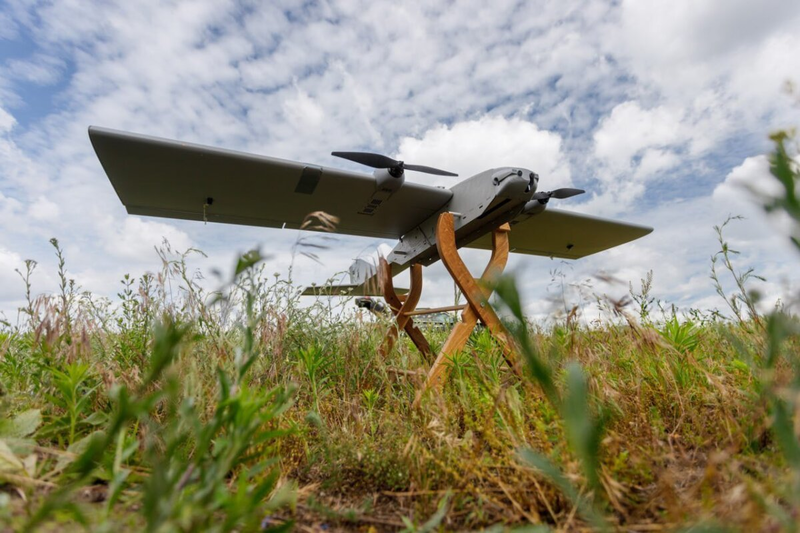
The disruptive power of innovative technology is not confined to naval warfare. The war in Ukraine, which broke out in February 2022, has become the defining example of drones' battlefield impact. Ukraine transformed drones from reconnaissance assets into one of the war's core weapons systems. During the early stages of the conflict, Kyiv primarily relied on Turkish-made Bayraktar TB2 drones and commercial unmanned aircraft to detect Russian troop movements and direct artillery fire. It later established a low-cost precision strike doctrine by deploying large numbers of explosive-laden commercial drones and first-person-view (FPV) suicide drones capable of accurately destroying tanks, armored vehicles, and artillery positions at minimal cost. Beginning in 2024, the role of drones expanded further to include strategic targets deep behind Russian lines. Using domestically developed long-range drones and unmanned surface vessels (USVs), Ukraine has continuously struck Crimea, Russia's Black Sea Fleet, oil refineries, ammunition depots, and military logistics facilities inside Russian territory.
More recently, Ukraine has intensified pressure on Crimea through a three-stage drone campaign targeting air defenses, transportation infrastructure, and energy facilities. Ukraine's General Staff announced last month that it had targeted 31 air defense systems and radar installations across Crimea. Among its most significant achievements was the destruction of the Nebo-B radar, valued at approximately $100 million, in an attack carried out on June 25. Military analysts believe the Nebo-B radar, with a detection range of 595 kilometers, has been rendered inoperable.
Following its campaign against Russian air defenses, Ukraine shifted its focus to severing supply routes. On June 7, Ukrainian forces struck the Chonhar Bridge linking Crimea with the Russian-occupied Kherson region in southern Ukraine before attacking a temporary pontoon bridge hastily constructed by Russian forces. Satellite imagery indicates Russia is now building an alternative embankment route that is considerably more resistant to drone attacks. On June 20, Ukraine simultaneously struck the Kerch Port fuel terminal at the eastern tip of Crimea and a fuel storage facility at Russia's Port Kavkaz across the Kerch Strait. The attacks prompted Crimean authorities to declare a state of emergency, while fuel shortages forced large numbers of residents to leave the peninsula.
Russia's mainland has likewise failed to escape the expanding strike radius. Britain's The Telegraph reported on July 4 that Ukrainian drones successfully conducted a long-range strike against an oil terminal on the outskirts of St. Petersburg. Ukrainian President Volodymyr Zelensky wrote on Telegram that Ukrainian forces had struck "Kronstadt, a critical military target located more than 850 kilometers from Ukraine's border, along with port oil infrastructure that finances Russia's war effort." Military analysts argue that Ukraine's drone campaign is reducing Russia's military—long portrayed as one of the world's most advanced fighting forces—into a "paper tiger" incapable of sustaining modern high-intensity warfare. Regardless of how many tanks or artillery systems an army possesses, they become useless without fuel, ammunition, or replacement parts.
Ukraine's rapidly expanding drone capabilities have also been supported by a performance-based incentive system. The Ukrainian military currently operates a "drone force bonus" program across all branches of service, awarding soldiers performance points for destroying high-value Russian targets using drones. Russian military supply trucks have become particularly attractive targets because they are relatively easy to attack while yielding between 10 and 20 points per vehicle. With the widespread deployment of FPV drones capable of flying 100 to 200 kilometers alongside the introduction of the drone bonus program, Russian military supply vehicle losses have surged sharply since May. Frontline Russian soldiers have consequently taken to social media platforms and influential military blogs to post videos and photographs, warning that key supply routes are becoming "roads of death" and calling for urgent countermeasures.
China Unveils Drone Carrier, Bets on "Drone Swarm" Warfare
China is rapidly incorporating these battlefield changes into the modernization of its naval forces. On July 5, China Central Television (CCTV) extensively showcased the latest progress of the Sichuan, China's first domestically developed Type 076 amphibious assault ship. The footage revealed that deck guidance markings had been completed, the electromagnetic catapult installed, and the arresting gear fully fitted. It marked the first public appearance of the Sichuan following completion of its deck markings, leading analysts to conclude that testing of its core carrier-based aircraft launch and recovery systems has entered its final phase.
The Sichuan is the largest amphibious assault ship China has ever built. Measuring 260 meters in length and 52 meters in width, the vessel has a full-load displacement of between 50,000 and 60,000 tons, overcoming the traditional limitations of amphibious assault ships that have historically relied solely on helicopters and vertical or short takeoff aircraft. It is also reportedly the first amphibious assault ship in the world equipped with both an electromagnetic catapult and arresting gear—technologies previously reserved for large aircraft carriers. The electromagnetic launch system enables heavier carrier-based aircraft to take off more rapidly and safely.
The Sichuan is also capable of launching the 30-ton J-35 stealth fighter and the KJ-600 fixed-wing carrier-based airborne early warning aircraft. Analysts believe it will also be capable of continuously launching stealth drones such as the GJ-11 as part of so-called "drone swarm" operations, allowing it to conduct a broad range of missions against both land and maritime targets far from China's coastline. Unlike vertical takeoff drones, catapult-launched unmanned aircraft can carry substantially larger fuel loads, heavier weapons, and more powerful radar systems. Combined with arresting gear for repeated recoveries, the ship will enable sustained drone sortie operations, allowing China to establish an independent surveillance and strike network across disputed waters such as the Taiwan Strait and the South China Sea.
China's latest move is also expected to reshape the operational concept underpinning U.S. amphibious warfare. The U.S. Navy has developed the "Lightning Carrier" concept, equipping its 45,000-ton America-class amphibious assault ships with up to 20 F-35B stealth fighters to deliver formidable expeditionary airpower without relying on nuclear-powered aircraft carriers. It has also upgraded its aging Wasp-class amphibious assault ships to operate the F-35B, preserving its ability to rapidly project military power into conflict zones around the world.
However, U.S. amphibious assault ships remain limited to vertical or short takeoff and landing (STOVL) aircraft and lack both catapults and arresting systems. China's Type 076, by contrast, is being developed around an electromagnetic catapult capable of launching large numbers of fixed-wing unmanned aircraft. This would allow China to conduct persistent intelligence, surveillance and reconnaissance (ISR) and electronic warfare missions hundreds of kilometers ahead of amphibious operations, enabling it to seize the initiative on the battlefield before landings even begin. Analysts view the strategy as an effort to reduce dependence on large aircraft carriers while maximizing the effectiveness of amphibious operations through extensive employment of unmanned systems.
Siobhán Delaney is a Dublin-based writer for The Economy, focusing on culture, education, and international affairs. With a background in media and communication from University College Dublin, she contributes to cross-regional coverage and translation-based commentary. Her work emphasizes clarity and balance, especially in contexts shaped by cultural difference and policy translation.
Similar Post