"Industrial Restructuring Begins" China Scales Back EV Tax Incentives, אך Hopes of Easing EU Trade Tensions Dim Amid Indirect Subsidy and Transshipment Disputes

Oliver Griffin is a policy and tech reporter at The Economy, focusing on the intersection of artificial intelligence, government regulation, and macroeconomic strategy. Based in Dublin, Oliver has reported extensively on European Union policy shifts and their ripple effects across global markets. Prior to joining The Economy, he covered technology policy for an international think tank, producing research cited by major institutions, including the OECD and IMF. Oliver studied political economy at Trinity College Dublin and later completed a master’s in data journalism at Columbia University. His reporting blends field interviews with rigorous statistical analysis, offering readers a nuanced understanding of how policy decisions shape industries and everyday lives. Beyond his newsroom work, Oliver contributes op-eds on ethics in AI and has been a guest commentator on BBC World and CNBC Europe.
Authored On
Modified
China to Phase Out Tax Incentives That Have Underpinned EV Market Growth
EU Tightens Pressure on Chinese EVs Through Tariffs and Regulatory Barriers
"The Dispute Extends Beyond EVs" Deepening EU-China Trade Rift Persists
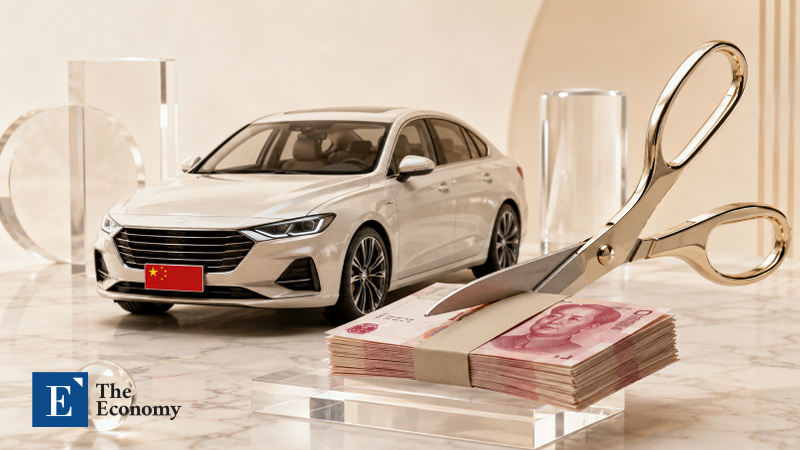
China's electric vehicle (EV) industry is entering a period of sweeping policy change. Beijing has formally signaled its intention to scale back direct tax incentives while seeking to limit further escalation in its trade conflict with the European Union (EU), which has increasingly centered on EVs. However, with concerns over China's indirect subsidy framework and allegations of transshipment through third countries still unresolved, the abolition of tax incentives alone is unlikely to translate into a meaningful easing of trade tensions with the EU.
China Slams the Brakes on EV Industry Support
According to a July 4 report by the South China Morning Post (SCMP), China's Ministry of Finance, State Taxation Administration, and Ministry of Industry and Information Technology (MIIT) recently issued a joint statement announcing that, effective January 1, 2027, annual vehicle and vessel tax reductions and exemptions previously granted to energy-efficient vehicles and various classes of new energy vehicles (NEVs) will be abolished. As a result, plug-in hybrid electric vehicles (PHEVs), extended-range electric vehicles (EREVs), and fuel-cell commercial vehicles will be subject to the same taxation standards as conventional internal combustion engine vehicles beginning next year.
The move reflects Beijing's assessment that its domestic EV industry has progressed beyond dependence on government support. China began subsidizing the NEV sector in 2009 and has maintained its position as the world's largest NEV market since overtaking global rivals in 2015. In 2024, NEV production and sales reached 12.888 million and 12.866 million units, respectively, while NEVs accounted for 40.9% of all new vehicle sales in China. The country's global footprint has expanded rapidly as well. China's total automobile exports surpassed 7 million units last year, with NEV exports nearly doubling year-over-year to almost 2.6 million units.
The challenge, however, is that the industry's explosive expansion has also intensified structural problems. According to British automotive research firm JATO Dynamics, approximately 400 EV models were sold in China last year—more than double the number available in 2019—highlighting increasingly intense competition in the domestic market. Even so, leading manufacturers such as BYD, Geely, and Chery have established self-sustaining business models through vertical integration and overseas market expansion, while smaller EV manufacturers without economies of scale remain heavily reliant on government support. As subsidies are withdrawn, financially weaker companies are expected to be naturally eliminated from the market, accelerating industry consolidation around export-competitive market leaders.
Prolonged EU-China Trade Frictions
Trade tensions with the EU also appear to have influenced Beijing's decision to phase out tax incentives. Brussels has steadily intensified its scrutiny of Chinese EVs over the past several years. The turning point came in September 2023, when European Commission President Ursula von der Leyen declared during her State of the European Union address that "global markets are now flooded with cheaper Chinese electric cars, and their prices are kept artificially low by huge state subsidies," while announcing an anti-subsidy investigation. Unlike previous cases initiated by corporate complaints, the probe was launched independently by the European Commission. The formal investigation began on October 4, 2023, examining whether China's battery electric vehicle (BEV) value chain benefited from state subsidies and whether those subsidies had caused or threatened material injury to the EU's EV industry.
The Commission's preliminary findings, released in June 2024, concluded that China's EV value chain had indeed benefited from unfair subsidies and that the resulting surge in low-priced imports posed a "foreseeable and imminent threat of injury" to European manufacturers. In July 2024, the EU imposed provisional countervailing duties of 17.4% on BYD, 19.9% on Geely, 37.6% on SAIC, 20.8% on other cooperating producers, and 37.6% on non-cooperating companies, in addition to the bloc's existing 10% import tariff on automobiles. In October 2024, EU member states formally approved five-year definitive countervailing duties, setting final rates at 7.8% for Tesla, 17.0% for BYD, 18.8% for Geely, 35.3% for SAIC, 20.7% for other cooperating producers, and 35.3% for non-cooperating companies.
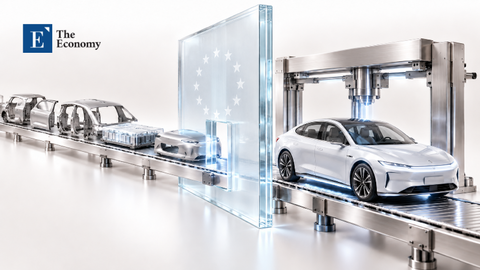
Brussels' campaign against Chinese EVs has expanded beyond tariffs into non-tariff barriers. The EU is currently considering a "Made in Europe" initiative that would restrict subsidies and tax incentives to vehicles whose final assembly takes place within Europe and whose non-battery components consist of at least 70% European-made content. The proposal is widely viewed as an effort not only to curb imports of Chinese-built vehicles but also to relocate EV manufacturing and component supply chains into Europe. Given that China has no free trade agreement (FTA) with the EU and remains at the center of ongoing trade disputes, Chinese manufacturers will likely need to establish production facilities within Europe to partially offset these regulatory barriers.
Trade Disputes Extend Beyond Electric Vehicles
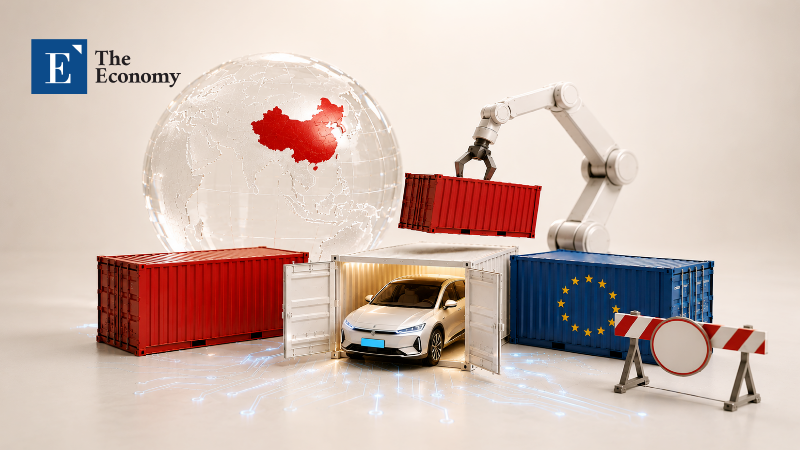
Nevertheless, the scaling back of China's EV support does not necessarily signal an end to the broader trade conflict between Beijing and Brussels. The two sides are already locked in disputes across multiple sectors beyond electric vehicles. One prominent example is China's use of transshipment routes. In May, the Financial Times (FT) reported that a five-million-square-meter agricultural zone in Morocco's port city of Tangier had been transformed into an automotive parts manufacturing hub. More than ten Chinese auto parts manufacturers—including Century, BTR, and APG—are reportedly operating or constructing factories there. Cai Junjie, project manager for APG's planned $70 million manufacturing facility in Tangier, scheduled to begin operations this year, stated that the plant would combine local labor and materials with Chinese components and technology, adding that "we can source the materials we need near our European customers at competitive prices."
Chinese manufacturers are increasingly establishing operations in Morocco because the country offers an advantageous gateway to European markets. Located just across the Strait of Gibraltar from Europe, Morocco has signed free trade agreements with approximately 50 countries, including the EU and the United States. Products manufactured there can qualify as Moroccan-origin goods and enter the EU tariff-free. Maroš Šefčovič, the European Commissioner for Trade and Economic Security, told the Financial Times that Chinese investment in Morocco could represent an attempt to circumvent trade barriers by routing exports to Europe through third countries in order to address China's overcapacity problem, warning that "this is becoming a very significant issue for Europe."
Adding to the controversy are the indirect subsidies that Beijing has long provided to domestic industries. Unlike direct cash payments, indirect subsidies reduce production costs through alternative policy measures. Chinese EV and battery manufacturers, for example, have secured financing from state-owned banks and policy lenders at below-market interest rates while also utilizing government-backed bonds and industrial development funds to expand production capacity. Local governments have further supported manufacturers by offering industrial land at discounted prices and pre-building infrastructure such as roads, electricity networks, and water supply systems to attract EV and battery factories. Such indirect subsidies distort genuine market competitiveness by allowing companies that would otherwise have reduced investment or exited the market to survive through policy support. The result is persistent excess capacity, mounting inventory pressure, and further deterioration in corporate profitability.
Oliver Griffin is a policy and tech reporter at The Economy, focusing on the intersection of artificial intelligence, government regulation, and macroeconomic strategy. Based in Dublin, Oliver has reported extensively on European Union policy shifts and their ripple effects across global markets. Prior to joining The Economy, he covered technology policy for an international think tank, producing research cited by major institutions, including the OECD and IMF. Oliver studied political economy at Trinity College Dublin and later completed a master’s in data journalism at Columbia University. His reporting blends field interviews with rigorous statistical analysis, offering readers a nuanced understanding of how policy decisions shape industries and everyday lives. Beyond his newsroom work, Oliver contributes op-eds on ethics in AI and has been a guest commentator on BBC World and CNBC Europe.
Similar Post