"As Chinese Competition Intensifies" German Auto Industry Buckles Under Restructuring-Driven Labor Strife, Calls Grow for Japan-Style Collective Response

As one of the youngest members of the team, Tyler Hansbrough is a rising star in financial journalism. His fresh perspective and analytical approach bring a modern edge to business reporting. Whether he’s covering stock market trends or dissecting corporate earnings, his sharp insights resonate with the new generation of investors.
Authored On
Modified
German automakers face a wave of restructuring as labor unions mount fierce resistance
Surging Chinese EV presence across Europe turns labor disputes into a critical liability
Japan embraces industry-wide cooperation to navigate a similar structural crisis
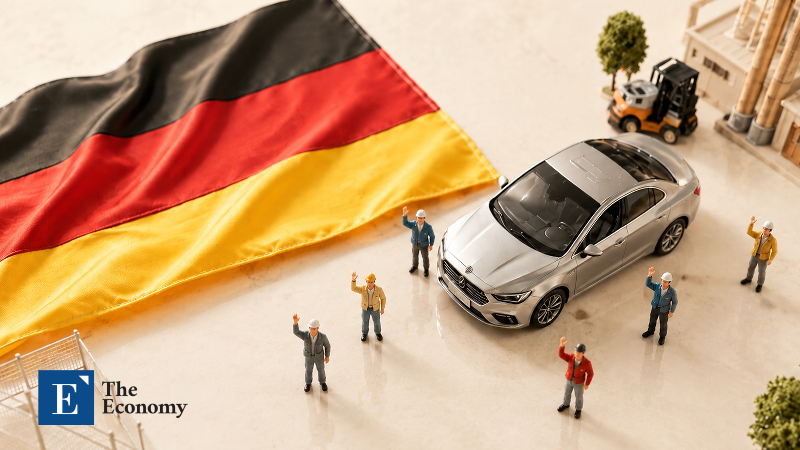
Germany's automotive industry is becoming increasingly mired in labor-management conflict. As domestic automakers grapple with deteriorating earnings amid mounting pressure from Chinese electric vehicle manufacturers, sweeping restructuring efforts have become unavoidable. However, fierce union resistance is delaying the industry's structural transformation. Against this backdrop, market observers argue that Europe's automakers should move beyond company-specific restructuring and instead establish an industry-wide collaborative framework similar to Japan's to overcome the crisis.
German Auto Industry Under Pressure
On July 3 (local time), Germany's dpa news agency reported that tens of thousands of Mercedes-Benz employees affiliated with IG Metall, Germany's largest industrial union, staged nationwide demonstrations protesting the company's cost-cutting measures. The protests followed Mercedes-Benz's decision to postpone until next year the payment of an annual special compensation conversion bonus that approximately 90,000 of its 108,000 employees in Germany had been scheduled to receive this month. According to IG Metall, more than 33,000 workers participated in the demonstrations, while the union also warned of prolonged additional industrial action.
Such restructuring-driven labor disputes are spreading across Germany's automotive sector. According to German publication Manager Magazin on June 26, Volkswagen Group recently formulated a restructuring plan that includes eliminating up to 100,000 jobs and closing four factories in Germany. If implemented, it would represent the largest workforce reduction in automotive industry history, leaving one out of every three Volkswagen employees in Germany without a job. The company is also considering spinning off its core Volkswagen passenger-car division into a separate legal entity while discussing plans to reduce its vehicle lineup from roughly 150 models to fewer than 100.
The restructuring reflects Volkswagen's rapidly deteriorating financial performance. The group's global vehicle sales declined from 11 million units in 2019 to approximately 9 million last year. Operating profit plunged 53.5% year over year, while its operating margin fell to just 2.8%, leaving the company with virtually no meaningful profit per vehicle sold. Nevertheless, Volkswagen's works council and IG Metall declared that "if this plan is pushed through, we will do everything possible to stop it," signaling an uncompromising stance despite the severity of the company's challenges. The restructuring proposal is scheduled to be finalized after discussions at Volkswagen's supervisory board meeting on July 9.
Chinese EV Makers Accelerate Their Expansion Across Europe
Market observers warn that Germany's confrontational labor response could ultimately worsen the situation. With Europe's automotive market already coming under increasing pressure from Chinese manufacturers, additional labor disputes would only further undermine the region's competitiveness. According to May new-vehicle sales data released by the European Automobile Manufacturers' Association (ACEA), combined sales by five major Chinese automakers across 31 European countries surged 65% year over year to 138,410 units. As a result, Chinese brands expanded their share of Europe's new-car market to 11.4%. The companies included in the survey were BYD, SAIC Motor, Zhejiang Geely Holding Group, Chery Automobile, and Leapmotor.
The European Union has already erected regulatory barriers to curb the advance of Chinese EVs, most notably by imposing additional tariffs of up to 35.3% on Chinese-made electric vehicles over concerns about excessive government subsidies. Nevertheless, Chinese manufacturers continue to push aggressively into the European market. One reason is the renewed adoption of EV subsidy programs across EU member states. Germany abolished its EV subsidies at the end of 2023 but reinstated incentives in January this year, offering buyers of electric and plug-in hybrid vehicles subsidies of up to approximately $7,000. Sweden has resumed EV subsidies for low-income households after previously discontinuing them, while Italy has also expanded its incentive programs. These policy measures have effectively provided Chinese automakers with a buffer that helps preserve part of their price competitiveness despite higher tariffs.
Chinese manufacturers are also accelerating local production to offset tariff costs. Leapmotor is pursuing plans to assemble SUVs at a Stellantis plant in Spain. Chery Automobile has begun producing vehicles under the Ebro brand in partnership with Spain's EV Motors at the former Nissan Zona Franca plant in Barcelona, while also considering manufacturing vehicles at Nissan's underutilized Sunderland facility in the United Kingdom. BYD, meanwhile, has designated its plant in Szeged, Hungary, as its primary European production hub for electric vehicles destined for regional markets.
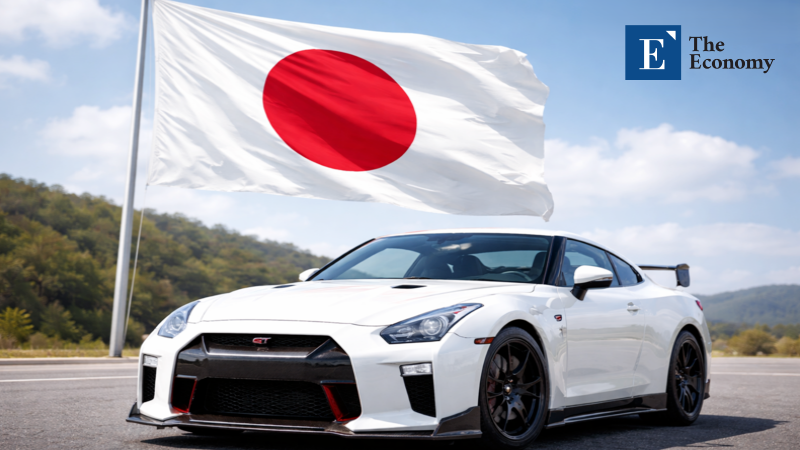
Japan Embraces an Industry-Wide Response
Some analysts argue that Europe's automotive industry should draw lessons from Japan in redesigning its crisis-response strategy. Japan's automakers maintained global leadership for decades through the competitiveness of their hybrid and internal combustion engine vehicles, but their position has weakened rapidly during the industry's transition to electric vehicles as Chinese manufacturers gained ground. As companies such as BYD vertically integrated the entire EV ecosystem to improve both cost competitiveness and product development speed, Japanese manufacturers—whose greatest strength had long been vehicle assembly capabilities—found themselves losing their competitive edge.
Recognizing that individual corporate efforts alone would be insufficient, Japan's automotive industry has strengthened cooperation under the Japan Automobile Manufacturers Association (JAMA). In its recently released strategic report, JAMA Vision 2035, the association identified the joint development of foundational technologies for next-generation mobility—including electric vehicles, automotive software, semiconductors, and batteries—as a shared industry priority. The strategy envisions continued competition in vehicle design and branding while sharing the enormous costs associated with developing core infrastructure and key components.
Industry consolidation has also begun to materialize. Hino Motors and Mitsubishi Fuso, Japan's two leading truck manufacturers, reached a final agreement to complete their management integration by the end of this year. As the traditional commercial vehicle industry—where engine technology and assembly expertise once determined competitiveness—gives way to an era defined by electric trucks, hydrogen-powered trucks, and autonomous commercial vehicles, the two companies have chosen to establish a joint investment platform for next-generation technologies. The merged entity is expected to become a major commercial vehicle group employing more than 40,000 people, with participation also planned from Toyota, Hino's parent company, and Daimler Truck, the parent of Mitsubishi Fuso.
As one of the youngest members of the team, Tyler Hansbrough is a rising star in financial journalism. His fresh perspective and analytical approach bring a modern edge to business reporting. Whether he’s covering stock market trends or dissecting corporate earnings, his sharp insights resonate with the new generation of investors.
- Previous "Infrastructure at Its Limits": Vulnerabilities in the U.S. Power Grid Exposed by Extreme Heat and AI Demand as Big Tech Races to Secure Its Own Energy Supply
- Next "Industrial Restructuring Begins" China Scales Back EV Tax Incentives, אך Hopes of Easing EU Trade Tensions Dim Amid Indirect Subsidy and Transshipment Disputes
Similar Post