“Israel Was Kept in the Dark”: Saudi Arabia Reverses Trump’s Decision to Strike Iran, Emerges as the Middle East’s New Power Broker

Anne-Marie Nicholson is a fearless reporter covering international markets and global economic shifts. With a background in international relations, she provides a nuanced perspective on trade policies, foreign investments, and macroeconomic developments. Quick-witted and always on the move, she delivers hard-hitting stories that connect the dots in an ever-changing global economy.
Authored On
Modified
Trump Cancels Massive Strikes on Iran Without Prior Notice to Israel
Three Gulf States Urge Restraint Over Fears of a Strait of Hormuz Blockade and Attacks on Oil Facilities
Crown Prince Mohammed bin Salman Emerges as a Key Middle East Power Broker After Spearheading 14-Nation Maritime Defense Coalition
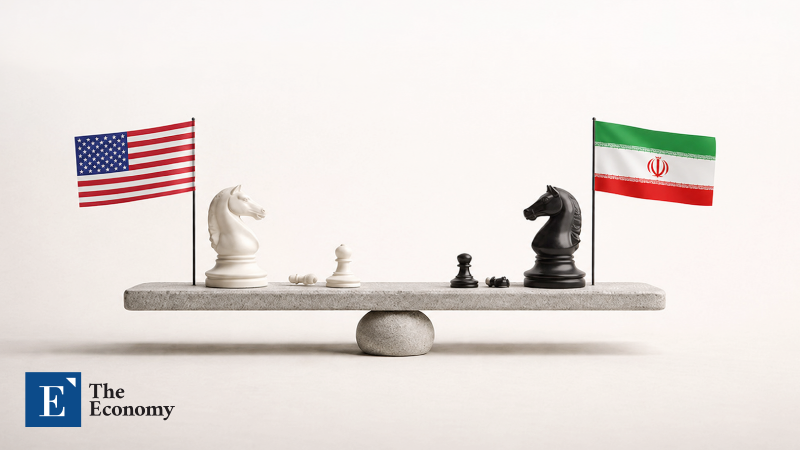
US President Donald Trump’s decision to cancel massive strikes on Iran without even notifying Israel in advance is reshaping the Middle East’s strategic landscape. Trump accepted calls for restraint from Saudi Arabia, Qatar and the United Arab Emirates (UAE), amid concerns over the energy and logistics shock that could result from a blockade of the Strait of Hormuz and attacks on Gulf oil facilities. Saudi Crown Prince Mohammed bin Salman, in particular, has expanded his diplomatic and military influence by persuading Trump to stand down while also spearheading joint airstrikes with the US military and the creation of a 14-nation maritime defense coalition. As attacks by Iranian proxy forces intensify regional instability, the crown prince is consolidating the Gulf states’ shared interests into military and diplomatic cooperation, strengthening his position as a central power broker in the Middle East.
Israel Says US Failure to Notify It of Strike Cancellation Caused “Severe Confusion”
According to the Times of Israel and other news outlets on Aug. 2, local time, senior Israeli officials, including Prime Minister Benjamin Netanyahu and Defense Minister Israel Katz, reportedly learned that Trump had canceled the strikes on Iran only after seeing his social media post. “We even felt as if we had been abandoned,” one senior Israeli official said, expressing frustration.
The United States and Israel had begun drawing up plans to attack Iran on July 29, the day after the two countries’ leaders met at the White House. Trump publicly signaled at the time that “massive airstrikes” were imminent. Expectations of a joint US-Israeli operation intensified after US embassies across the Middle East began receiving evacuation advisories late last month. US Central Command (CENTCOM), which is directing the war against Iran, prepared plans to strike Iranian energy infrastructure, and Israel was expected to participate in the operation, according to a US official.
Trump, however, abruptly called off the attack 24 hours before it was due to begin, while Israel remained completely unaware of the reversal. “For several hours, we were in a state of genuine uncertainty,” a senior Israeli official said. “President Trump left us in the fog, and senior generals had to learn what was happening through Trump’s social media.” When Israel first saw Trump’s announcement, officials initially believed it was a deception designed to lull Iran into a false sense of security. They ultimately confirmed Trump’s decision after managing to contact their US counterparts.
Israel continues to maintain that Iran’s nuclear and missile capabilities must be eliminated at their core. Its position reflects a belief that easing military pressure on Iran could undermine deterrence. Trump’s calculation, however, is different. If an attack on Iran were to trigger a blockade of the Strait of Hormuz, retaliatory strikes on US military bases or attacks on Gulf oil facilities, the repercussions for the US economy and global oil prices could be enormous.
Iran Says No Compromise Reached on Strait of Hormuz
Trump canceled the massive strikes after Iran’s foreign minister agreed to a compromise proposal for the full reopening of the Strait of Hormuz. Israel’s Channel 12 reported that “the compromise, coordinated by the United States and Qatar, would allow vessels to enter the Persian Gulf through waters controlled by Iran and use Omani waters for outbound passage in the opposite direction.” Axios reported that Oman had agreed to the arrangement, but was seeking firm assurances that Iran’s hard-line Islamic Revolutionary Guard Corps (IRGC) would also comply, with Qatar currently working to secure those guarantees.
Iran, however, has issued statements categorically denying the account. In a statement, acting Iranian Defense Minister Ibn al-Reza described Trump’s announcement as “part of a campaign of psychological warfare and carefully calculated provocation,” stressing that “Iran regards it as a real and serious threat.” He also took a hard line, declaring, “We will never be caught off guard or respond passively.” A military source who requested anonymity likewise dismissed Trump’s claim as a lie and accused him of seeking to extract concessions through Gulf leaders.
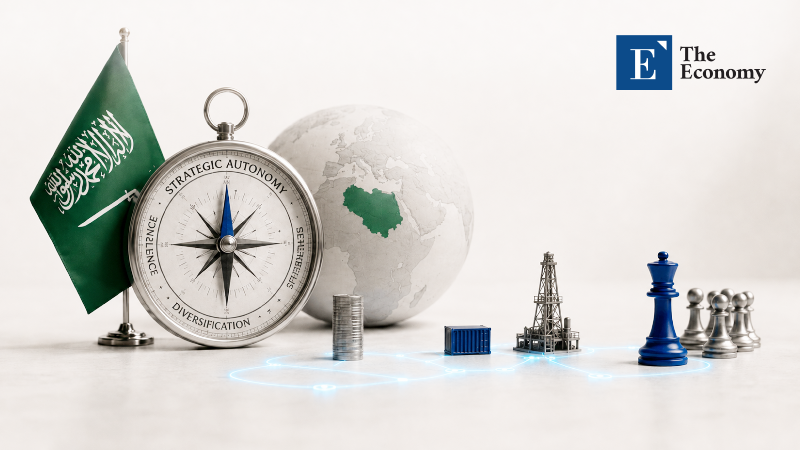
Joint Pressure From Three Gulf States
There are clear indications that Gulf states influenced Trump’s decision to cancel the strikes. Speaking to reporters aboard Air Force One on Aug. 2, shortly after suspending the operation, Trump said he had received requests from Saudi Arabia, Qatar and the UAE. Crown Prince Mohammed bin Salman was the first figure identified as having directly swayed Trump’s decision. The crown prince reportedly warned that the consequences of an attack, including an influx of refugees, would be difficult to predict and said he “strongly preferred an agreement to an attack.”
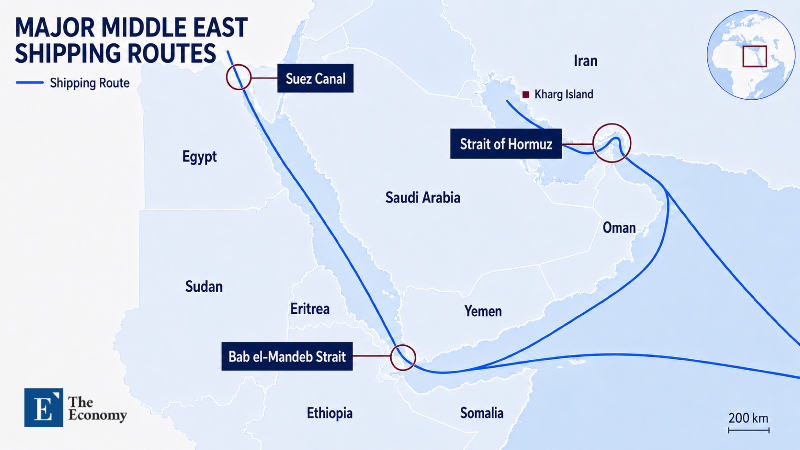
Saudi economic calculations also underpinned the crown prince’s intervention. According to the US Energy Information Administration (EIA), an average of 20 million barrels of petroleum products passed through the Strait of Hormuz each day last year, equivalent to about 20% of global consumption. Saudi crude oil and condensate accounted for 5.5 million barrels per day, or 28% of total traffic through the strait. Saudi Arabia operates the East-West Pipeline connecting its eastern oil fields with the Red Sea port of Yanbu, but the pipeline lacks sufficient capacity to reroute all existing exports. Tankers departing from Yanbu must also pass through the Bab el-Mandeb Strait, which lies within the operational reach of the Houthis, Yemen’s Iran-aligned armed group.
Other Gulf Cooperation Council (GCC) states face broadly similar constraints. Qatar exports most of its liquefied natural gas (LNG) through the Strait of Hormuz. The UAE operates a pipeline capable of transporting 1.8 million barrels per day from Abu Dhabi’s oil fields to the port of Fujairah on the Gulf of Oman, but its additional rerouting capacity is limited. A prolonged closure of the strait would therefore simultaneously disrupt Saudi crude oil exports, Qatari LNG shipments and the UAE’s energy and logistics businesses. The financial, tourism and logistics industries built by Dubai and Abu Dhabi, along with Doha’s international aviation hub, also depend on regional security. These shared economic interests explain why GCC states repeatedly urged Trump to refrain from launching the strikes.
Saudi Arabia on Guard Against Escalation, Mounts All-Out Defense of Vision 2030
These economic interests have provided the foundation for Saudi Arabia to lead a coordinated GCC response. Saudi Arabia had sought to avoid direct participation in the war that began after the United States and Israel attacked Iran in February. Although the weakening of Iran could benefit Saudi Arabia, which has long maintained an adversarial relationship with Tehran, Riyadh would also sustain significant damage if the war spread across the Middle East. Saudi Arabia’s caution has also been driven by economic considerations. Crown Prince Mohammed bin Salman is pursuing Vision 2030, which aims to reduce the kingdom’s dependence on oil and transform it into a tourism and business hub. The prolonged war has disrupted tourism and efforts to attract foreign investment. Crude oil exports, the backbone of government finances, have also been constrained, intensifying the economic burden.
Relations between Saudi Arabia and the Trump administration have also shifted. Differences between the two countries have widened, particularly over Middle East security and how to deal with Iran. In recent years, Saudi Arabia has pursued a rapprochement with Tehran to reduce the Iranian threat, concluding that diplomacy offered a more practical means of managing Iran than military confrontation. The outbreak of war with Iran, however, derailed Saudi Arabia’s diplomatic efforts. Moreover, Iran’s control over the Strait of Hormuz and threats by Iran-aligned armed groups against Red Sea shipping routes have exposed a widening maritime security vacuum in the Middle East.
Mohammed bin Salman’s Middle East Security Vision
Saudi Arabia is consequently moving to consolidate the military and diplomatic capabilities of Gulf states in defense of its crude oil export routes, while leveraging that process to expand its regional leadership. The shift first became apparent in military operations. According to The New York Times, Saudi Arabia joined the US military in striking facilities operated by Iran-aligned militias in Iraq on July 29. It marked the first time since the 1991 Gulf War that Saudi Arabia had publicly acknowledged conducting joint airstrikes with the United States on the territory of another Arab country. The Saudi government characterized the operation as a limited act of self-defense against forces that had attacked its oil facilities and stressed that it had no intention of escalating the conflict. At the same time, it issued an unequivocal warning that any attack on Saudi Arabia would carry consequences.
The following day, Saudi Arabia announced plans to establish a “multinational maritime defense coalition” with 13 countries, including Kuwait, Qatar, Bahrain, Türkiye, Egypt and Pakistan. Delegations from 43 countries and the European Union (EU) attended the founding meeting, and the coalition’s headquarters will be located in Saudi Arabia. Participating countries plan to pursue intelligence sharing, operational planning, joint exercises and combined maritime operations in the Bab el-Mandeb Strait, the Red Sea and the Gulf of Aden. By assembling the member states and placing the command structure on its own territory, Saudi Arabia is positioning itself as the central pillar of regional maritime security.
The immediate impetus for establishing the coalition was the Houthis’ maritime blockade. After declaring on July 20 that they would prevent Saudi vessels from passing through the Red Sea, the Houthis attacked two Saudi oil tankers and energy facilities in Jizan and Yanbu. Saudi Arabia responded by striking the Houthi-controlled Yemeni port of Hodeidah and accelerating the launch of the multinational coalition. The strategy seeks to transform the response to the Houthis from a series of individual retaliatory actions into a collective maritime security framework, thereby constraining the operational reach of Iran-aligned forces across the Red Sea.
Iran has long used the Houthis, Iraqi militias and other proxy forces to expand its influence across the Middle East. Their attacks, however, have also produced the countervailing effect of uniting Gulf states behind a Saudi-led collective response. Crown Prince Mohammed bin Salman is, in practice, broadening his role as an intermediary between the United States and Iran and as the architect of a new security framework for Yemen and the Red Sea. His success in reversing Trump’s decision to launch the strikes and establishing a 14-nation maritime coalition illustrates Saudi Arabia’s strategy of exploiting Iran’s waning influence to emerge as the Middle East’s central power broker.
Anne-Marie Nicholson is a fearless reporter covering international markets and global economic shifts. With a background in international relations, she provides a nuanced perspective on trade policies, foreign investments, and macroeconomic developments. Quick-witted and always on the move, she delivers hard-hitting stories that connect the dots in an ever-changing global economy.
Similar Post