Oil prices fall as US–Iran diplomatic contacts expand; China seeks to broaden its influence through mediation

Aoife Brennan is a contributing writer for The Economy, with a focus on education, youth, and societal change. Based in Limerick, she holds a degree in political communication from Queen’s University Belfast. Aoife’s work draws connections between cultural narratives and public discourse in Europe and Asia.
Authored On
Modified
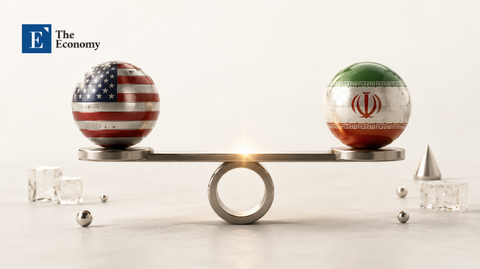
Iran presents conditions for peace talks to the US, signals possibility of reopening the Strait of Hormuz
US also seeks diplomatic solution rather than renewed military operations; oil prices plunge on hopes of an end to the war
China expands mediation with Iran and Gulf states as it seeks greater influence in the Global South

The Iranian government has said it could reopen the Strait of Hormuz within a short period if its demands are met. As the United States and Iran continue negotiations mediated by Qatar, hopes for an end to the war appear to be rising again, with both sides prioritizing diplomatic solutions over further military operations. International oil prices have consequently begun to decline noticeably, while China and regional countries including Oman and Saudi Arabia are also stepping in as mediators to help ease tensions in the Middle East.
Iran’s conditions for progress in negotiations
According to AFP on the Nov 2nd, Iranian Foreign Ministry spokesperson Esmaeil Baghaei told a press conference that day, “We are continuing negotiations with the United States through mediating countries,” adding, “We have condensed the ‘seven-step proposal’ conveyed to the United States on the sidelines of the UN General Assembly last September into a form that can be implemented within two days.” Although the proposal’s details have not been disclosed, it reportedly includes a plan to reopen the Strait of Hormuz within seven days if the United States accepts Iran’s demands. It is also believed to call for the lifting of the US naval blockade and sanctions against Iran, the return of frozen assets, and a halt to fighting on all fronts.
Iran, however, insists that the United States must first accept its demands as a prerequisite for progress in negotiations. “If our demands are met, security in the Strait of Hormuz can be restored within a short period, and the negotiating process can resume,” Baghaei said. But he stressed, “Unless our demands, including the lifting of the US naval blockade, are accepted, there can be no progress toward a final agreement, nor can the Strait of Hormuz be opened or made safe.” He reiterated, “Everything depends on the US side accepting Iran’s demands,” adding, “Only then can we discuss the subsequent steps.”
Efforts to find a diplomatic way forward gather pace
Iran’s leadership is also taking steps to explore a diplomatic solution. On the 2nd, Iranian President Masoud Pezeshkian said through Iran’s state-run IRNA news agency, “We are working to resolve the issues through dialogue, and the supreme leader has granted the government certain authority in this regard.” Given that Iran’s supreme leader has the final say on national security and foreign policy, this amounts to leadership backing for the government’s diplomatic negotiating efforts. However, neither the precise scope of the authority granted to the government nor whether it can adjust negotiating conditions has been disclosed.
Working-level consultations are also intensifying. On the 30th, a Qatari mediation delegation held more than 12 hours of talks with Iranian officials in Tehran, during which specific agreement proposals were also discussed. According to Reuters, a source familiar with negotiations to end the war between the United States and Iran said a draft proposal for an agreement between the two sides was circulating among officials and that follow-up talks could be held. The source added that although the Iranian delegation left Doha, Qatar, after completing its schedule on the 1st, its departure was not due to problems arising during negotiations.
US cautious about further military operations
The United States is also taking a cautious approach to resuming military operations against Iran. Israel’s Channel 12 reported that, in a telephone call with US President Donald Trump on the 31st of last month, Israeli Prime Minister Benjamin Netanyahu strongly urged the resumption of military attacks on Iran immediately after the US midterm elections on the 3rd. His demand reflected concerns that the Qatar-mediated negotiations between the United States and Iran to end the war could weaken military and diplomatic pressure on Iran. Trump, however, reportedly maintained that the prospects for a diplomatic solution should be explored before further military operations and asked Israel to refrain from intervening in the negotiations for the time being.
The United States is indeed maintaining diplomatic contact with Iran. In particular, US Vice President J. D. Vance reportedly recently conveyed a message about resuming negotiations to Mohsen Rezaei, secretary of Iran’s Supreme National Security Council, at Trump’s direction. However, the possibility of military action has not yet been ruled out entirely. Speaking to reporters on the 31st of last month, Trump said, “Negotiations with Iran are going smoothly,” but added, “There are still one or two targets among Iran’s nuclear facilities that need to be dealt with, and we can take care of them in 10 minutes.” At the same time, he stressed that there was no need to rush into additional attacks, as the United States had already inflicted immense damage on Iran’s navy, air force, air defenses, and nuclear program.
Table 1. US and Iranian positions on negotiations to end the war
| Country | Basic position | Negotiating conditions and key developments |
|---|---|---|
| Iran | Remains open to a diplomatic solution and reopening the Strait of Hormuz, but demands that the US make concessions first | Demands the lifting of the naval blockade and sanctions, the return of frozen assets, and a halt to fighting; the supreme leadership has granted the government certain authority |
| United States | Prioritizes exploring a diplomatic solution over further military operations, while keeping military options open | Conveys a message about resuming negotiations under Qatari mediation; remains cautious about additional attacks while maintaining military pressure |
International oil prices slide
Ongoing diplomatic negotiations between the United States and Iran have led to a decline in international oil prices. On the 2nd, Brent crude futures, the international oil benchmark, settled at USD 104.77 per barrel, down USD 8.66 from the previous trading session. US West Texas Intermediate (WTI) crude futures also closed down USD 7.66 at USD 96.46 per barrel. The declines are notable given that Brent and WTI rose 13.6% and 15.2%, respectively, last month. Tim Waterer, chief market analyst at KCM Trade, told Reuters, “With hopes of diplomatic progress still intact and no significant military escalation over the weekend, some of the upward pressure on oil prices has eased for now.”
Other countries are also accelerating diplomatic efforts to ease tensions in the Middle East. China is a prominent example. On the 2nd, China’s Foreign Ministry announced that Zhai Jun, the Chinese government’s special envoy on Middle East affairs, would visit Iran, Oman, and Saudi Arabia from early to mid-November. Chinese Foreign Ministry spokesperson Mao Ning said the tour was intended to implement President Xi Jinping’s vision for peace and security in the Middle East, adding, “Through a series of contacts with the relevant countries, we will promote peace negotiations and ease regional tensions.”
China expected to gain diplomatic influence
High-level diplomatic contacts are also continuing. Chinese Foreign Minister Wang Yi met Ali Bagheri Kani, deputy secretary of Iran’s Supreme National Security Council, in Beijing the same day and stressed that a political solution should take precedence over military confrontation. While expressing support for Iran’s efforts to safeguard its sovereignty and security, he said dialogue and negotiation were the only realistic means of resolving the Middle East conflict. Wang then held separate talks with Saudi National Security Adviser Musaed bin Mohammed Al-Aiban, saying the region stood at a critical crossroads between war and peace and calling for an end to hostilities and measures to ensure the safety of energy and maritime transport routes. President Xi Jinping also held a summit that day with visiting Omani Sultan Haitham bin Tariq, stating that the Middle East and the Gulf region must not become a battleground for competition among major powers.
International observers suggest that China could further strengthen its diplomatic influence in the Global South if it achieves tangible results in the current discussions on ending the war. China has expanded economic, infrastructure, and trade cooperation with countries in Africa, the Middle East, Latin America, and Southeast Asia, while emphasizing a diplomatic approach distinct from that of the United States, grounded in respect for national sovereignty and noninterference in internal affairs. In the Middle East in particular, it has maintained strategic ties with Iran while expanding cooperation with Saudi Arabia, Oman, and others, building a diplomatic foundation that allows it to engage with countries on opposing sides. In March 2023, it also brokered an agreement between Iran and Saudi Arabia to restore diplomatic relations, helping improve ties between major regional rivals. China appears to be extending relationships previously centered on economic cooperation into politics and security, while strengthening its standing as a major power that contributes to resolving international conflicts.
Aoife Brennan is a contributing writer for The Economy, with a focus on education, youth, and societal change. Based in Limerick, she holds a degree in political communication from Queen’s University Belfast. Aoife’s work draws connections between cultural narratives and public discourse in Europe and Asia.
Similar Post