“Will Alaska LNG Development Be Stalled?” Democrats’ Control of U.S. Congress Could Reshape Global LNG Supply Chains; Canada Raises Output as Qatar Focuses on Recovery

Oliver Griffin is a policy and tech reporter at The Economy, focusing on the intersection of artificial intelligence, government regulation, and macroeconomic strategy. Based in Dublin, Oliver has reported extensively on European Union policy shifts and their ripple effects across global markets. Prior to joining The Economy, he covered technology policy for an international think tank, producing research cited by major institutions, including the OECD and IMF. Oliver studied political economy at Trinity College Dublin and later completed a master’s in data journalism at Columbia University. His reporting blends field interviews with rigorous statistical analysis, offering readers a nuanced understanding of how policy decisions shape industries and everyday lives. Beyond his newsroom work, Oliver contributes op-eds on ethics in AI and has been a guest commentator on BBC World and CNBC Europe.
Authored On
Modified
Democrats’ landslide U.S. midterm victory increases uncertainty over Alaska LNG project
Canada expands natural gas production and LNG exports while pursuing additional capacity
Qatar seeks a way forward through major capacity expansions after Iran war sends LNG exports plunging
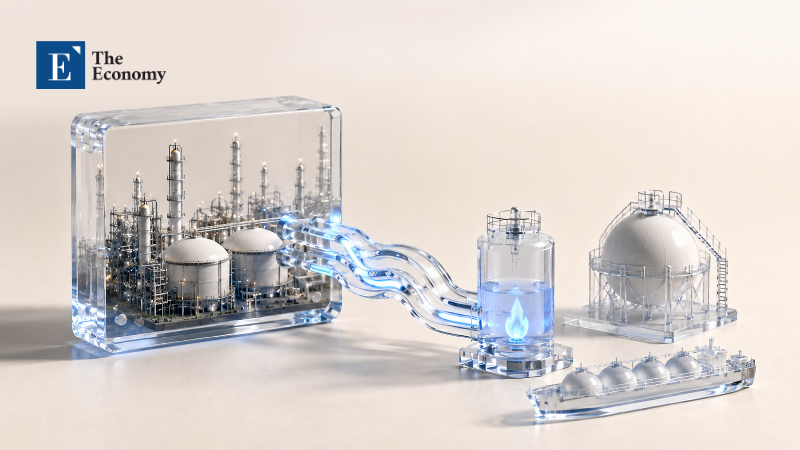
Changes in the U.S. political landscape have emerged as a new variable in global liquefied natural gas (LNG) supply chains. With Democrats winning majorities in both the Senate and the House of Representatives in the U.S. midterm elections, large-scale U.S. projects to expand LNG production and exports, including Alaska LNG development, face a growing possibility of being stalled. Against this backdrop, markets are focusing on the role of alternative suppliers, including Canada, which could benefit if U.S. supply expansion slows, and Qatar, which is pursuing major capacity expansions despite a sharp decline in exports caused by the Iran war.
Democrats Oppose Expansion of LNG Exports
According to foreign media reports compiled on the 11th, the view is gaining traction across various sectors that Democrats’ landslide victory in the U.S. midterm elections will increase uncertainty surrounding the Alaska LNG development project promoted by the Donald Trump administration. The Alaska LNG development project is a major energy infrastructure undertaking that would transport natural gas produced in Alaska’s northern North Slope region through an approximately 1,300-kilometer pipeline to Nikiski in the south, where it would be liquefied for export to Asian markets. U.S. energy developer Glenfarne Group currently holds a 75% stake in the project, with the state of Alaska holding the remaining 25%. Total project costs are estimated at approximately USD 44.5 billion–54.5 billion. Planned annual LNG production capacity is 20 million metric tons (t).
President Trump has presented the project as a cornerstone of efforts to expand U.S. energy exports and improve the trade balance, encouraging Asian allies to participate. The problem is that Democrats have consistently raised concerns about carbon emissions associated with fossil fuel development. In May 2023, 44 Democratic members of Congress sent a letter to the White House Council on Environmental Quality (CEQ), urging stricter reviews of the climate impacts of new LNG export facilities and pipeline projects. The lawmakers warned at the time that continued U.S. government approval of large-scale LNG infrastructure construction could lock in greenhouse gas emissions over the long term. They also specifically addressed the Department of Energy’s export authorization for the Alaska LNG project. In May 2024, approximately 75 Democratic lawmakers also supported the administration of then-President Joe Biden in its decision to pause reviews of new LNG export authorizations.
Higher Barriers to Financing Related Projects
Given this Democratic policy stance, federal financial support and loan guarantees for the Alaska LNG project are also likely to become major subjects of congressional scrutiny. Congress established federal loan guarantee authority for an Alaska natural gas pipeline in 2004 and amended the relevant provisions in 2021, but issuing actual guarantees requires separate administrative procedures and financial reviews. If Democrats question the justification for committing public funds during budget deliberations or demand additional conditions on loan guarantees, the developer’s financing costs could rise and a final investment decision could be delayed.
Analysts have offered similar assessments. In an analysis published on the 5th, Louise Woods and Elena Guillet, attorneys at U.S. law firm Haynes Boone, said, “The immediate impact of the midterm elections is not a change in the law, but a change in the risk associated with decisions made under existing law.” They advised that “companies should consider, as a key variable, the possibility that federal funding needed for projects or agencies’ ability to perform their duties could be constrained during budget deliberations.” Energy research firm Rystad Energy also highlighted that, by securing a congressional majority, Democrats can add restrictive provisions to federal budget legislation and exercise influence over confirmations for senior energy-related positions.
Canada Welcomes Potential Boost in Export Competition
If uncertainty surrounding the Alaska LNG project increases, competing exporter Canada is likely to benefit. Canada has recently been rapidly increasing its natural gas production. According to the Canada Energy Regulator (CER), Canadian natural gas production reached a record daily average of 19 billion cubic feet (ft³) last year, up 3.8% from 18.3 billion cubic feet in 2024. That growth has continued this year. Statistics Canada data measuring natural gas by energy content show that production in June rose 8.0% year on year to 700.8 million gigajoules (GJ), while July production increased 4.2% to 720.5 million gigajoules.
Export growth has been even steeper. Canada began large-scale LNG exports to Asian markets when the LNG Canada facility in Kitimat, British Columbia, started operating in June last year. Monthly LNG exports consequently rose from just 16.13 million gigajoules in July last year to 45.69 million gigajoules in January this year and 58.13 million gigajoules in March. In June, exports reached 58.31 million gigajoules, setting a record at the time. This export capacity is expected to expand further. In late September, LNG Canada’s operators made a final investment decision on a second-phase expansion to increase annual production capacity to 28 million metric tons. The plan is to add two liquefaction trains, each with an annual capacity of 7 million metric tons, to the existing facility, doubling total LNG production capacity.
Table 1. LNG Supply Trends in Canada and Qatar
| Country | Category | Key Details |
|---|---|---|
| Canada | Production | Natural gas production reached a record high last year, with growth continuing this year |
| Exports | LNG exports to Asia have expanded rapidly since LNG Canada began operating | |
| Capacity Expansion | LNG Canada’s second-phase project aims to expand annual production capacity to 28 million metric tons | |
| Qatar | Supply Disruptions | LNG exports plunged due to the Iran war, the blockade of the Strait of Hormuz, and attacks on Ras Laffan facilities |
| Recovery Burden | Liquefaction facilities with an annual capacity of 12.8 million metric tons are inoperable, with repairs expected to take 3–5 years | |
| Capacity Expansion | The North Field expansion project aims to increase annual production capacity to as much as 142 million metric tons by 2030 |
Uncertainty Over LNG Supplies From the Middle East
Qatar is also identified as a key factor shaping the future of global LNG supply chains. Qatar is the world’s second-largest LNG producer after the United States and a major supplier accounting for approximately 20% of the global LNG export market. Its LNG industry has grown around North Field, the world’s largest non-associated natural gas field. The Ras Laffan Industrial City in northern Qatar houses 14 liquefaction trains with a combined annual production capacity of 77 million metric tons. According to the International Energy Agency (IEA), Qatar produced approximately 165 billion cubic meters (m³) of natural gas last year, about two-thirds of which was exported as LNG.
However, Qatar’s LNG production and exports have been severely curtailed since war broke out between the United States and Israel on one side and Iran on the other on February 28. Iran’s retaliatory attacks and blockade of the Strait of Hormuz forced successive suspensions of LNG carrier voyages, while Iranian missile strikes in March also damaged the key production facilities at Ras Laffan Industrial City. In the approximately six months following the outbreak of war, Qatar exported just 18 shiploads of LNG, down approximately 96% from 509 shiploads during the same period a year earlier. Losses from reduced sales over that period were estimated at USD 24 billion.
Qatar’s Infrastructure Expansion Efforts
The damage caused by the war is unlikely to be repaired quickly. In March, Saad Sherida Al-Kaabi, Qatar’s minister of state for energy affairs and CEO of QatarEnergy, said Iranian attacks had rendered two liquefaction trains inoperable. Their combined annual capacity of 12.8 million metric tons represents approximately 17% of the country’s total LNG export production capacity. He said repairs were expected to take 3–5 years and could result in annual revenue losses of USD 20 billion. The IEA also estimated that damage to Qatar’s LNG production facilities and supply disruptions in the Middle East could result in a cumulative reduction of approximately 140 billion cubic meters in global LNG supply between this year and 2030.
One variable, however, is that Qatar is accelerating construction of new facilities to expand LNG production capacity. A prominent example is the North Field expansion project, which aims to raise annual LNG production capacity at Ras Laffan Industrial City to as much as 142 million metric tons by 2030. Reuters reported last month that QatarEnergy planned to bring the first LNG liquefaction train of the North Field East expansion project to a state of operational readiness in November and begin actual production in the first quarter of next year. Facilities for the North Field South project are also scheduled to begin production in 2028. However, the blockade of the Strait of Hormuz has delayed deliveries of construction equipment and key materials, leaving the start-up schedules for the remaining production facilities uncertain.
Oliver Griffin is a policy and tech reporter at The Economy, focusing on the intersection of artificial intelligence, government regulation, and macroeconomic strategy. Based in Dublin, Oliver has reported extensively on European Union policy shifts and their ripple effects across global markets. Prior to joining The Economy, he covered technology policy for an international think tank, producing research cited by major institutions, including the OECD and IMF. Oliver studied political economy at Trinity College Dublin and later completed a master’s in data journalism at Columbia University. His reporting blends field interviews with rigorous statistical analysis, offering readers a nuanced understanding of how policy decisions shape industries and everyday lives. Beyond his newsroom work, Oliver contributes op-eds on ethics in AI and has been a guest commentator on BBC World and CNBC Europe.
Similar Post